
You know what’s a good topic? The top 100 best Game Boy games, of course. That’s what we’re here to talk about today. First let’s begin with some back story. The original black and white (or black and green for the sake of accuracy) Game Boy started a handheld gaming revolution. The only problem with it is Nintendo was the only one benefiting from this. There were many challengers, but no one could topple the mighty Game Boy. Many of these were technically superior but players made their choice and they stuck to it. Because of this developers flocked to the handheld, and it amassed a huge library. Some of it is good, and some bad. We’re here to help you out by detailing what’s worth playing.
This list is going to cover games playable on the original Game Boy only. Sorry color fanatics. This one is just about the black and white releases. While many of these games did have integration with the GBC (beyond basic backwards compatibility) they’re all playable on the original brick style portable. At some point we’ll do a Game Boy Color list, but for now we’re celebrating the OG. Oh, and the Game Boy Pocket as well. We can’t just forget that wonderful little revision, now can we? Either way let’s get started with the list. These are the top 100 best Game Boy games of all time.

#100. – Radar Mission
We’re kicking this list off with a hidden gem. Do you like the classic board (or pen and paper, if you’re truly old school) game Battleship? Yeah, most of us are. Radar Mission is like that, but only partially. When you get the hankering to play Battleship but have no friends around this will suffice. It also has a few neat options, such as lucky shots and even a helicopter that actively moves around between turns that also must be destroyed.
It’s a good take on the classic game we all played growing up. Game B might as well be an entirely different title though. Here you play as a submarine moving around a battlefield either submerged or on the surface. It plays kind of like a mix between a strategy game and a shooter. It’s actually pretty fun, and the contrast in gameplay was a pleasant surprise. Yes, Battleship is awesome, but sometimes you just want to shoot some stuff. Radar Mission offers it all.
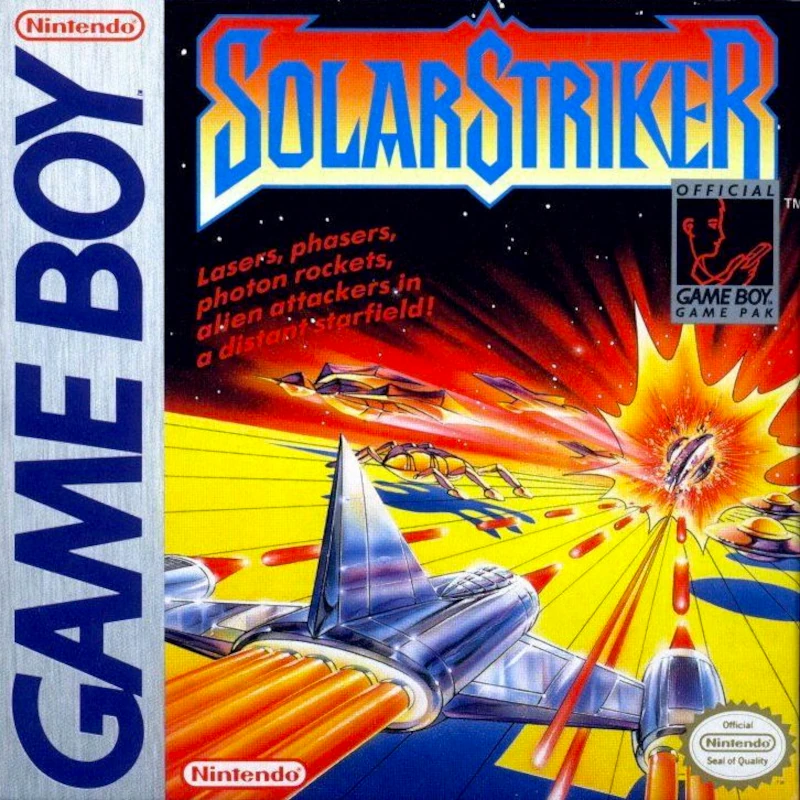
#99. – Solar Striker
Believe it or not Nintendo once made a shmup. Radical, right? Solar Striker is its name, and following the basic playbook is its game. This one really doesn’t do anything different from its contemporaries. It feels like kind of a cash-in if I’m being honest. Nintendo is, and has been, one of the most innovative companies around. The fact that they released a shooter is surprising, but even moreso is the fact that it doesn’t try anything new. I wanted Solar Striker to be bold. Instead it’s just basic.
That’s not entirely a bad thing though. For what it is Solar Striker is a pretty good game. This is an overhead shooter that’s a bit slow in pacing. That’s okay because it has decent stage layouts and enemy patterns. There’s also a linear power-up mechanic, but they’re useful enough that you’re going to want to seek these floating icons out. The best part is that this one is easy to see. Yes, even on the original low resolution screen. This is thanks to smart color use. By that I mean the backgrounds are mostly white. Solar Striker is decent, but I expected more from a Nintendo shmup.
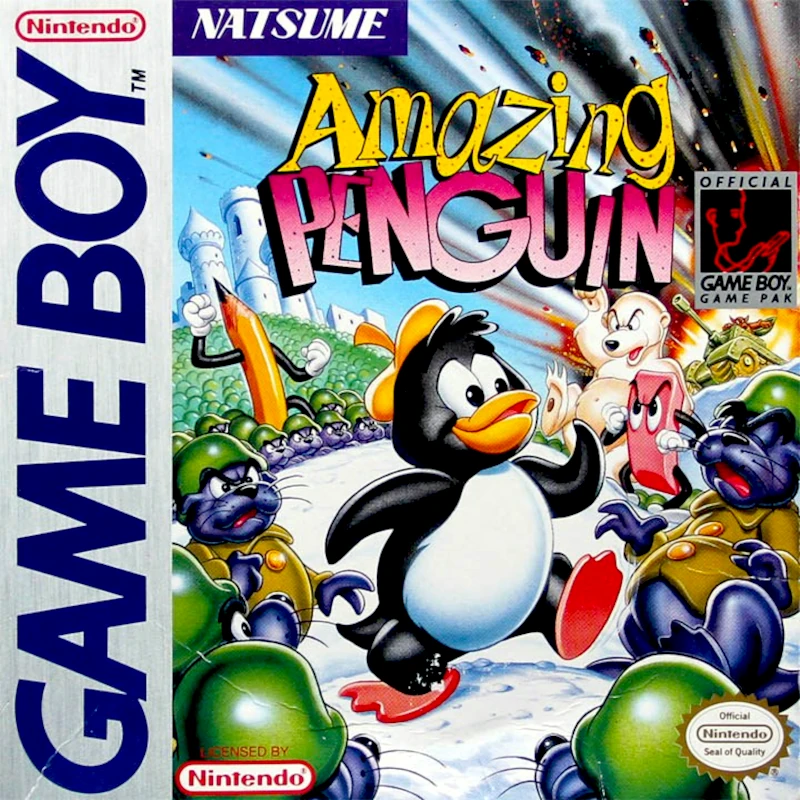
#98. – Amazing Penguin
With a name like that ‘amazing’ is the last thing I would expect this game to be. It also didn’t help that this one came from Natsume. Yet, here we are. At first glance Amazing Penguin looks like one of those shovelware puzzle games developers churned out like they were making butter. That’s what I thought, but that thought was quickly shattered. Amazing Penguin is a good time, and perfect for the pick up and play nature of handheld gaming.
Amazing Penguin is sort of a Pac-Man clone. That’s just scratching the surface though. You view the action from a top down perspective, and play as a penguin. That last part should be obvious. You can only guide him along set paths in the shape of squares. Contained on these are circle icons (I thought they were bombs, but that makes no sense) and touching all of them closes the square which they surround. Your goal is to collect all of these. You also have CPU controlled enemies trying to make you into penguin souffle. When you eliminate the squares they are defeated. It’s a fun time, and worth checking out. This one is a Game Boy exclusive, so you’ll need to dust off the brick to enjoy this guy.
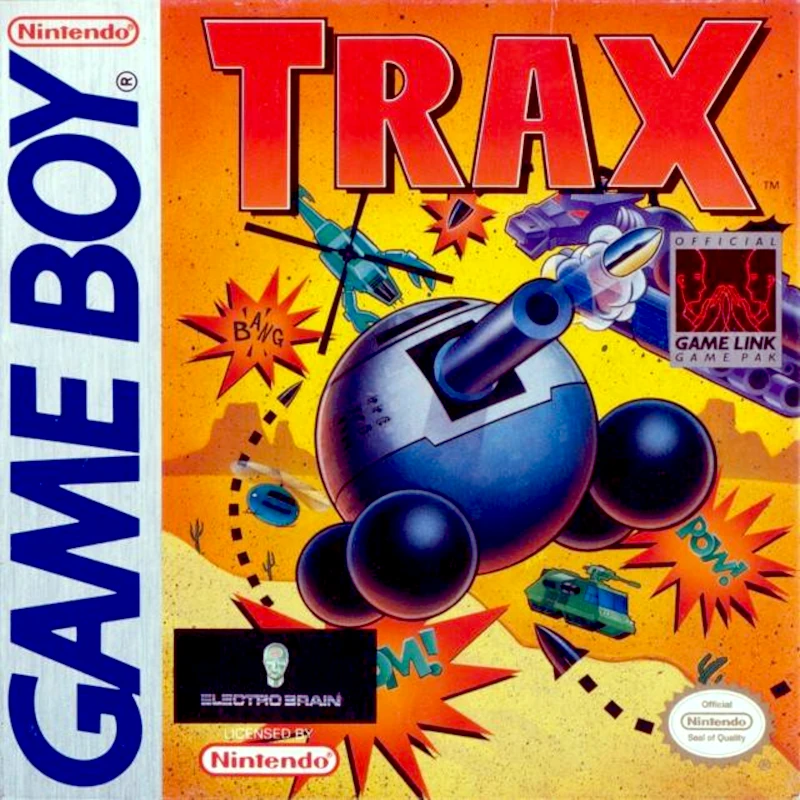
#97. – Trax
No, it’s not Klax. I made that mistake too at first. Trax is an original title developed by Hal Laboratories so you know it’s good. It’s a shame that no one played it. This one is a very interesting top down shooter. It’s unique in that you can move freely in all directions. It’s also worth noting that it feels like the developers intended this to be used with dual directional pads. The Game Boy doesn’t have those. You can control the direction you’re firing, but only by holding the A button. Oh, and the turrets only turn to the right. Yeah, it’s pretty limited. That’s half the fun though.
Yes the controls are awkward. Did I care after the first five minutes? Heck no. Trax is surprisingly fun even despite its limitations. The fact that the screen doesn’t scroll on its own paired with the ability to move in all directions makes for some seriously fun gameplay scenarios. The level designs are ace. It’s a lot of fun to dispatch all of the enemy tanks, boulders and whatever other destructible elements in each stage. Trax is fun, and unfortunately it’s only on the Game Boy.
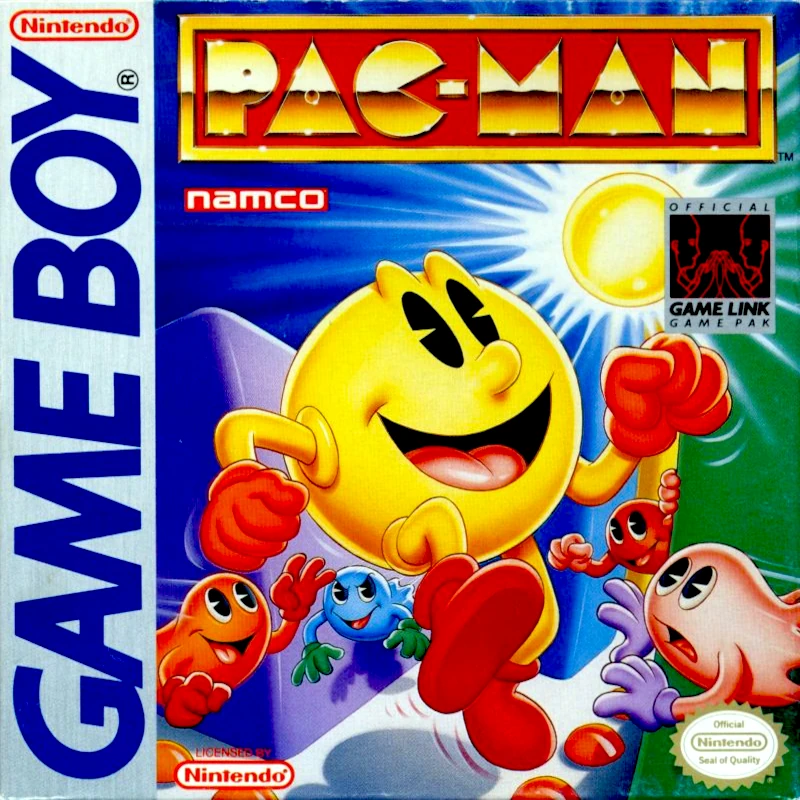
#96. – Pac-Man
Pac-Man is basically the old faithful release on every retro console. Except for on the Atari 2600. That version is best forgotten. I have been playing the Game Boy version for years. That’s why I was surprised to learn that this version is kind of notorious. Gamers generally don’t like it. This is my list however, and I’m a Game Boy Pac-Man fan. I’m genuinely sorry if you didn’t enjoy it. I did. Still friends.
I would feel bad for explaining how this one plays. I mean, it’s Pac-Man. Even your mom and grandma know what this is. If you wanted to play Pac-Man on the go your options were limited. This was pretty much it. Namco didn’t re-invent the wheel here. You still travel around the play field gobbling down pellets as the yellow video game icon. This time he’s gray. You’ll have to use your imagination here. The major downside to this port is that the entire playfield can’t be displayed at once. Yes, this one has screen scrolling. It’s annoying, but not enough to ruin the experience. This may be a poor man’s version of the original release, but it’s still Pac-Man.
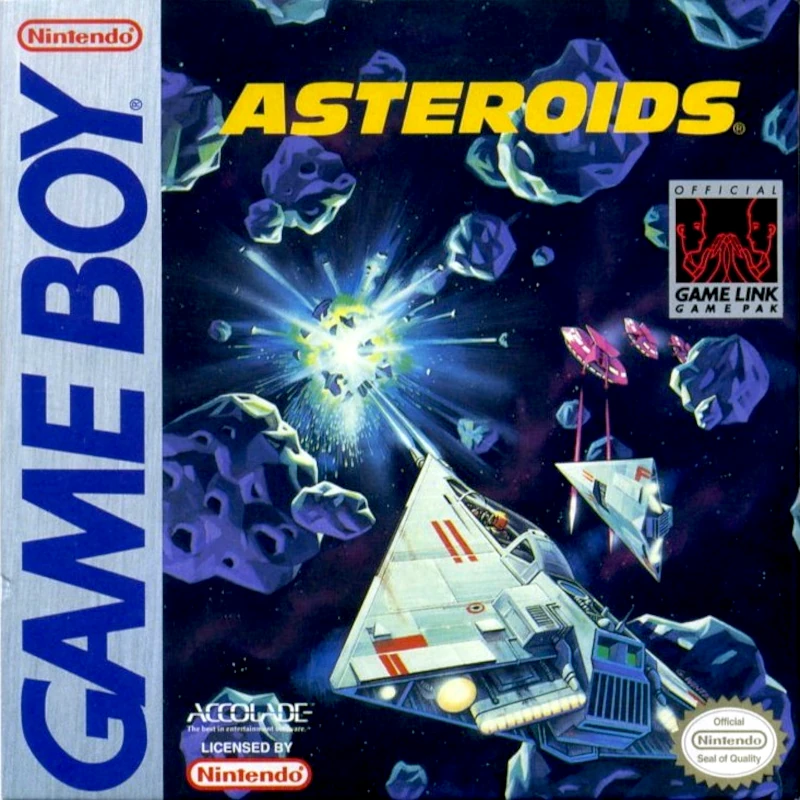
#95. – Asteroids
Speaking of classics Asteroids is also available on the Game Boy. I would argue that this one is even better on the handheld. That’s due to the arcade style gameplay. It lends itself well to short bursts of gameplay. You aren’t going to sit down for a marathon session with Asteroids. Instead you’re going to play it on the go, and for five minutes at a time when you’re idle.
Asteroids on the Game Boy is exactly what you would expect it to be. It’s the classic game, but with some changes to make it easier to see on the limited screen. Unlike Pac-Man the developers were able to fit the whole playfield in this case. It’s classic Asteroids where you change directions with the directional pad, and fire with A. Moving forward is performed by pressing forward. Your goal is just to eliminate all of the asteroids. Hence the name. The major change made here is that the background is now white. It makes sense considering you’re going to struggle to see what’s happening on the Game Boy screen.
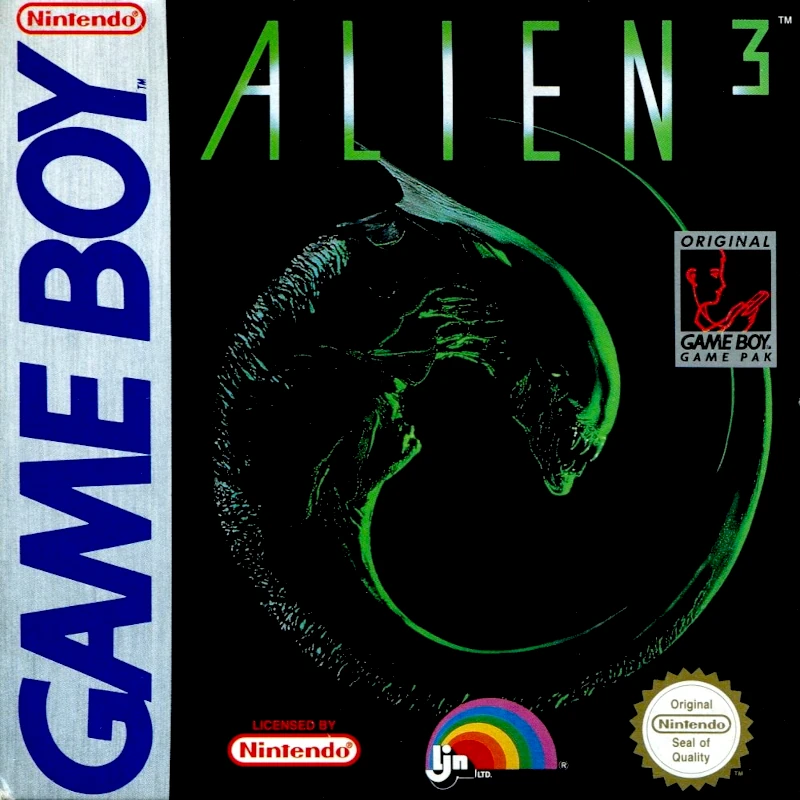
#94. – Alien 3
As a longtime fan of horror films I fully support developers using the licenses from these franchises to make video games based on them. With that said I’m not the biggest fan of Aliens. I know, I know. Get your pitchforks ready. Games based on the Alien franchise have however been some of my favorites. In particular the title based on the third movie slaps on the Game Boy. Believe me when I say that I’m just as surprised as you are.
This one is pretty different from its console counterparts. There are more elements of an adventure game here. It fits the source material really well. Here you play as Ripley, and your goal is to eradicate the extra terrestrial monsters. Gameplay is surprisingly fun with good level designs, and fun enemy patterns. Yes it’s just the aliens from the movie, but there’s something really rewarding with dispatching them. The adventure game elements, mostly via the interface, are really cool too. If you’re a fan of the franchise and have the original Game Boy available then you could do much worse than this one.
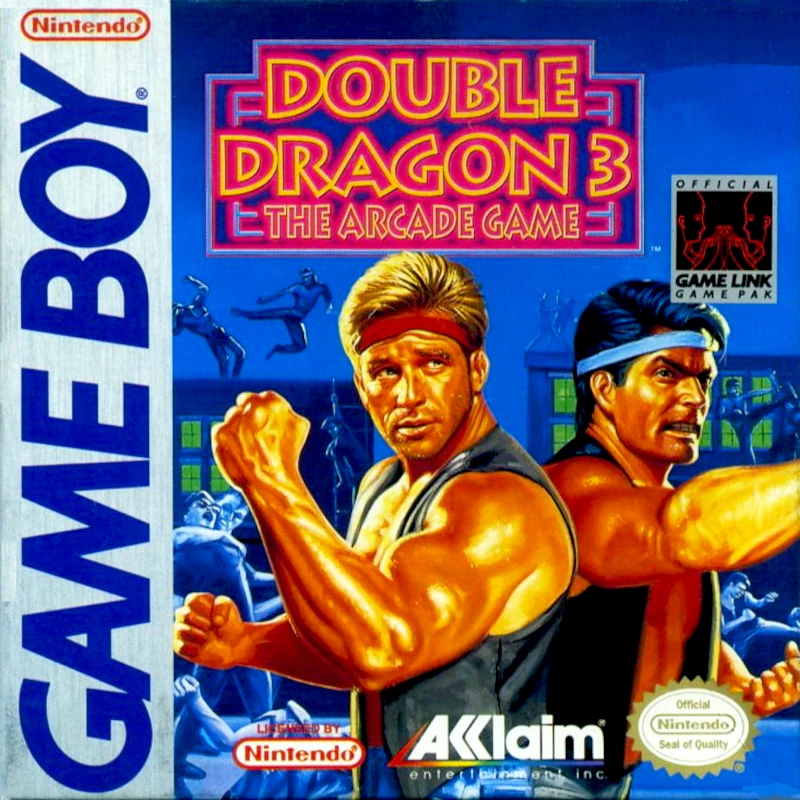
#93. – Double Dragon 3: The Arcade Game
Beat em ups are life. Unfortunately there weren’t a lot of them on the Game Boy. If you’re a fan of the genre and wanted to play them on the go your options were limited. Double Dragon 3 is a disappointing port, but it’s still highly playable. It’s also quite fun. Please note that I didn’t say it’s perfect. Double Dragon 3 has more than its fair share of issues. None of which stopped me from enjoying the experience though.
So wait people hated this one? Yes, it’s true. I’m an outlier here. Pacing is slow and the hit detection has some issues. It took a while for this one to sink its teeth in for me. This one plays like a traditional beat ’em up. Your goal is to defeat a near endless supply of enemies. How do you do it? With kicks and punches, of course. Double Dragon 3 certainly isn’t perfect, but it doesn’t have to be this high up on the list. Is it fun though? Yep.
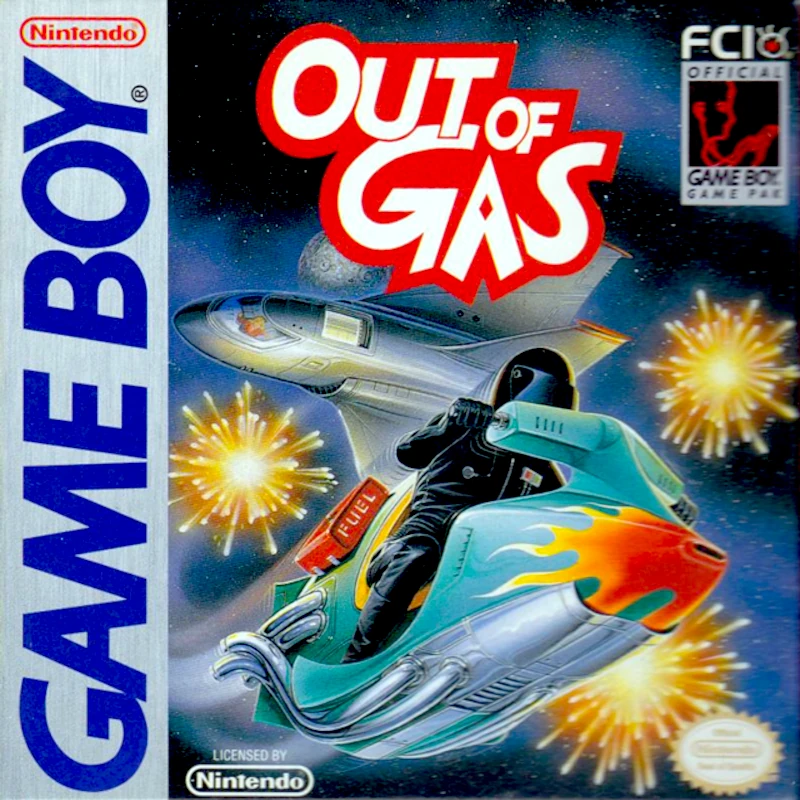
#92. – Out of Gas
I had the darndest time figuring out what this game would be based on the title. A racer? Nope, it’s a shooter. When you start playing it the name makes more sense. The game is played from an overhead perspective as you guide your ship through a variety of maze-like areas. Your simple goal is to gather all of the gas. Makes sense, right? Along the way various enemies will attack you which drains this previous fuel. Your gas reserves also work as a countdown timer. It constantly depletes. When you run out it’s game over.
While the first few stages are basic puzzle elements soon begin to trickle in. Sometimes you have to collect each gas icon in a specific order. This is displayed via a number. It makes things more difficult and requires that you pull off some planning to be successful. The only thing really holding this one back is the crazy sense of momentum you have. Your ship is going to be bouncing off of walls like a bumper car. This doesn’t damage you, but it can make getting to where you’re going a chore at times.
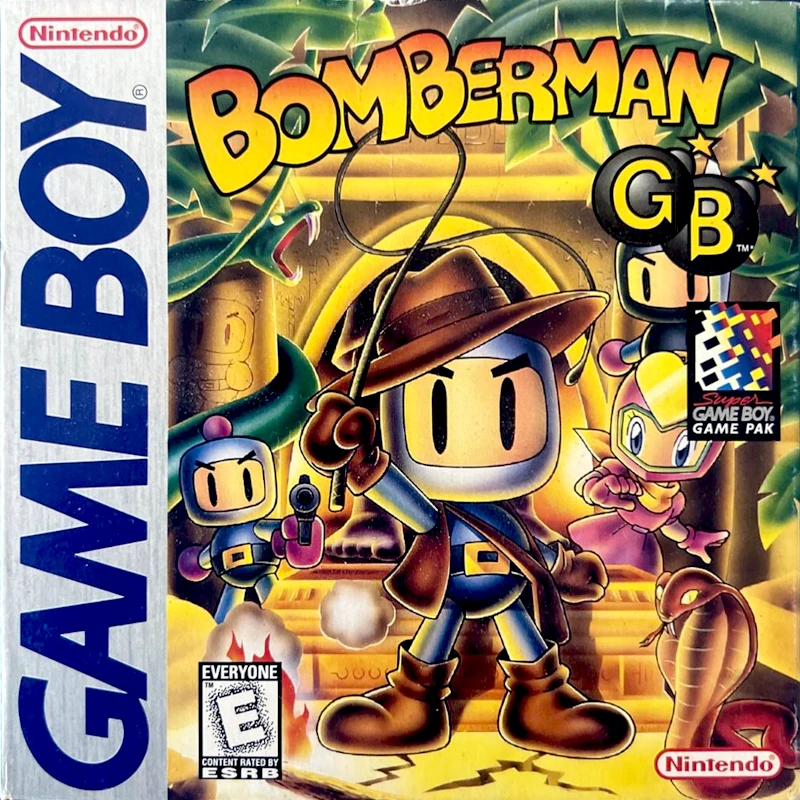
#91. – Bomberman GB
Who doesn’t love Bomberman? I mean, come on. The only thing holding these games back in the handheld realm is the high bar of entry for multiplayer. That is after all the highlight of the series. Getting together multiple Game Boy units, copies of the game, and link cables is annoying. It’s worth noting that this is actually the second Bomberman title on the Game Boy. The first was re-tooled as a Wario game oddly enough. We’ll speak on that one later.
It’s worth pointing out that this isn’t your father’s Bomberman. No, this is a more adventure filled game. You can tell right away considering this Bomberman don’s an Indiana Jones-like hat, and the stages are all based in caves and tombs. There are even boss encounters, and a weird overarching story. You even gain new powers as you complete stages. It’s interesting to say the least. What’s really cool is that multiplayer here can be accessed with either link cables and additional systems, or simply by plugging this one into a Super Game Boy. It’s multiplayer right out of the box using the latter method. How cool is that?
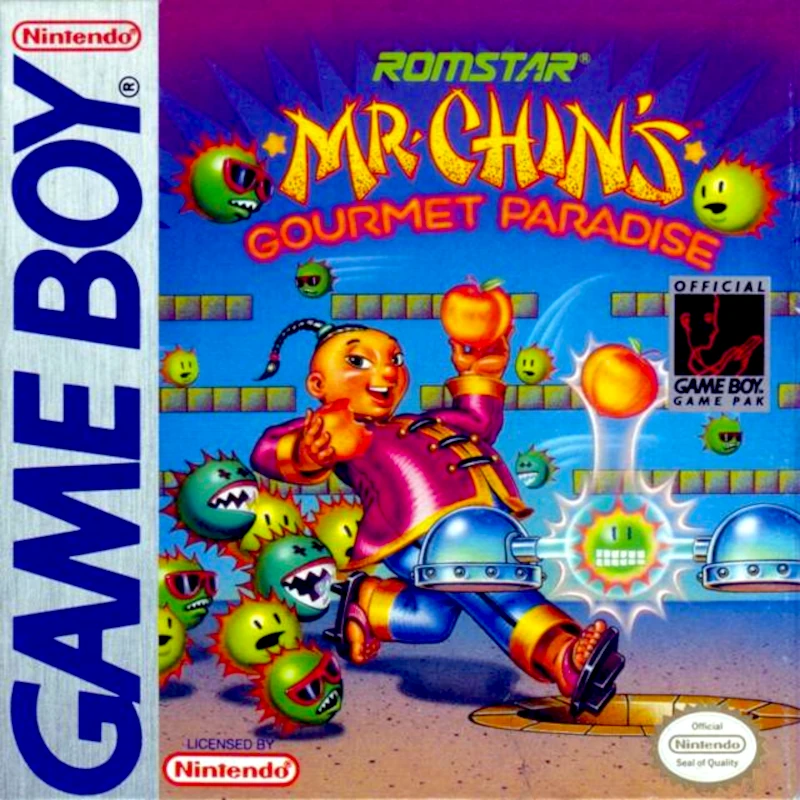
#90. – Mr. Chin’s Gourmet Paradise
This one isn’t exactly politically correct. The graphics are heavily exaggerated into the theme. If you are able to get past this you’ll find a remarkably decent Game Boy hidden gem. Mr Chin’s is a side scrolling single screen platformer action game. That’s not entirely accurate though. Because of the system’s small display there is scrolling, but the stages are still small and enclosed. This one is vaguely reminiscent of Bubble Bobble, and that’s not a bad thing by any means.
In Mr. Chin’s Gourmet Paradise you play as a chef of the title’s name. Your goal is to eliminate all of the enemies in each stage. Upon doing so you move on to the next. Call it repetitive, but it works. You take out foes by setting down landmines. Any foe that’s trapped in between two of these transforms into walking peaches. Mr. Chin then eats them. The problem is that given the rudimentary graphics they don’t really look like peaches. I had to get my mind out of the gutter for this one. Mr. Chin’s Gourmet Paradise is simple, but it’s quite fun.
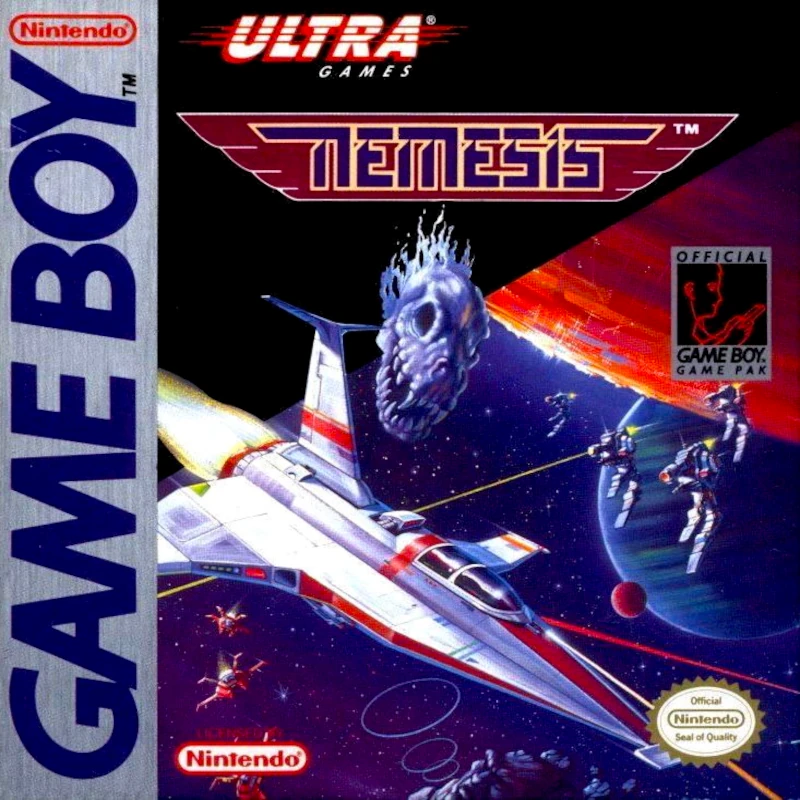
#89. – Nemesis
Back when the name Gradius actually meant something Konami was all in with the franchise. They kept it mostly in the arcades and on Nintendo consoles at the time. This series of side scrolling shooters was massively popular. They didn’t leave the Game Boy in the dark. So what does Nemesis have to do with Gradius? It’s the name they changed it to in the conversion to the handheld system. Why did they do this? I don’t know for sure but it probably has something to do with Nintendo limiting the number of games publishers could release on their systems. Yeah, it’s silly. I know.
What’s nice is the fact that this one stands on its own two feet. Nemesis is not a mere port. It’s an original Gradius game. It’s also a very good one. The game uses the same power-up mechanics as Gradius, but set in a series of brand new stages and with a new multi-tiered missile. Basically you defeat enemies and snatch up power ups, but you choose when to enable these. You can save them up to gain different effects from these, and you’ll have to do so or else you’ll get stuck early on. Nemesis is difficult, but a lot of fun. I just wish it was easier to see on the little screen. I just hope you still remember the Konami code. You’ll need it here.
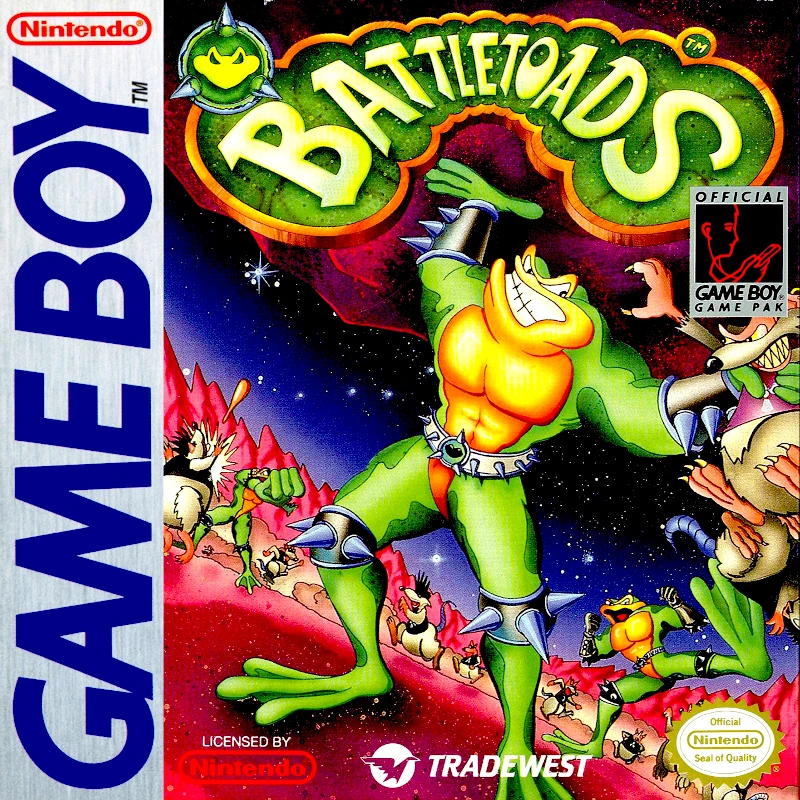
#88. – Battletoads
I expected this to be a port of the first Battletoads. As usual I was wrong. Rare gave us an all new adventure here. It’s more custom tailored to the Game Boy which I’m thankful for. Why did they re-use the name and boxart? I’m guess they’re lazy. I can relate. Regardless Battletoads is a lot of fun even on the go. The amount of work they put into making this one an original title is commendable.
Rare didn’t completely re-invent the wheel here. Battletoads still plays like its predecessor. It’s a 2D beat ’em up game where you play as muscular humanoid frogs, and they’re out to beat up everything that moves. Punch them enough and they fly off the screen. It’s as simple as that. Wait, there’s more. You have several stages where you ride vehicles. These are still hard as all heck, but rewarding to finally beat. Battletoads is a treat on the Game Boy, and in some ways I think it’s better than its console big brother.
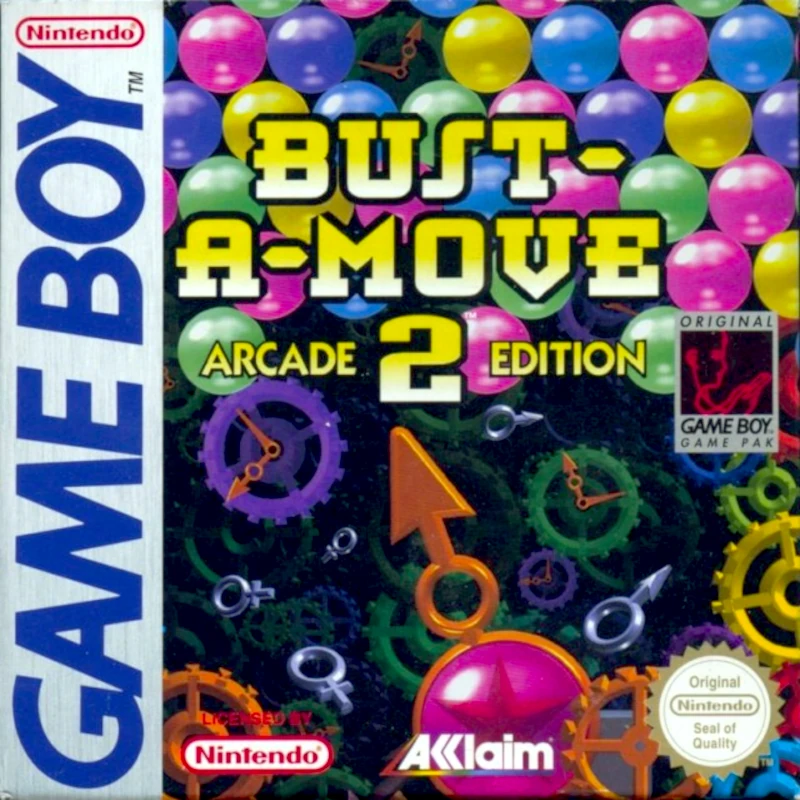
#87. – Bust-a-Move 2: Arcade Edition
Believe you me we’re going to be talking about Bubble Bobble in this list. For now we’re starting with its spin-off puzzle title. The Game Boy was the perfect home for this type of game. Minus the color limitations of course. Developers found ways around this issue for Bust-a-Move so there’s little to complain about here.
In Bust-a-Move 2 you play as the cute little dinosaurs from Bubble Bobble. This time they’re managing a catapault/cannon type thing at the bottom of the side view screen. It can be manipulated to aim left and right and everywhere in between. Using this you fire bubbles upward aiming for like patterned circles. When enough of these touch they’re eliminated. It’s a fun game, and very little is lost in the experience with the conversion to the Game Boy. Due to the emphasis on short bursts of playtime I’d almost say it’s more enjoyable here on the little screen. Bust-a-Move 2: Arcade Edition feels right at home on the original Game Boy.
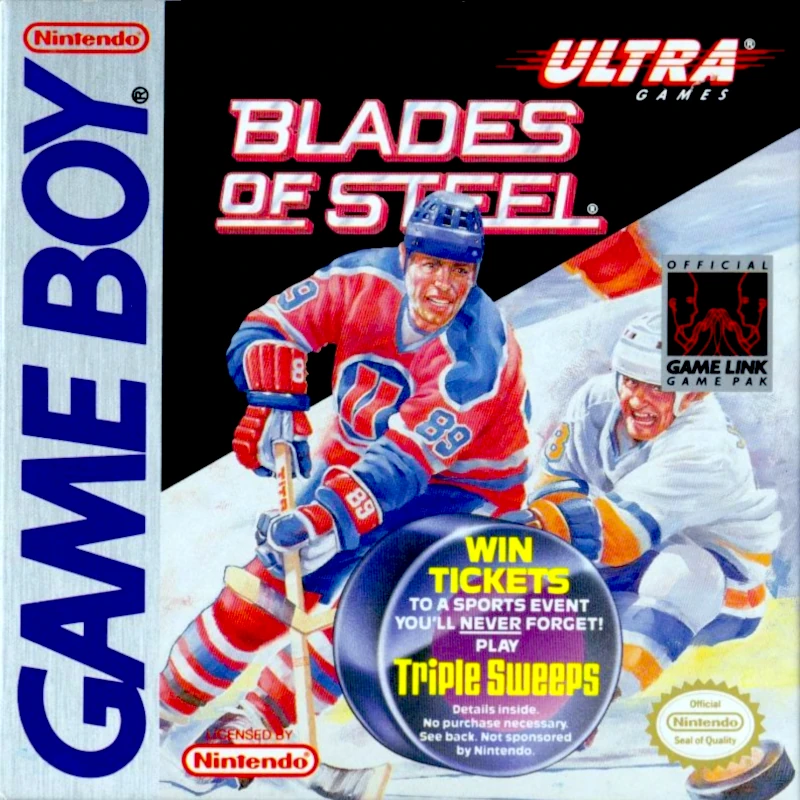
#86. – Blades of Steel
I’ve been called a lot of things, but a sports game enthusiast is not one of them. I don’t hate them. There’s just so much more that I like better. It’s hard to deny just how fun Blades of Steel is. This fast paced hockey game retains most of what made the NES version so enjoyable. Yes, that includes the infamous fight mini-games. Blades of Steel stands out as one of the best NES ports to Game Boy in my opinion.
It becomes abundantly clear right away that this is kind of a barebones sports game. There aren’t a lot of different options. It’s definitely not a hockey sim, that’s for sure. What it does have is surprisingly fast gameplay that’s very smooth for the hardware. Even with the limited color display I never had an issue figuring out who was on what team, or even where the puck currently was. It plays well, and that’s what matters. Plus you can duke it out with another character after repeated clashes. You punch it out until there’s a winner, and they get control over the puck. While it’s hilarious I absolutely loved this feature.
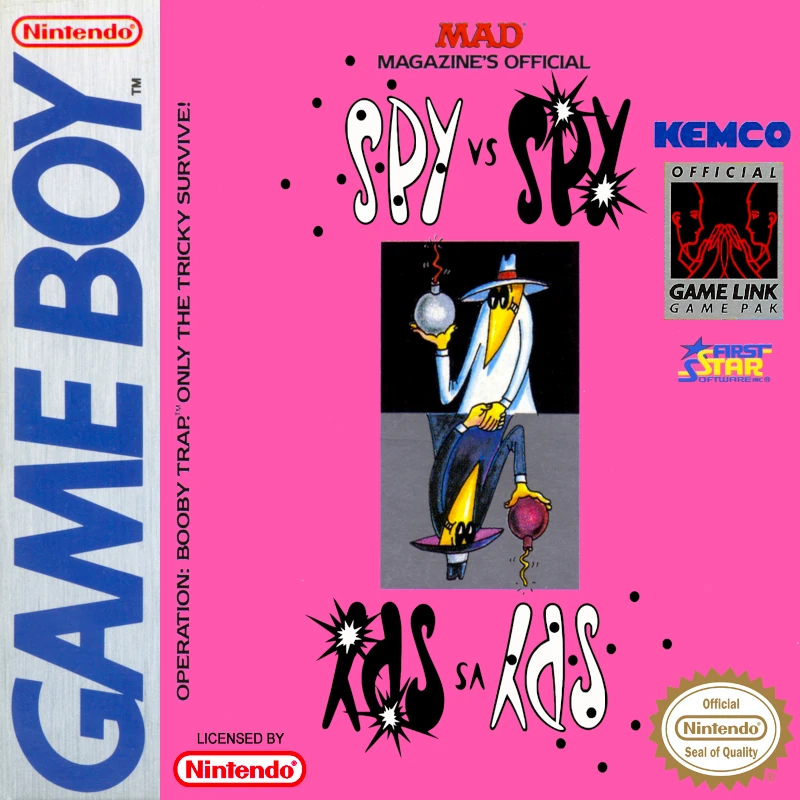
#85. – Spy Vs. Spy: Operation Boobytrap
I know it’s not a popular opinion, but the original Spy Vs. Spy is one of my favorite games on the NES. I was beyond excited to see that there was a Game Boy conversion. Unfortunately it’s just not the same. For one thing there’s no more split screen action. Oh and there’s a weird tropical theme going on. I’m not sure why they picked that, but hey, what do I know?
Spy Vs. Spy: Operation Boobytrap is based on the original premise. There’s some twists though. Not all of them are good. Your goal is to find five puzzle pieces in each stage and reach the exit before you opponent. That sounds pretty similar, right? Because the room based set up of the original is gone it’s a little more awkward. It’s also too easy to fall into the water which causes instant death. Regardless I still had a fun time with this one. It feels like Spy Vs. Spy, but isn’t nearly as fun or polished.
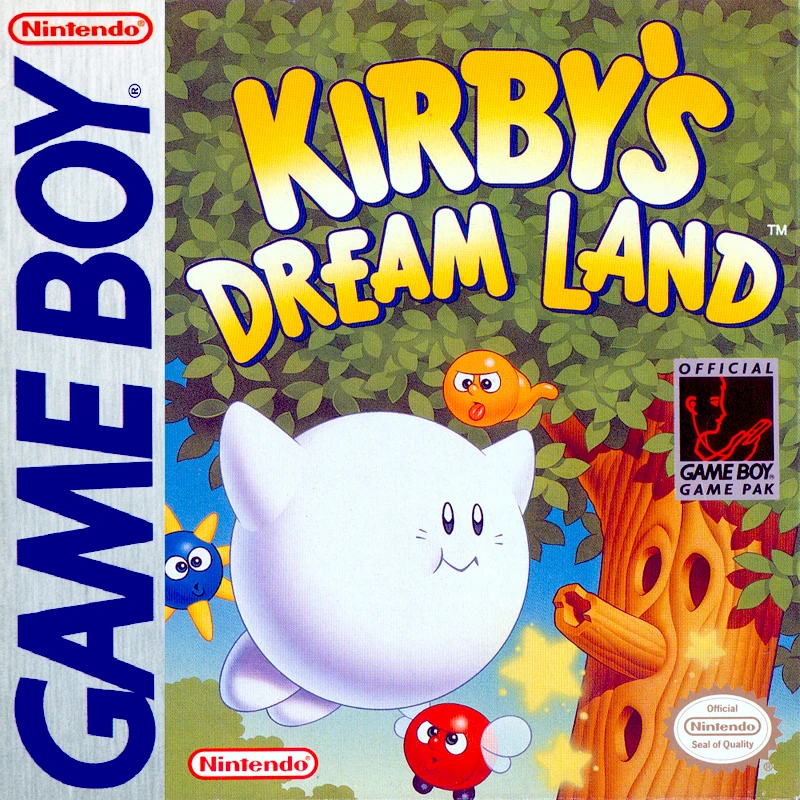
#84. – Kirby Dream Land
Whoa now. What’s a Kirby game doing so low on the list? Kirby Dream Land was the pink guy’s first outing. Back then he was actually white. Hard to imagine, huh? Dream Land predates many of our favorite mascot character’s abilities. He can still float in the air and eat enemies. Unfortunately he cannot absorb their powers. That’s why Kirby Dream Land isn’t that great. With just his base abilities the game is really basic and easy. There’s just not a lot to it.
Even despite being such a basic platformer the game still has that classic Nintendo polish. Because his powers aren’t in place yet you have to dispatch most of the foes by sucking up enemies and spitting them out. The level designs are good, but again, very basic. Kirby Dream Land is a step above most platformers on the system, but our little guy has since seen better days. If you’re a big time Kirby fan this one is worth playing. Otherwise you can safely skip it.
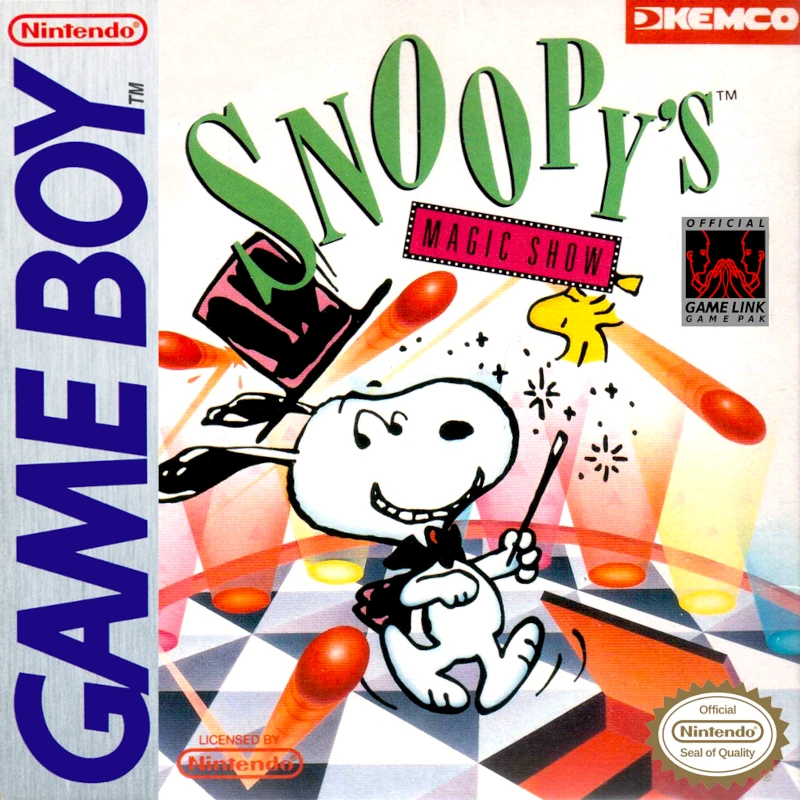
#83. – Snoopy’s Magic Show
I, for one, love the Peanuts characters. Charlie Brown, Snoopy etc all hold a special place in my heart. The franchise hasn’t really had much of a presence in the realm of video games over the years though. Honestly it never seemed like it would lend itself particularly well to this entertainment medium. It’s a comedy comic strip aimed at kids. I could see a platformer being churned out from one of the movies, but it never really happened. Now we’re going to talk about one of the few Peanuts games released.
It’s Snoopy’s Magic Show, and unfortunately I can’t think of a worse use of the license. Outside of the player taking control of Snoopy, and collecting Woodstock icons it’s hardly representative of anything Peanuts. Fortunately it’s a good game. You guide Snoopy through several single screen stages as he avoids a bouncing ball while rescuing Woodstock. There isn’t much more to it. That’s the game. Thanks to some clever puzzles and stage layouts it’s surprisingly addictive. I still laugh at the fact that there’s no magic, or even show, and Snoopy’s just there to be there. The title is deceptive to say the least.
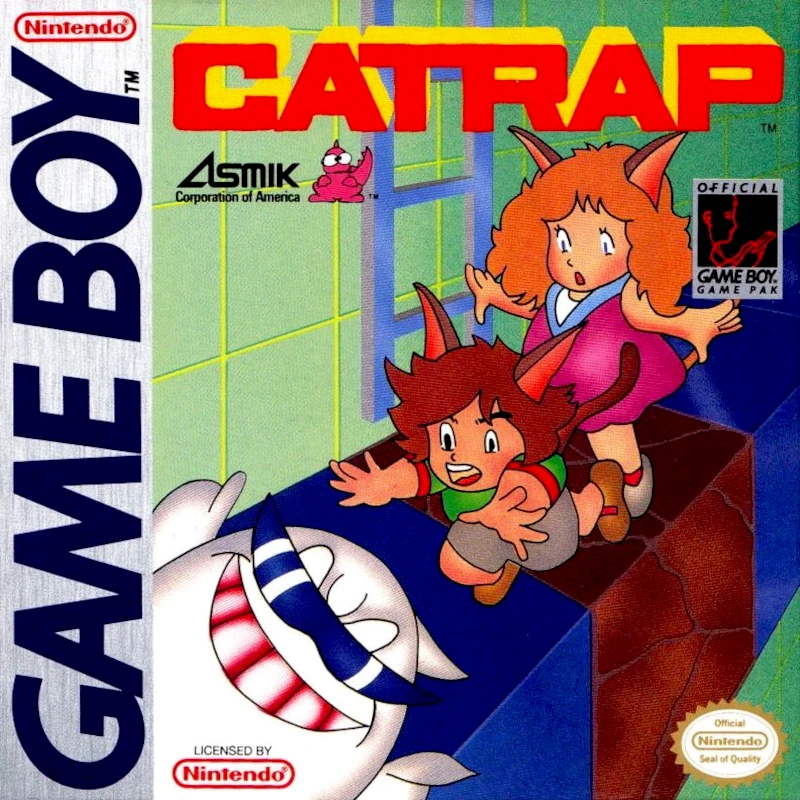
#82. – Catrap
I’m not a fan of cats. I like cat-people even less. It’s not difficult to put my differences aside for a game that’s as good as Catrap. It has both of these things. Catrap is awesome in spite of this. This is an early Game Boy game that seems more advanced than most releases at the time. It’s a side scrolling puzzle/platformer with some really unique level designs.
In Catrap you play as both a cat-boy and cat-girl. They switch out between stages. Your goal is to defeat all enemies in any given area. These levels however are full of obstacles. Some of them require use of your noggin to get past. This is a puzzle game, after all. You can destroy some terrain elements by running through them ala Wario. The level designs are really creative and I enjoyed most of them. There are one hundred stages so that’s a good thing. Catrap is definitely a hidden gem on the platform.
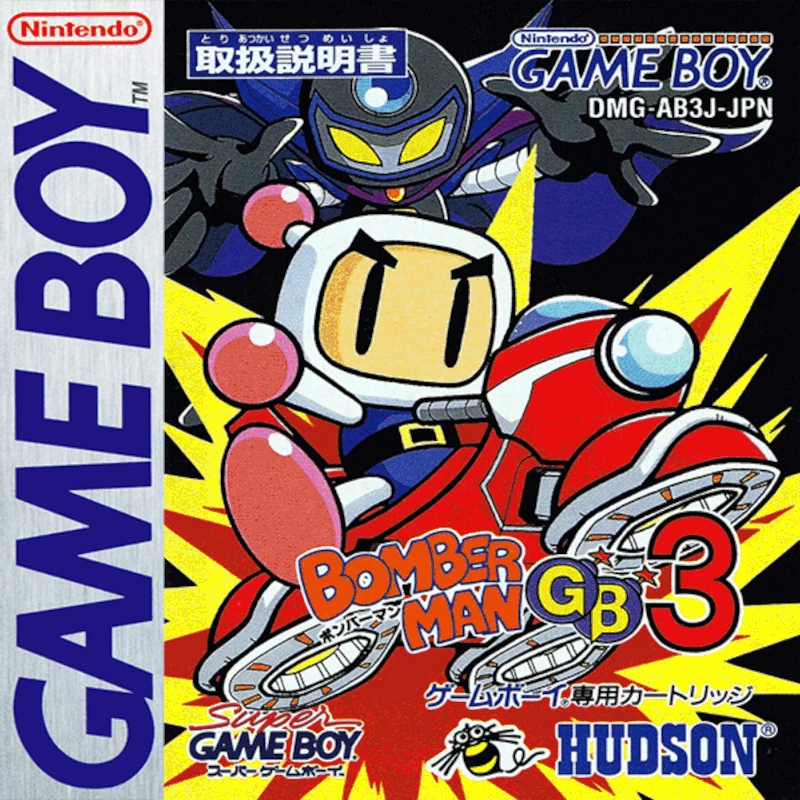
#81. – Bomberman GB3
The second game in Hudson’s handheld line of bomber guys was a departure thematically for the series. The result was a little weird. It was a solid adventure though. Bomberman GB3 ditches this motif. Instead it looks like classic Bomberman. It doesn’t really play like it though. If there’s one thing Bomberman needs its variety. GB3 delivers this, and more.
Bomberman GB3 has all of the classic standards of the series. From an overhead perspective you guide the titular hero around 2D mazes. Your only weapon is an endless supply of bombs that you drop. These explode in a plus shaped pattern, and are used to both defeat enemies and destroy obstacles. What sets this one apart is that single player progression is based on completing objectives. Sometimes you’ll have to defeat all the enemies, collect items, etc. The game is 35 levels long and this helps to break up the action. It’s a shame that Hudson left this game in Japan because it’s one of the better Bomberman games.
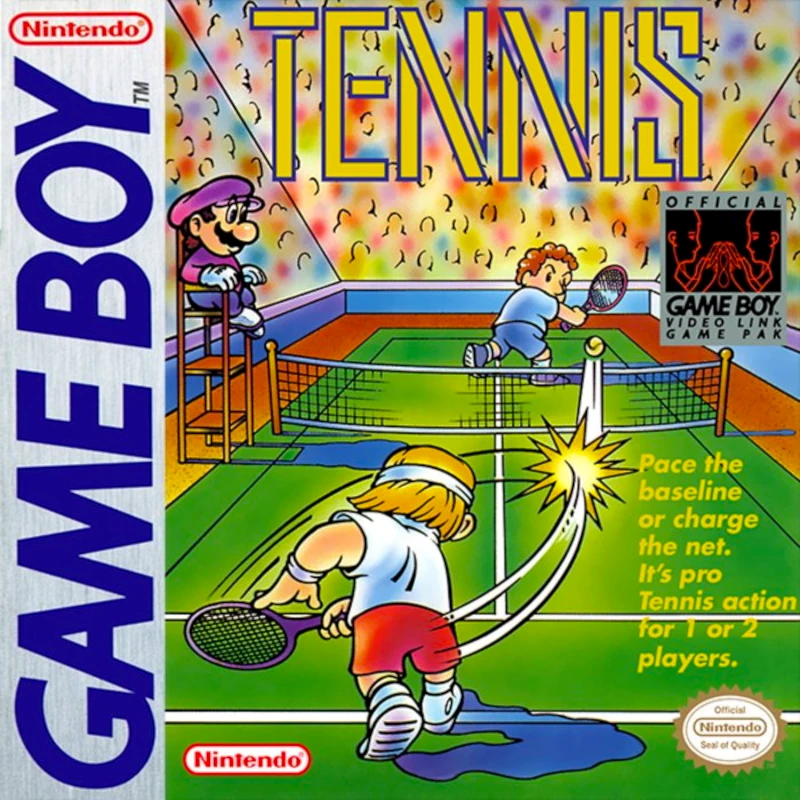
#80. – Tennis
I already went into my disdain for sports games. I don’t keep this secret. Tennis is an outlier for me. I’m not a big fan of the sport in real life, but in video games it can be amazing. That’s the case with Tennis on the Game Boy. It’s clearly based on the NES version which I spent countless hours in. This one plays a little more slowly, but it’s just about as fun. Plus, Mario is the referee. That’s long before he starred in his own sports lineup.
If there’s one complaint I have it’s that Tennis doesn’t have a lot of options. It’s just Tennis. For better or worse. Unfortunately multiplayer didn’t make it into this version. Perhaps the gameplay is too fast paced for the low data exchange rate with the link cable. Regardless I found plenty to like about the solo play here. The perspective is also really good with a semi overhead view of the field and players. It’s very easy to see and play. Tennis might be barebones, but it’s still quite good.
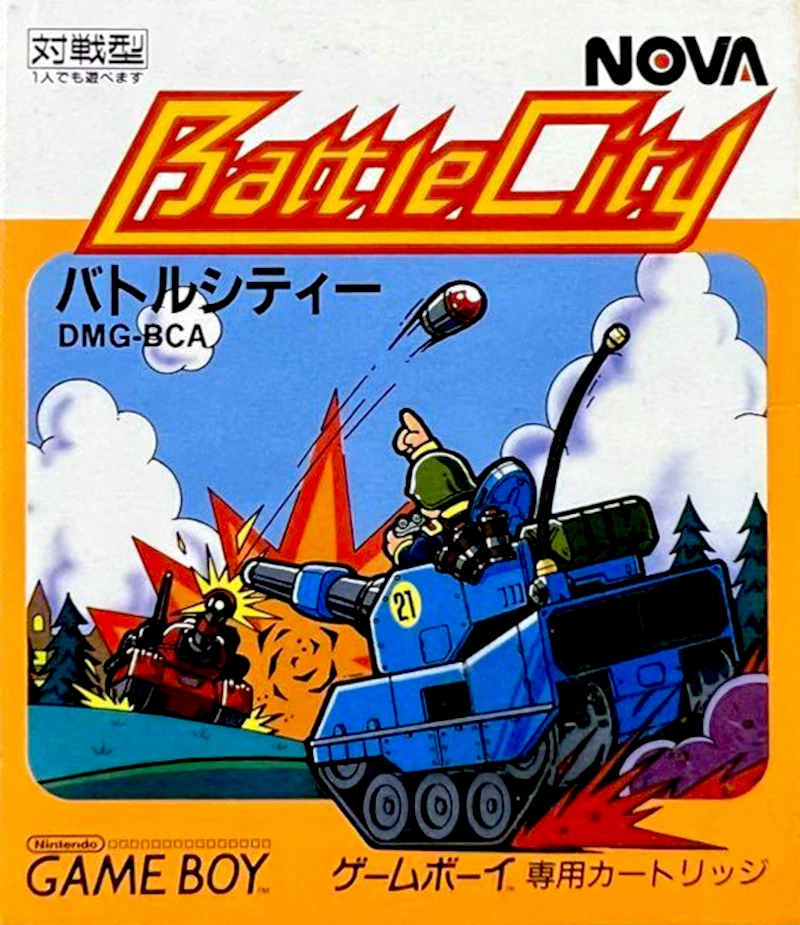
#79. – Battle City
Here’s another multi-directional tank shooter on the Game Boy. Those were pretty popular, eh? This one was made by Namco so you know it’s got to be good. Unfortunately they didn’t think it was great enough to localize. Surely North American audiences would have gotten a kick out of Battle City, but alas, it can only be acquired via import. It’s a shame because the pick up and play style of gameplay perfectly suits on the go sessions.
Battle City, as I’ve already mentioned, has you commanding a tank. You traverse various enclosed arena style stages using an overhead view. Your goal? Take out the enemy tanks. Things start out easy enough with opponents that require just one hit to destroy. As you progress through the thirty five stages things get progressively more difficult. Enemies can take more hits, and their patterns are more aggressive. What I really liked about this one was the destructible environments. You can blast through walls with ease. This helps get the jump on unassuming tanks. This is a fun one that’s worth checking out.
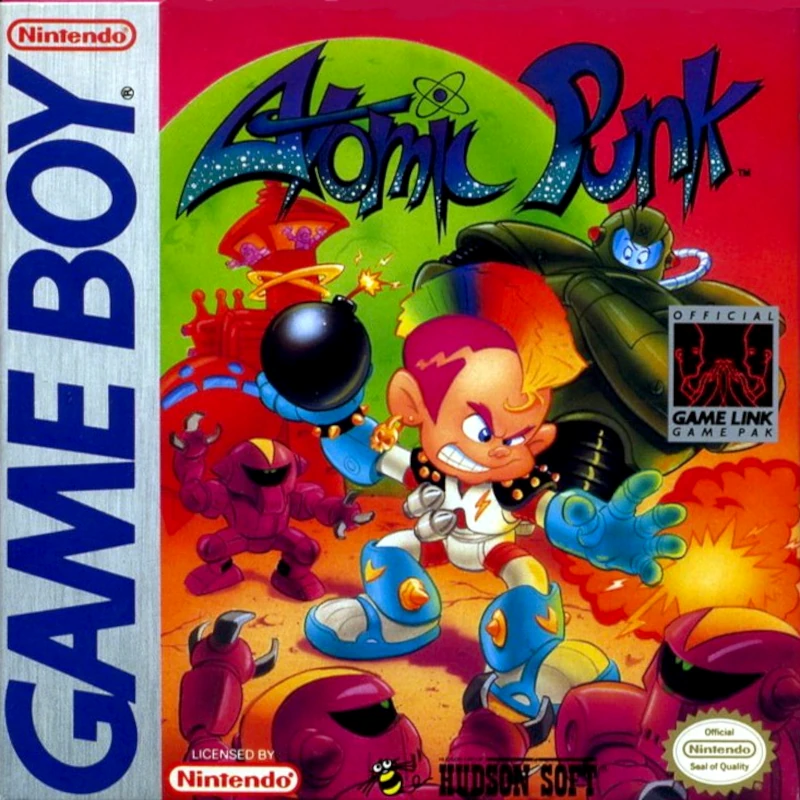
#78. – Atomic Punk
Throughout time Hudson has made some questionable decisions when it comes to Bomberman. Atomic Punk is one of the big ones. Just what does it have in common with Bomberman, you may ask? Everything. It’s Bomberman in everything except name, and the boxart. Even the in-game graphics make it clear. I really don’t get why they decided to rename this one. It’s even more surprising that it had a different name in every region it was released. Just let Bomberman be Bomberman. Let him live his life.
It’s interesting to note that this was actually the first Bomberman game released on the Game Boy. This version plays very much like its console counterparts, but with a few twists. Your goal is still to defeat all of the enemies, and you do so by placing bombs which explode in plus shaped patterns. What’s new here is the panels. These offer slight changes to gameplay, and you are allowed to choose which one you want to use in each stage. It’s a decent idea, but the execution is a bit subtle. Those looking for a pure form of Bomberman on the Game Boy need look no further.
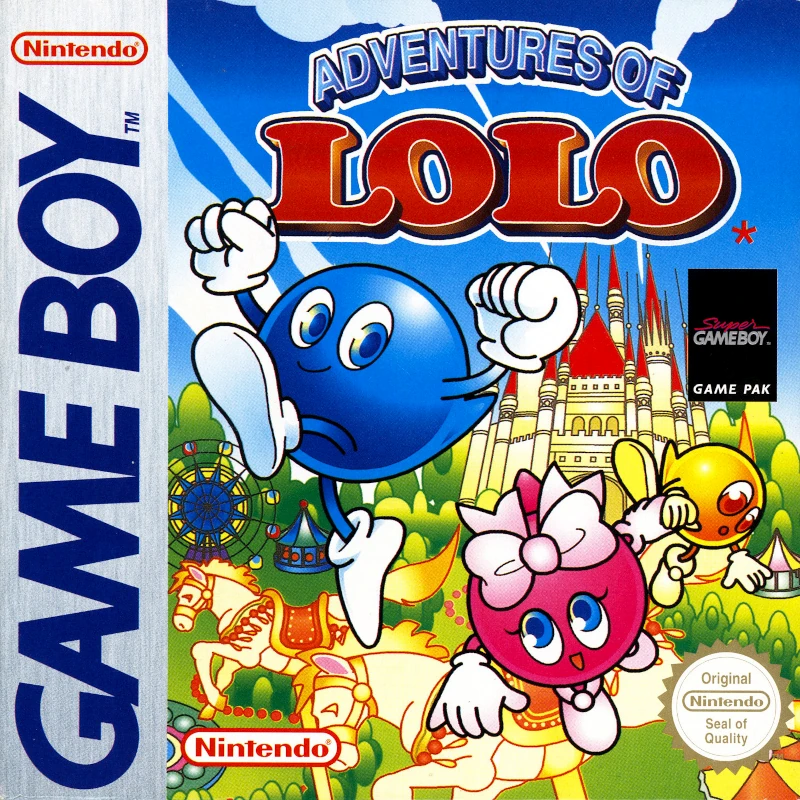
#77. – Adventures of Lolo
This is another game that was never released in North America. It’s based off the hit series of the same name, and these titles were an institution on the NES. Here it had no less than three outings. The Game Boy outing is an original game with some light changes and a few welcome additions. It was brought to Europe so it’s still playable in English. I’m not sure why they went this route, but hey, let’s roll with it.
Despite having the same name as the NES release this is an all new adventure. That means original puzzles and level designs. The basic premise is the same though. You control Lolo. He’s an anthropomorphic ball with eyes, and a big heart. That’s just my assumption though. Your goal is to push blocks around, neutralize enemies, and collect three hearts in each level. It’s easy enough in the beginning, but the difficulty eventually ramps up. At times I even had to put on the trusty old thinking cap. It’s a fun and charming game, and fans of the franchise will want to play this one.
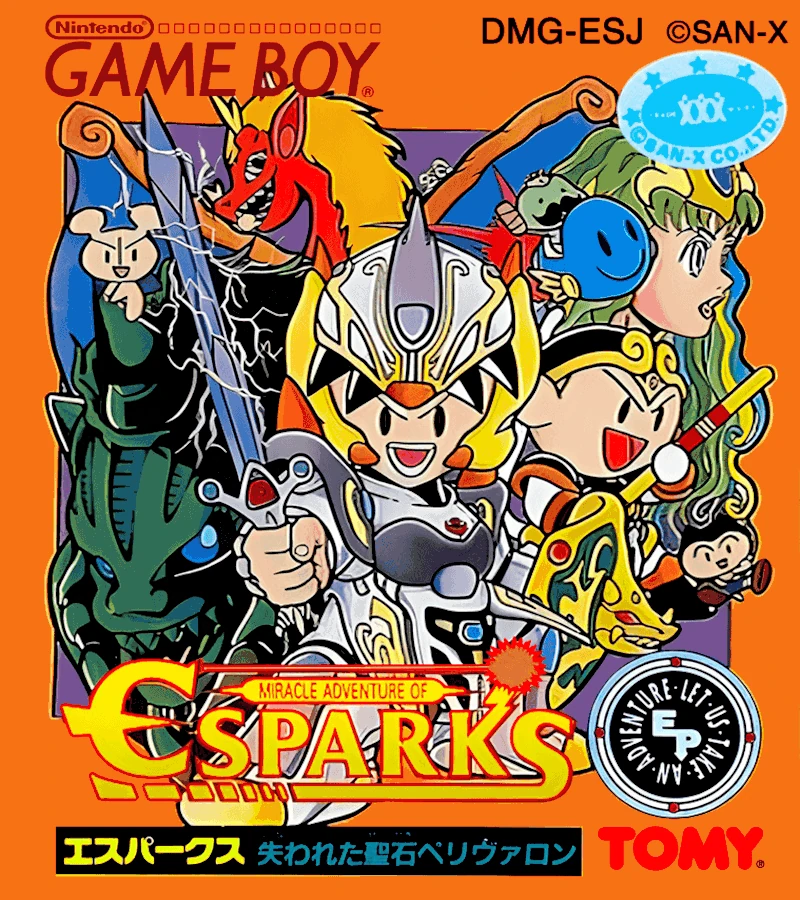
#76. – Miracle Adventure of Esparks
I know, we’re leaning pretty hard into the imports for this list. I promise they’re all good. Miracle Adventure of Esparks is no exception. It’s a side scrolling action platformer. You play as a cute little knight armed with a sword against an army of whimsical foes. You aren’t helpless though. This weapon can fire multiple types of beam shots at enemies. The level designs are interesting and it’s a treat to see everything Esparks has to offer. It also doesn’t hurt that the graphics are fantastic.
Miracle Adventure of Esparks is a clear step above most platformers on the system. You have a variety of different enemy types and obstacles to overcome. My favorite part of the game however is that in specific stages you ride on the back of a dragon that flies through the sky. Here gameplay feels more like a shooter, and we need more of that. In this sense it kind of feels like the original Kid Icarus, but trust me when I say this game is better. If you’re looking for something a little different, but familiar at the same time, then Miracle Adventure of Esparks has your number.
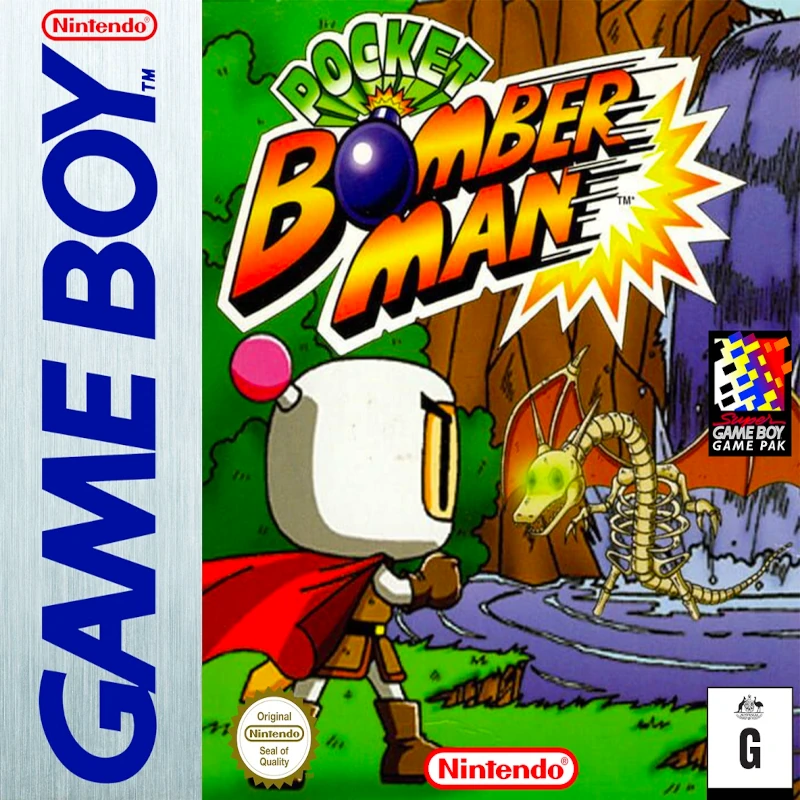
#75. – Pocket Bomberman
Yes I know. Most gamers who played this one probably did so on the Game Boy Color. The game was released on one of those nifty dual purpose cartridges. That means you didn’t have to fork out money for the superfluous new handheld iteration. Neat, huh? Bomberman was no stranger to the Game Boy at this point, but for this release Hudson tried something new. Hey, platformers were all the rage. Why shouldn’t Bomberman get in on the fun?
In case you didn’t already guess it this is a 2D side scrolling platformer. It shouldn’t work. I mean, Bomberman’s slow paced gameplay doesn’t sound like an ideal fit for a more action oriented game. Somehow it does though. Bomberman can run, jump, and of course drop explosives. Initially I was worried that playing the waiting game would be boring. I mean, these take some time to blow up. It’s actually not a problem. It makes Pocket Bomberman play differently from your typical platformer. I might be alone in saying this but Pocket Bomberman is one of my favorite installments in the series. As far as the original Game Boy goes that is.
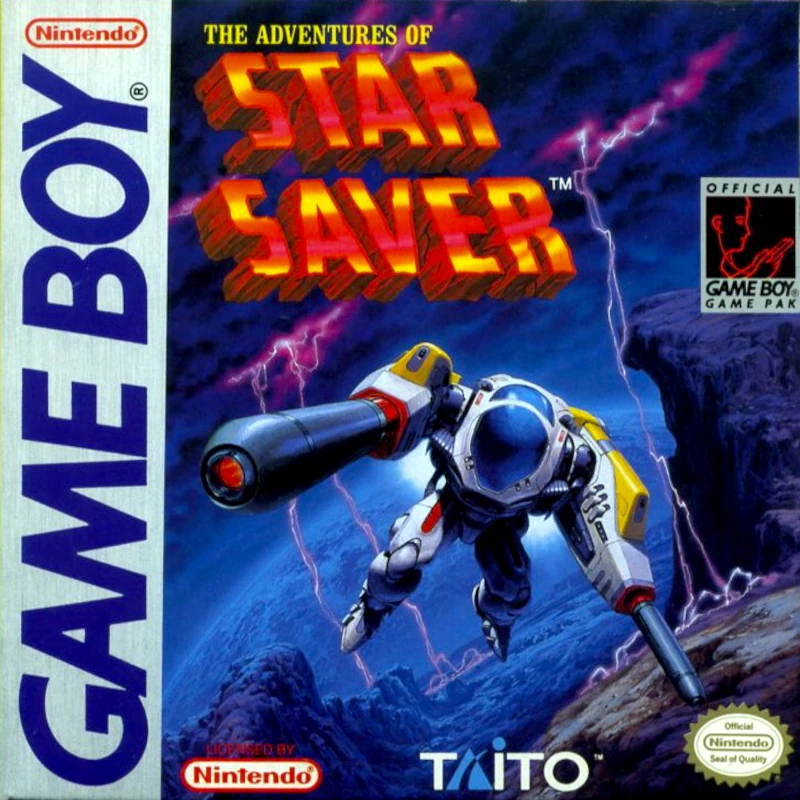
#74. – Adventures of Star Saver
The world needs more mech games. There’s something rewarding about blasting foes to smithereens aboard giant robots. Adventures of Star Saver is one of these titles. It’s easily one of the best Game Boy games that no one played. I get it. The title makes it sound like a shmup. We had enough of those, and on more powerful hardware. I’m thankful that this turned out to not be the case.
Adventures of Star Saver is a 2D side scrolling action game. You play as a child piloting a mech robot. This can jump, and shoot. You know, the basic abilities in just about any video game from this time period. The main difference is that when you take a hit you have to continue on foot. Your character has largely the same abilities, but they’re weaker, and you can no longer collect power-ups. It’s a neat idea, and it works well here. The level designs are highly enjoyable with some well placed enemies and obstacles. Even the platforming works well. That’s not something you’d expect from a game where you ride around in a giant robot, but here we are.
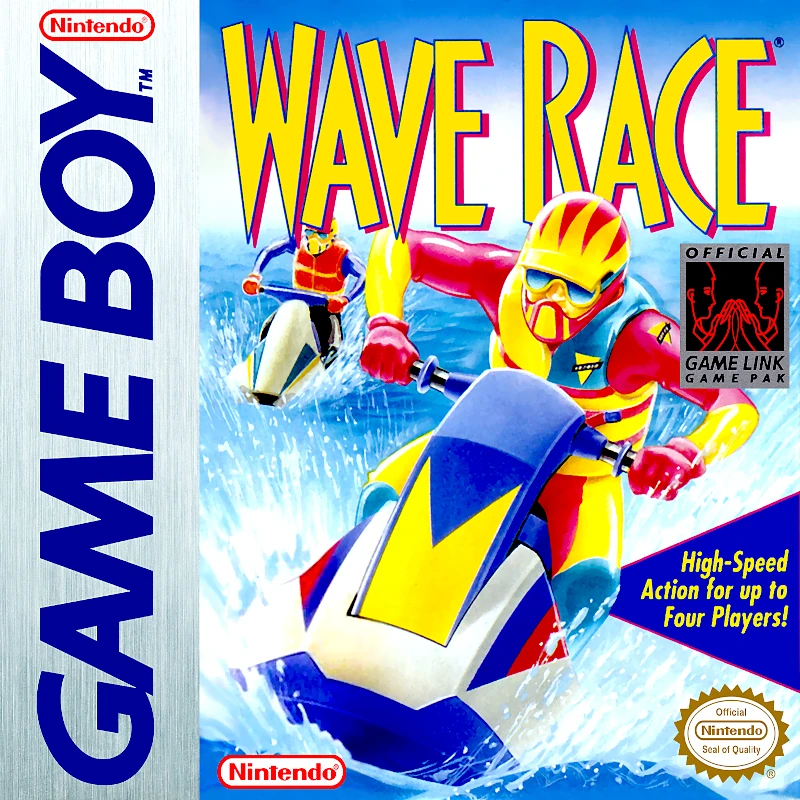
#73. – Wave Race
Remember Wave Race 64? Now that was a good game. It was a great showcase for the Nintendo 64 hardware near launch. It still tops many gamers lists as one of the best N64 games. I was surprised to learn that it wasn’t the first game in the series. Wave Race on the Game Boy actually predates it. This is surprising considering almost no one has played the handheld iteration. I mean, it wasn’t exactly a showstopper like it’s console counterpart so it makes sense.
I’ll start off by saying that the Game Boy version isn’t nearly as good. It’s not bad by any means, but it uses an overhead perspective. That isn’t exactly immersive. Gameplay is largely the same and has you racing around water based tracks aboard jet skis. In the basic mode you have to race against other players whilst passing through posts littered throughout each course. This adds an extra layer of tactics to play because you can’t simply whip around at top speed and expect to win. The overhead view is a little awkward at first but I was able to get used to it. After that I discovered Wave Race to be a competent, and fun racer on the Game Boy. Plus, jet skis. They’re definitely more fun than cars.
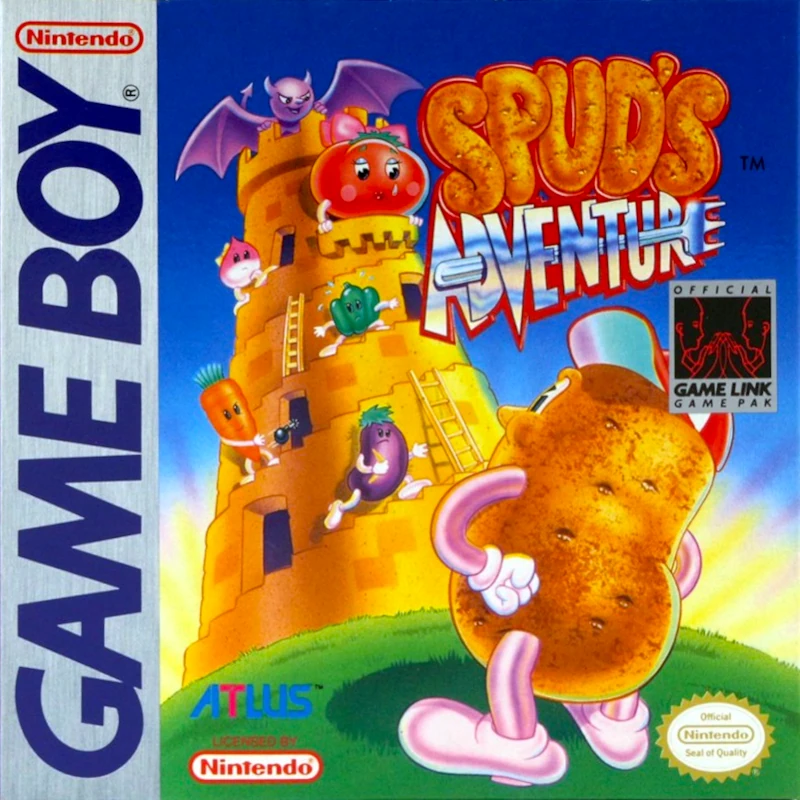
#72. – Spud’s Adventure
I never thought I’d enjoy a game where you play as a potato, yet here we are. Spud’s Adventure has you playing as everyone’s favorite kind of stem tuber (I thought it was a root vegetable too) in an action RPG setting. Your goal is to reach the top of a massive tower that’s filled with enemies and puzzles. It’s not a very friendly place. Especially for a vegetable. This is a strange game no doubt. It’s also a really fun one that’s a true blue Game Boy hidden gem.
The game is played from an overhead perspective. It’s basically a light role playing game focused around action and puzzles. Your primary attack involves shooting full size (in game, of course) potatoes at the enemies. You gain experience from doing so, and eventually levels. This is how you get stronger. The puzzles can be a little easy to solve, but combat is surprisingly fun. I also really enjoyed the level designs in this one. If you’re hungry for something you probably haven’t played before then Spud’s Adventure is the perfect solution. Don’t be a tater and give this one a try.
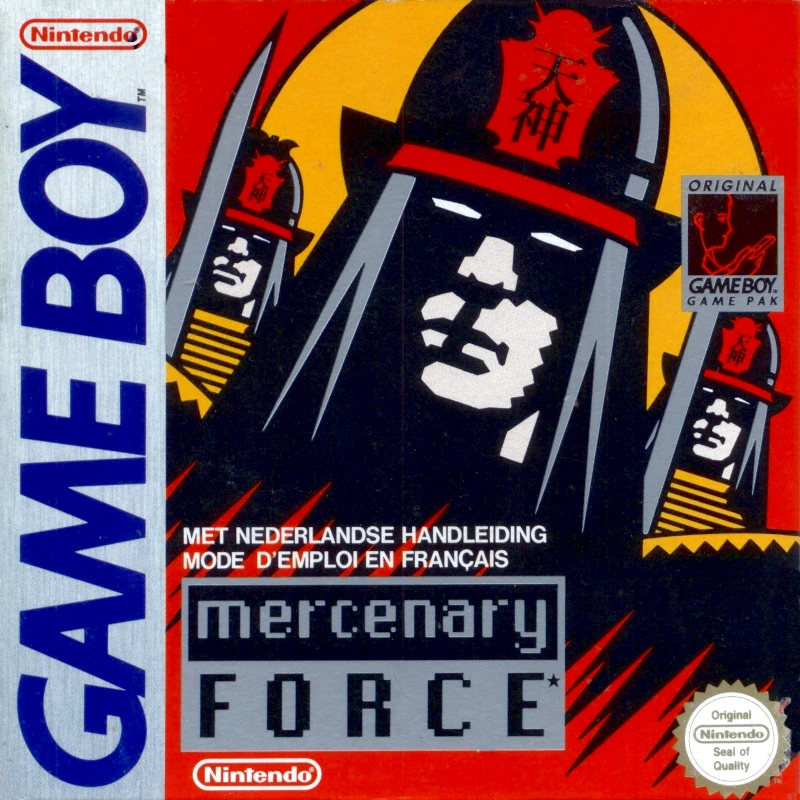
#71. – Mercenary Force
I love weird shooters. The stranger the better as far as I’m concerned. Mercenary Force fits this bill. It’s a shmup, but rather than piloting a spaceship you are instead given charge of a group of four different mercenary characters. It’s strictly two dimensional, and played from a side view. The characters march forward in tandem and fire a variety of different shots. They each have a different projectile with separate trajectories and even directions. It’s a unique system that works really well here.
What I love about this one is how different it is. Each of the characters has a different number of lives, and each time they’re hit you lose one. When they run out that guy is out of commission. While they always move in a general squad set-up you can change their formations to better suit your need. It’s really interesting because you have to pay attention to the location of each of these characters while dodging enemy fire, and of course, whilst you fire back. Mercenary Force is super unique, and never quite found its audience.
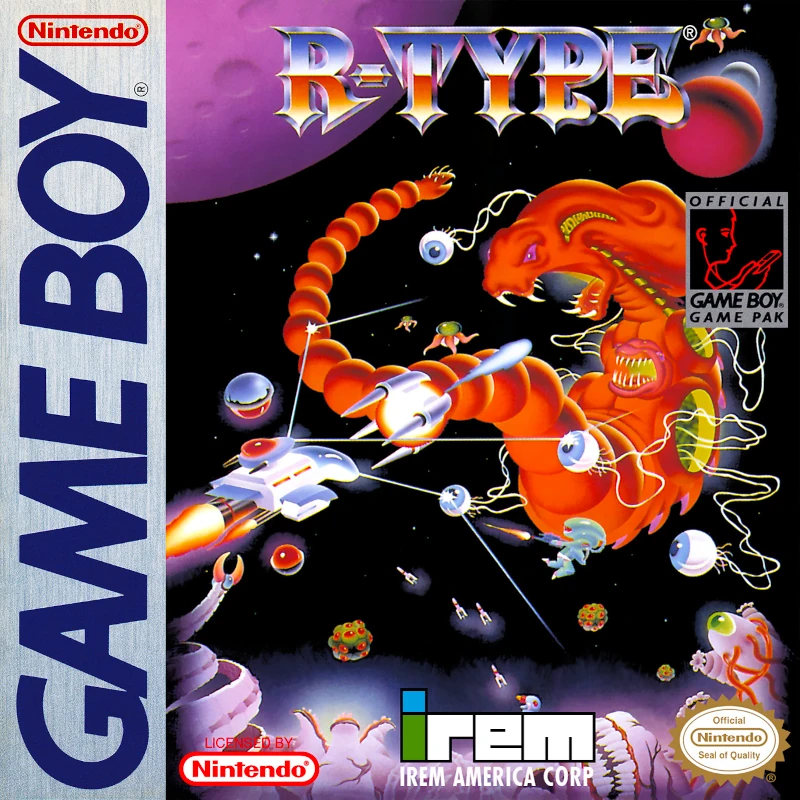
#70. – R-Type
In case you didn’t already know R-Type is a legendary shooter series from Irem. It has since largely died out, but for a time it was one of the big boys. In arcades it was king, but it also had several home console ports. Today we’re talking about the Game Boy edition. The developers opted not to create an original entry in the series and instead scale down the original version to fit on the handheld. The results are actually pretty good. Sure, this one pales in comparison to the console experience but hey, R-Type is R-Type.
The first thing you’ll notice about R-Type is that it’s a slower paced more methodical shooter than its contemporaries. This hasn’t been changed with the move to the Game Boy. Another major difference is that you have an attachment for your ship called the force. While attached it provides various types of shots in addition to the regular pea shooter. You can unhook it however and at this point it functions more like a traditional option in most other shmups. The game is challenging, and a lot of fun. The only problem I have is that there are less enemies, and everything is more difficult to see. It still feels like R-Type.
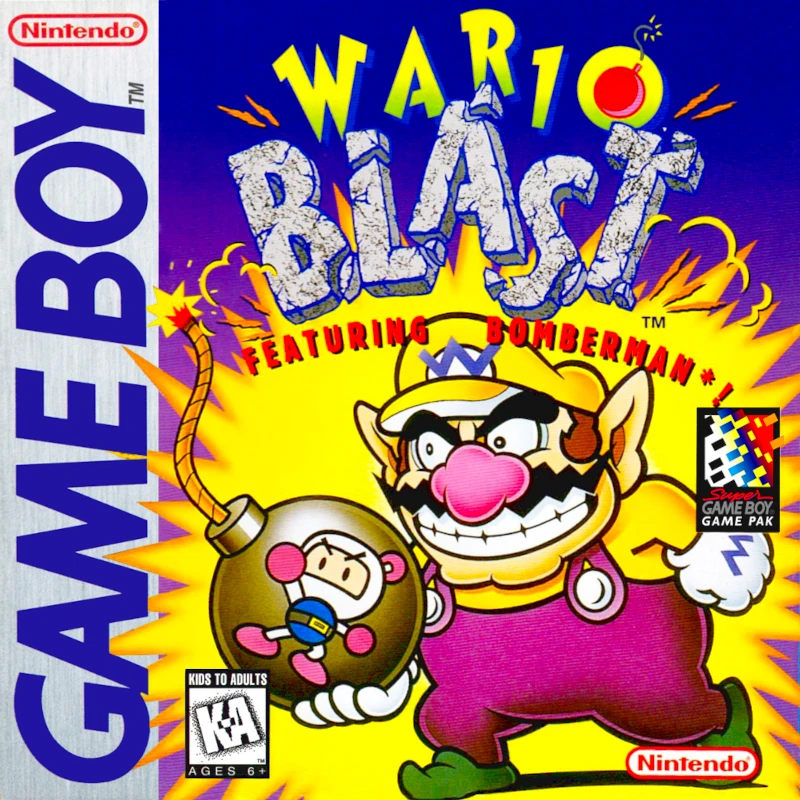
#69. – Wario Blast: Featuring Bomberman
Hudson really tried naming their Game Boy Bomberman games anything to try to sell more copies, didn’t they? Wario Blast is not a Wario game at all. It’s just Bomberman GB (as it was released in Japan) with Nintendo’s anti-hero thrown into the mix. I’m not sure that’s better. Nintendo’s character has very little to do with Hudson’s premier franchise, and he just feels out of place here. Regardless it’s still a solid Bomberman game, and I kind of enjoyed having Wario around. He just represents a change in graphics, but it’s still a fun idea.
Wario Blast plays like your traditional Bomberman game. That’s why I prefer it to the others on the platform. It didn’t really mix in gimmicks. It’s just plain old vanilla Bomberman. Or Wario. Whichever you choose. You progress through a variety of stages battling against other bombermen and when they’re wiped out you win the match. I liked how you could gain permanent abilities such as bumping enemies or kicking bombs, and they stuck with you between levels. It’s also amazing that you can play this one multiplayer using the Super Game Boy. I love crossovers, and this is a neat little Bomberman game with that twist going for it.
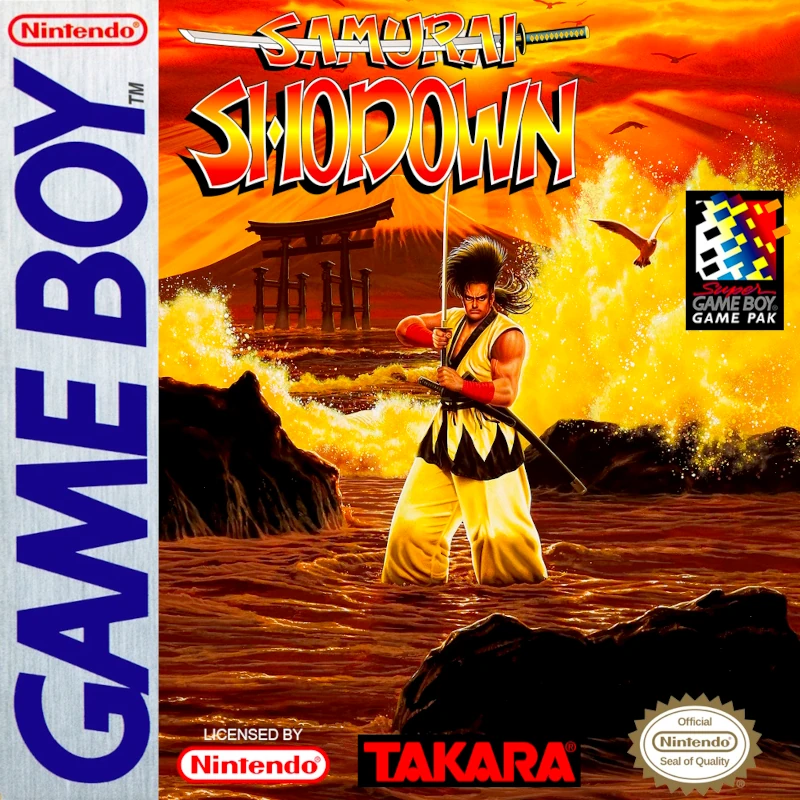
#68. – Samurai Shodown
Let’s face it. The Game Boy was hardly known for having good fighting games. They do exist, but these are far and few between. Samurai Shodown is one of these exceptions. It’s even better that this one is a weapons based fighter. Fortunately the developers didn’t simply try to cram the original game on the handheld. We saw how well that works out with the abysmal port of Street Fighter II. Instead they scaled it down, and played more on the platforms strengths. It’s all the better game because of this.
Samurai Shodown is still a 2D fighter, but some major changes have been made. Of course all of the blood and gore has been completely cut down. The fighters don’t even look like their usual selves. Instead they’re chibi versions. It looks downright cute. Despite the new visual style this still plays and feels like Samurai Shodown. You have twelve fighters to choose from, and most of their special moves return. Combos aren’t easy to pull off due to the game’s choppier animation, but the fighting engine is surprisingly solid. Samurai Shodown is a winner.
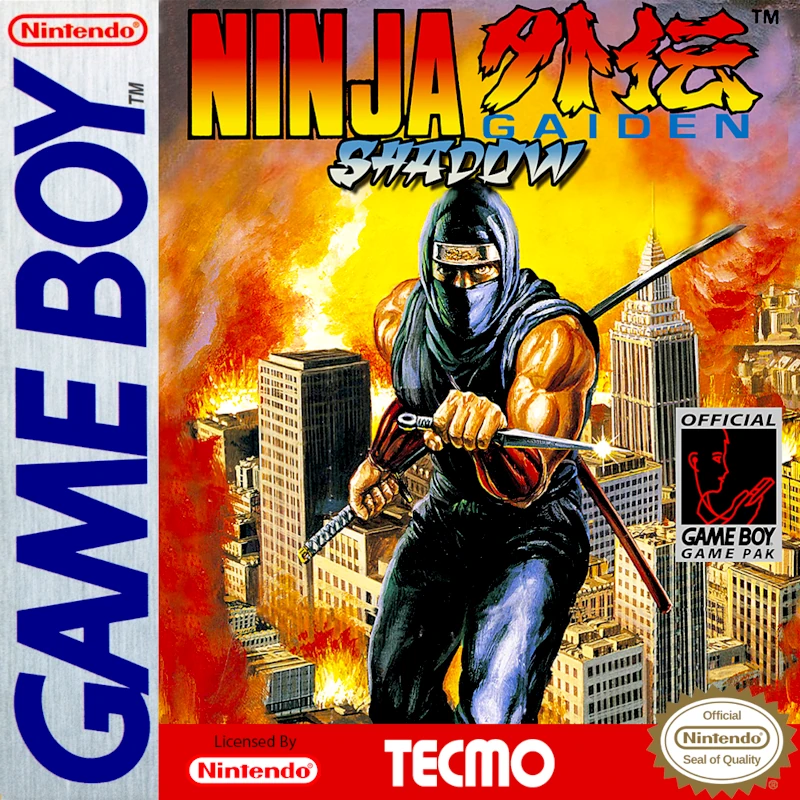
#67. – Ninja Gaiden Shadow
There was a Ninja Gaiden game on the Game Boy? Yep, there sure was. This one was made by developer Natsume. That’s not usually a name you connect with quality, but in this case, it’s good. Unfortunately the gameplay had to be dialed back quite a bit. Despite this it still feels like Ninja Gaiden. At least a little. This one is largely it’s own thing set to the backdrop of the franchise. It’s also very pretty. I was seriously surprised that the Game Boy could keep up with the action. It looks better than most of the NES Ninja Gaiden games in my opinion.
So what was tuned down here? For one thing Ryu Hayabusa can no longer cling to, and jump off of walls. This is a major downside. Ryu’s acrobatic techniques basically made these games. You are also missing the optional weapons as well. It might sound like Shadow is a major bummer, but surprisingly that’s not the case. The level designs are actually really good. There’s a nice amount of variety included here. Much moreso than in most Game Boy titles. Ninja Gaiden Shadow might be a little weird for the franchise, but it’s a worthwhile prequel.
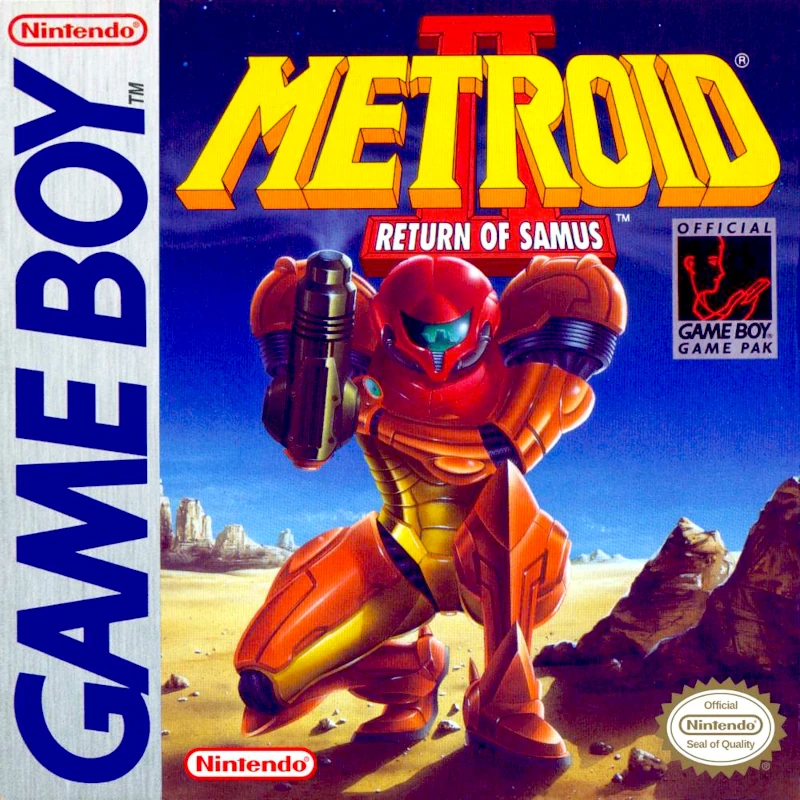
#66. – Metroid II: Return of Samus
I’m not a big fan of Metroid. There, I said it. I have no nostalgia for these titles. They were the games we would play at friends house, and quickly give up on. I have more appreciation for them now, but I don’t love the series. Still the quality of Metroid II is undeniable. The fact that Nintendo was willing to put a mainline sequel on the Game Boy is a testament to the effort they put into this title. Metroid II is good. This is one of the standout titles on the platform.
Despite the move to less powerful hardware this feels like a true sequel to the original. It’s no mere spin-off, nor is it an afterthought. It lives up to the name of Metroid II. It’s a 2D action side scrolling platformer with a focus on exploration. You will want to check out every nook and cranny because more often than not the way forward isn’t always the most obvious path. Gameplay is fun, and Metroid II introduced some of the most interesting power-ups to the series. Spider ball, I’m looking at you. The game itself is not second rate. Nintendo put a lot of effort into this title.
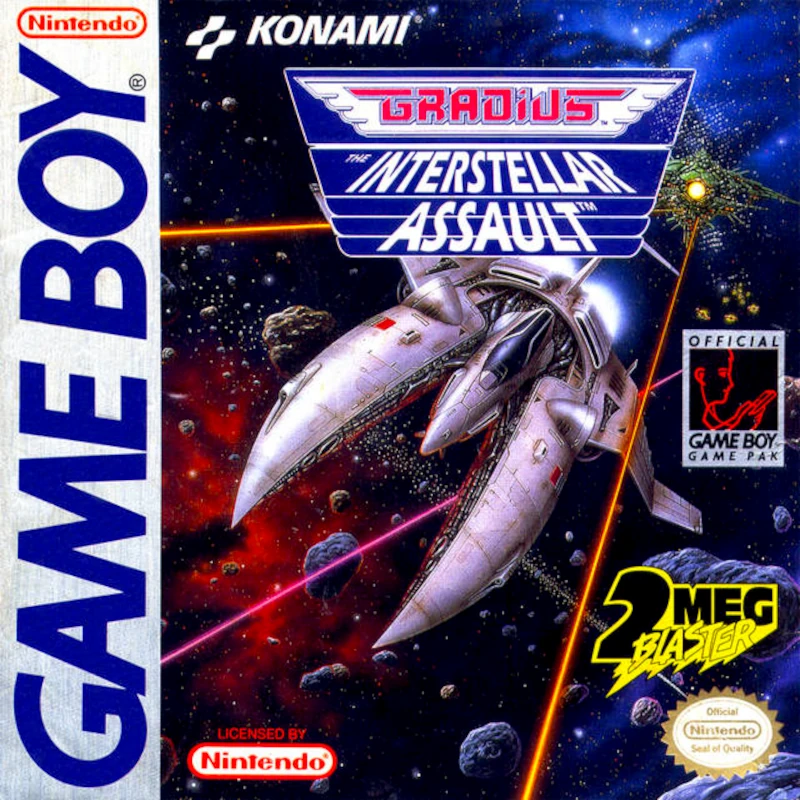
#65. – Gradius: Interstellar Assault
Wow, Konami finally had the guts to call Gradius what it actually is. At least in North America. They stopped being weird about it with Gradius: Interstellar Assault. This game is one of the best shmups on the platform. It doesn’t exactly re-invent the wheel though. If you’ve played any Gradius before then you know what to expect here. It’s a side scrolling shooter wherein you play as the classic Vic Viper ship, and it’s your job to take down an army of aliens. So what’s a lone ship to do against an armada of flying aliens and their ships? Blow up everything that moves, of course.
What else can I say except this one is definitely Gradius. You still power up your ship’s weapons in the same manner. This is done by collecting power-ups, but their effects are not automatic. You can actually save these up for more powerful upgrades. The level designs here are particularly relentless. You are never given a moment of peace. I absolutely loved it. The game is also helped by having an incredible soundtrack, and decent graphics. If you’re going to play one Game Boy Gradius make sure it’s this one. Forget all about that ‘Nemesis’ nonsense.
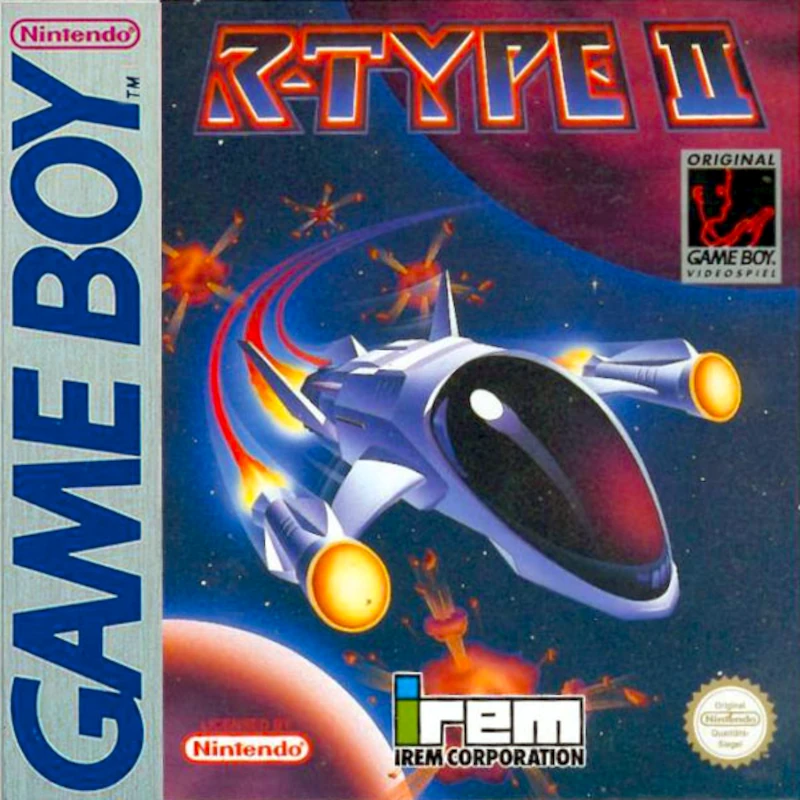
#64. – R-Type II
It’s really interesting to see how developers managed to downport their titles to the Game Boy. Take R-Type II for example. It was incredible in arcades. Clearly it wasn’t something the vanilla Game Boy could handle on its own. The developers here had to cut some of the graphics, enemies and stages. The gameplay is there however, and that’s what’s matters. It’s R-Type II. Just not quite as good. That didn’t matter much to gamers that wanted the novelty of playing it on the go though.
Like the original this title is a side scrolling shmup. The major gimmick here involves a ship attachment. When hooked into your craft you can use a multitude of different weapons. When you separate it this functions more like a traditional option. R-Type II features all new courses, bosses, and introduces a few new interesting weapons to the mix. It’s very impressive visually. Yes, it has some flicker and slowdown, but that’s to be expected at this point. I was dumbfounded at just how technical some of the bosses are. Not only are they huge but some feature a lot of moving parts. It looks incredible on the small screen.
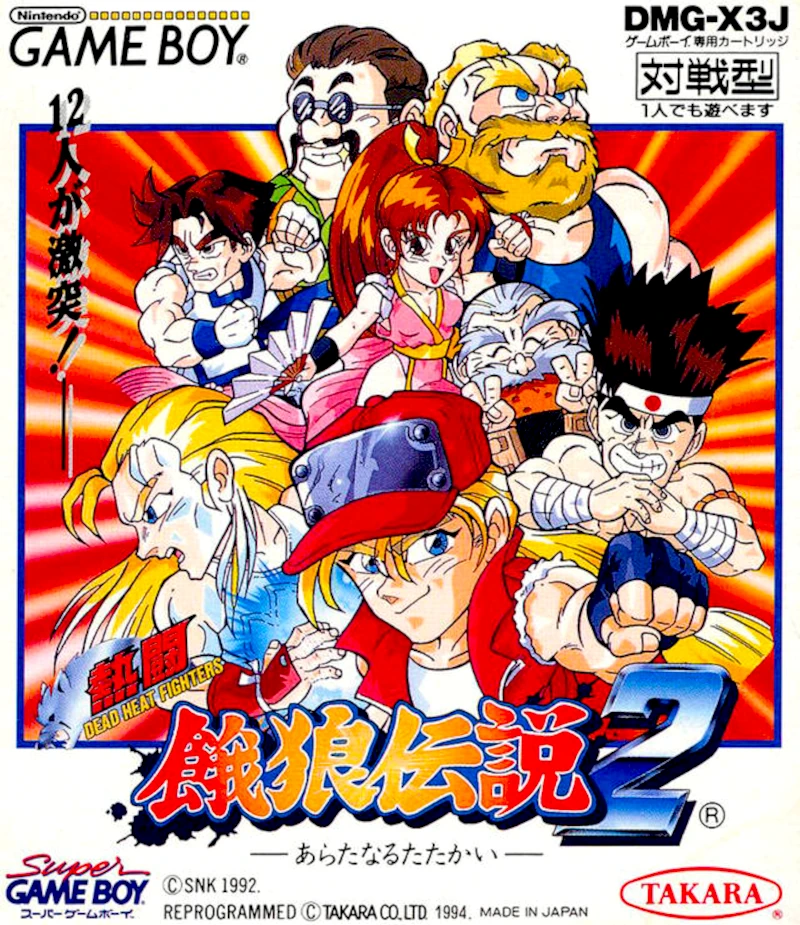
#63. – Netto Garou Densetsu 2: Aratanaru Tatakai
SNK was putting in work back in the 90s. Their fighters are some of the most revered of that age, and I absolutely appreciate them. They weren’t just stuck on the Neo Geo either. Third party developers often licensed and ported these titles to more popular hardware. That includes the Game Boy. The results were often mixed. Fortunately Netto Garou Densetsu 2: Aratanaru Tatakai (that’s Fatal Fury 2 to us uncultured heathens) was amazing on the Game Boy.
Obviously the hardware wasn’t up to the task of re-creating the entire game. The developers here took the smart route of overhauling the graphics engine. Now the characters are chibi designs. Many special moves were cut, but as a veteran Fatal Fury fan I was still able to jump right in. The gameplay is a little slow paced, and it’s far from a smooth experience. It’s still Fatal Fury though, and for me, that’s good enough. I really like the way the little characters look, and some of the animations are really impressive. The gameplay is flawed, but fun. If you like Fatal Fury then this import is a perfect collectors piece. Don’t just leave it on the shelf though. It deserves to be played.
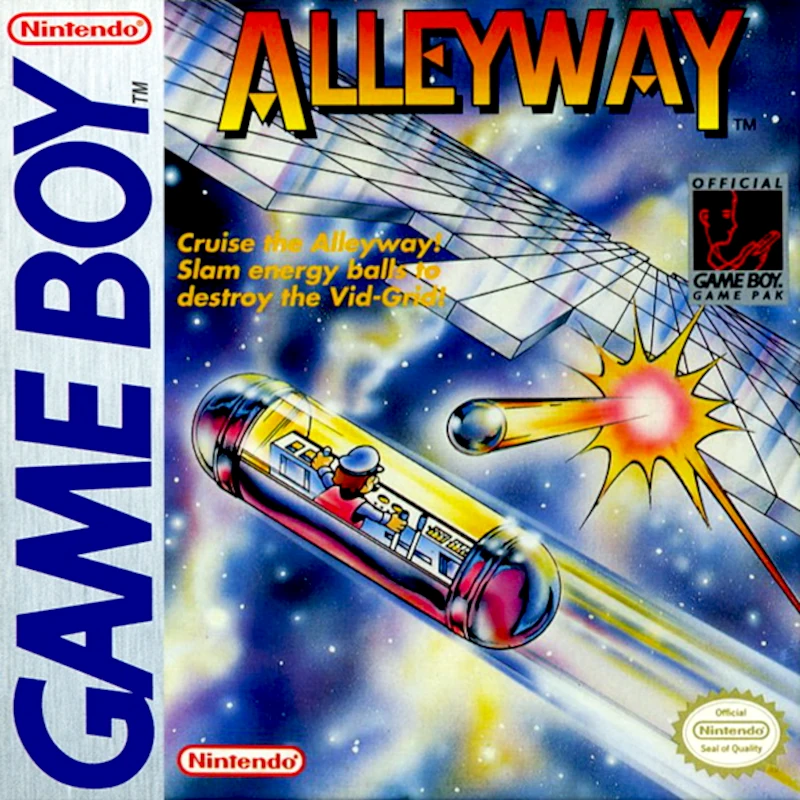
#62. – Alleyway
This one is a straight up Arkanoid clone. There aren’t a lot of additional features, nor does it have a lot of separate game modes. This is just basically Nintendo’s take on the classic arcade game. The thing is it’s really good. The source material was nothing to scoff at, but Nintendo does it even better here. I’m not even just talking about polish. As an early Game Boy game Alleway is decidedly lacking in that front. Sure, Mario’s here, but even he doesn’t do much to save the day. It’s the solid mechanics and great level designs that do the heavy lifting here.
Alleyway plays just like Breakout/Arkanoid. I mentioned it’s a clone of those games, and that’s not a lie. You control a paddle at the bottom of the screen. Or, it’s a ship. Oh and Mario is the pilot. Your goal is to eliminate all of the blocks on-screen. You do so by knocking a ball back and forth. If it reaches the bottom of the screen you’re done for. What makes this one really interesting is that some of the stages have moving blocks. It entirely changes the dynamics. Alleyway may not be terrible original, but it is quite good.
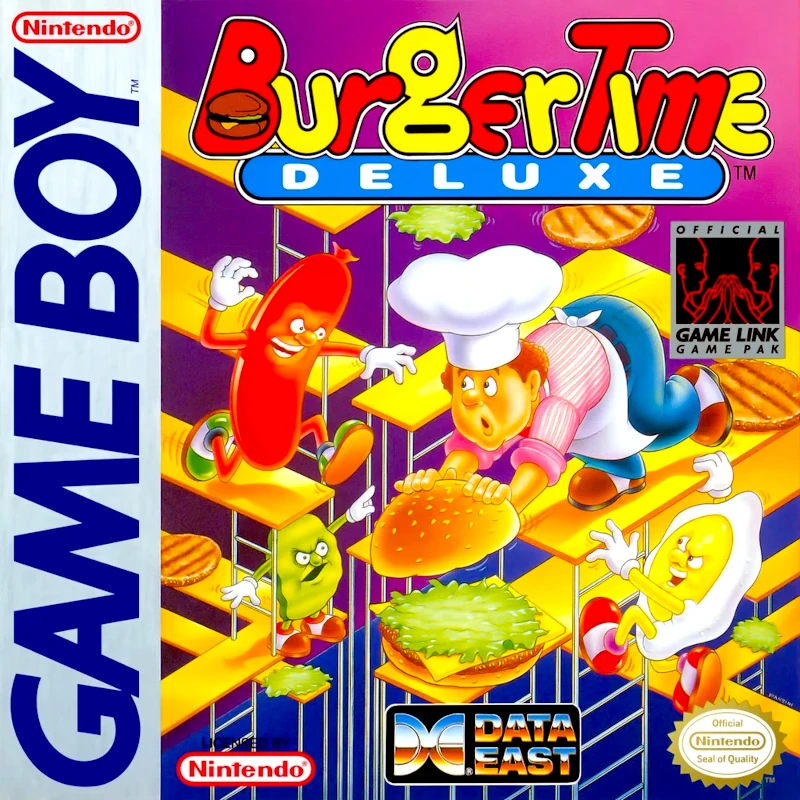
#61. – Burgertime Deluxe
I’m no stranger to hamburgers. Just ask my wife. So a video game about them should be right up my alley, right? Correct. Burgertime is fantastic in the arcades and on home console. I wasn’t even worried about the Game Boy version. I knew that fighting off enemy hot dogs and building burgers would translate perfectly to the handheld. It never looked like anything the little portable couldn’t handle, and the platform was perfect for older arcade ports. As you might be able to guess (based on it’s placement on this list) Burgertime Deluxe is awesome.
What surprised me is that this isn’t a mere port. It plays and looks like the original, but it has all new stages, and guess what? They’re good. The gameplay is also improved. In my opinion Deluxe is better than the original release in arcades. There’s more polish here, as well as a greater range of variety. This one is also quite a bit easier. Nothing’s worse than getting ransacked by a mob of angry hot dogs. They aren’t as efficient this time around, and therefore less unfair. Purists will scoff at this Deluxe release, but Burgertime fans who can’t get enough of the frantic fast food gameplay will love this one. There’s no better Burgertime than now to check this one out.
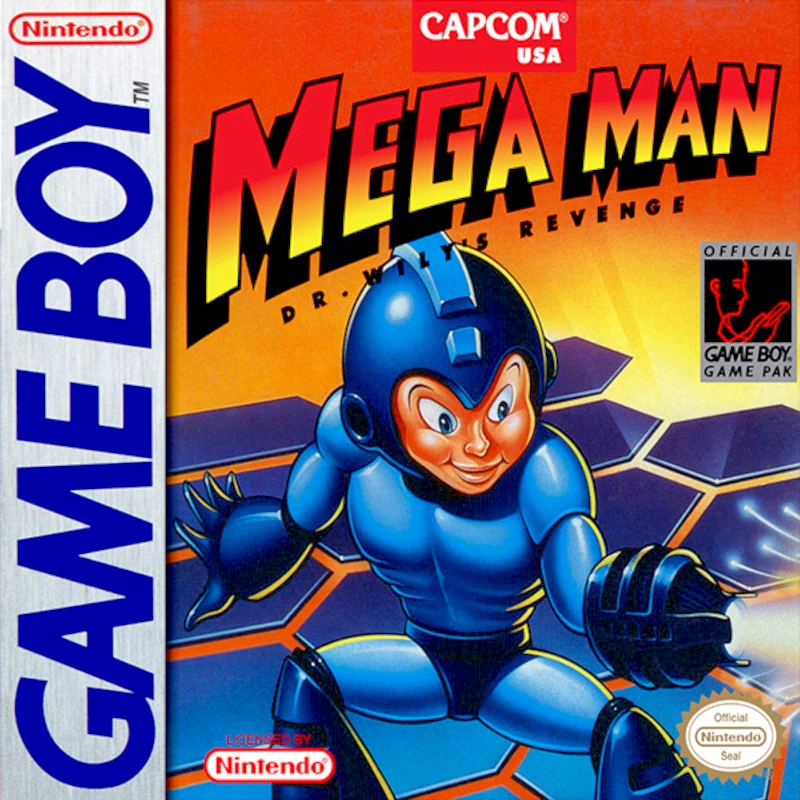
#60. – Mega Man: Dr. Wily’s Revenge
Capcom was not one to shy around from sequels. Or even releasing all of their games on every platform available. The Game Boy was one of their favorite targets. Hey, I’m not complaining. I love their games after all. With Mega Man: Dr. Wiley’s Revenge they took a different route. Instead of simply porting over the original adventure they instead opted to combine the first two Mega Man games into one remixed adventure. Does it work? Yes. Is it as good as the NES games? Unfortunately, no.
Dr. Wily’s Revenge feels too toned down to me. You can only select from four different robot masters at once. The first set is from the original game, and the next are ripped out of the sequel. The issue is that only the first gauntlet feature their own stages. The remainder of the game just consists of the bosses themselves. That’s lame. Still, it’s Mega Man and the borrowed content is carefully re-created. I just wish they didn’t cut out so much. Clearly the Game Boy could have handled it. This is just Capcom being Capcom. Boo.
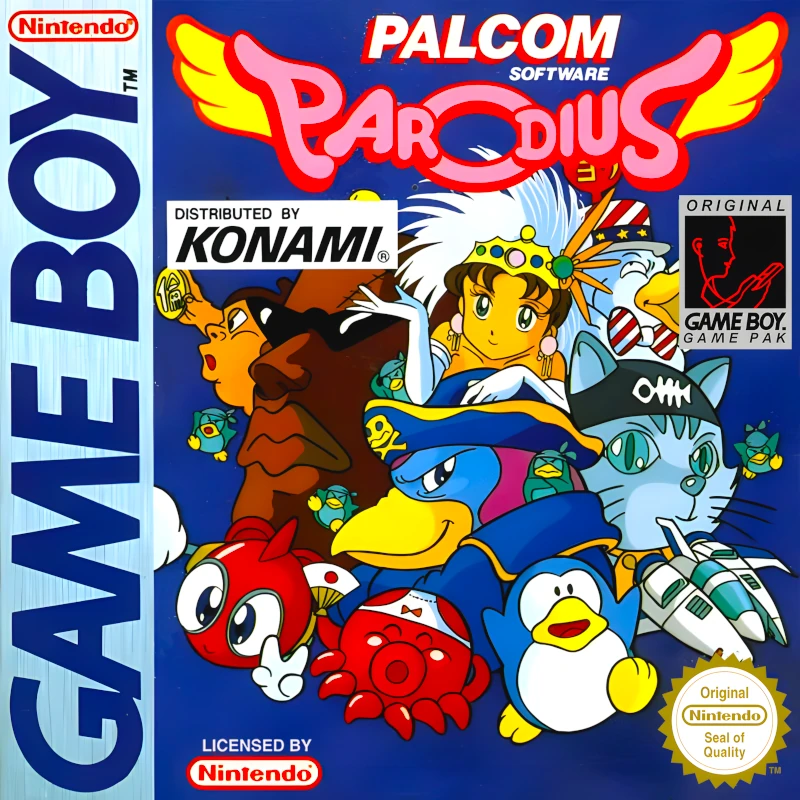
#59. – Parodius
For some reason Konami always thought North America couldn’t handle Parodius. Nearly every version came out in both Japan and Europe with us statesmen left feeling snubbed. It’s a well named joke on a number of different franchises under their belt. The focus of the jokes are however on Gradius. Like its source material this is a side scrolling shooter. It utilizes the same amazing power-up mechanics from that title as well. It’s basically Gradius, but weird, and I’m all in with it.
This Game Boy port does the original arcade release justice. It plays very similarly with the same stage layouts, characters and enemies. There were a few changes made. Mostly this just includes a few cuts. You’ll find less stages in this handheld iteration, and some of them have been re-arranged. It might not be the best port of the game, but it’s portable. That was enough. Parodius isn’t as hilarious as the developers clearly thought it was, but the game is cute. It’s also fun, and looks amazing in motion. Parodius is quite good.
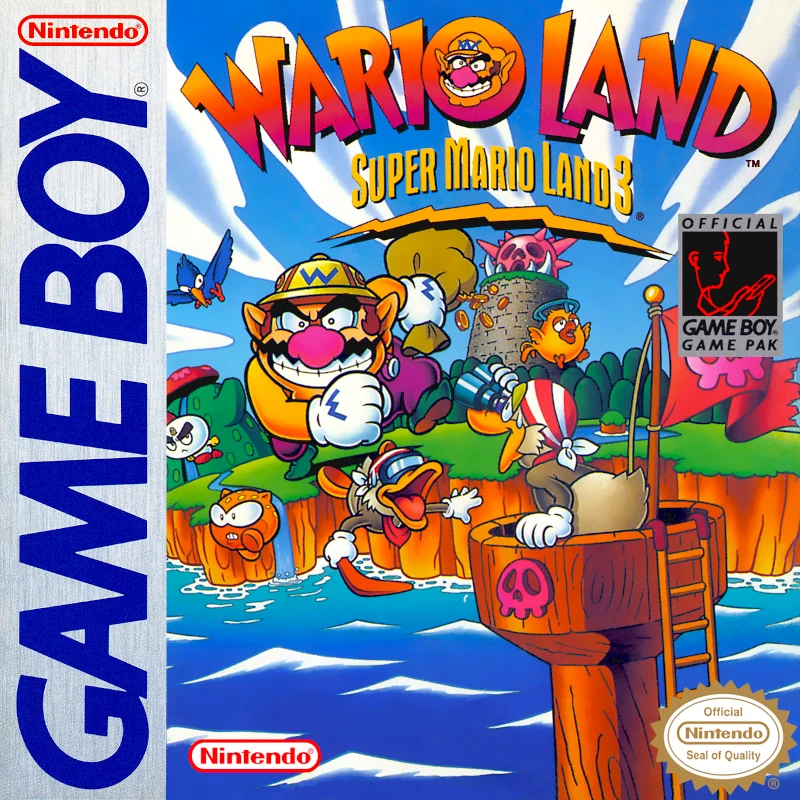
#58. – Wario Land: Super Mario Land 3
Apparently Wario was such a popular character that Nintendo thought he’d be able to carry an entire game. They were right. Wario Land went on to spawn an entire series. We’re starting with the first one however. Wario Land is a side scrolling action based platformer. It obviously still has the DNA of the Mario Land series. What I mean is it’s a little weird. The enemies are distinctly not related to the Mario franchise, and the stages have odd theming. Hey, that’s just Nintendo on the Game Boy. It’s how they did things with the handheld.
Wario’s abilities differ from Mario’s in some key ways. He can still run and jump, yes, and he even collects power-ups which give him new abilities. What’s different is that he can charge at foes. This is the villain’s trademark ability. The power-ups come in the form of hats and let him do things like breathe fire, float in the air, and destroy even stronger blocks. Honestly the level design is really interesting, but it’s a far cry from the quality we come to expect in Mario games. The Wario Land series never resonated with me, but I still mildly enjoy them.
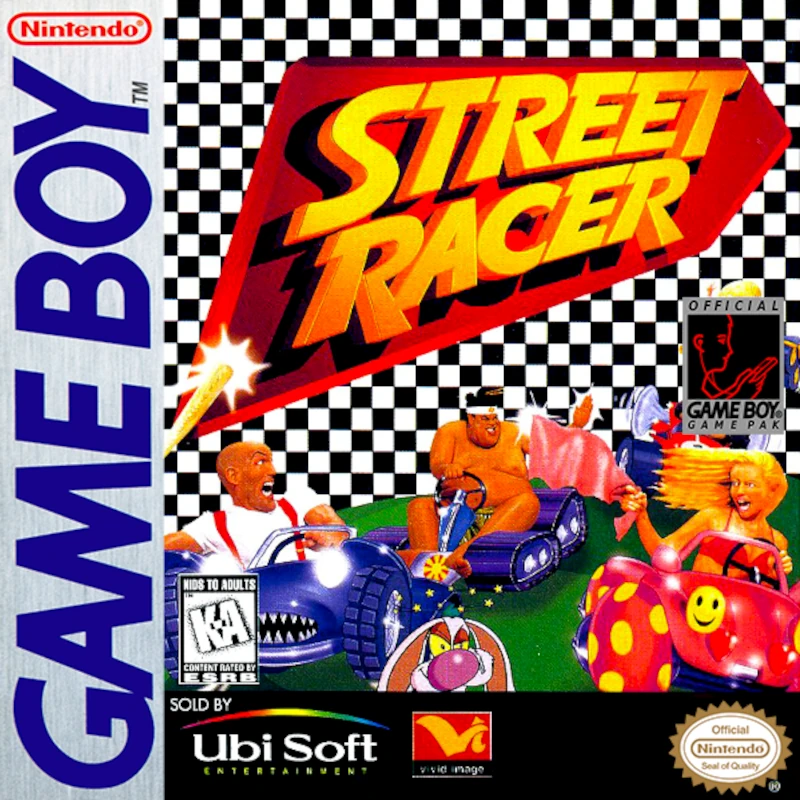
#57. – Street Racer
What we wanted was Mario Kart on the Game Boy. This ain’t it. I waited years for Nintendo to get off their butts and it never happened. It was up to third parties to fill the void. What we got was Street Racer. It’s pretty good. As I said earlier this certainly isn’t Mario Kart though. This is a port from the Super Nintendo/Sega Genesis game. Scratch that. It’s a total remake made to better suit the Game Boy’s hardware. What I mean is it’s not as good. That’s okay because we were desperate for a kart racer, and this scratched that itch.
Street Racer is one of the most competent racers on the Game Boy. That isn’t saying much. The game scales surprisingly well to create the illusion of 3D. It looks really good in motion on the small screen. Unfortunately everything is a little hard to see. You get used to it, but the display is never optimal for a title like this. It’s crazy how many options the developers were able to cram into this one. There’s the typical races, battle mode, and you can even play Soccer. No, Rocket League wasn’t the first one. Street Racer is a decent little kart racer on a platform starved for them.
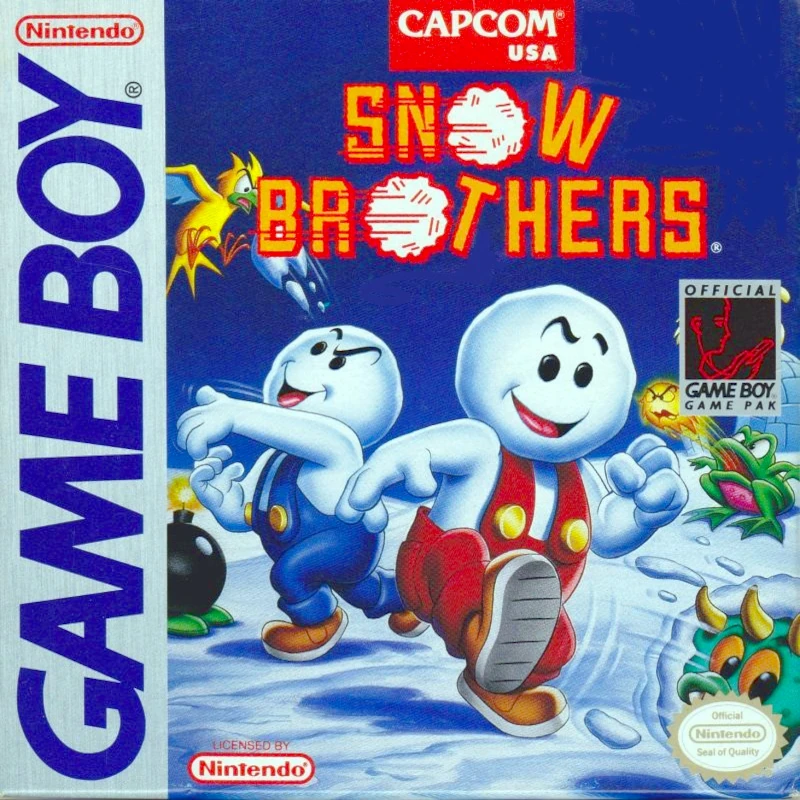
#56. – Snow Brothers
Snow Brothers is one of my weaknesses. The game on the Nintendo Entertainment System stole all of my attention for a time. I loved it, and the multiplayer is still amazing. The game also made its way to the Game Boy in the form of Snow Bros. Jr. Fortunately the conversion was a success. These single screen arcade style games are perfect for gameplay on the go. The only thing that’s disappointing is the fact that this is a port. One with missing features. They couldn’t make an original game? Really?
With that out of the way let’s talk more about gameplay. This one is a side view action, single screen game. You clear out all of the enemies and move on to the next area automatically. This is done by encasing them in snow. You see, you play as a snowman. One with endless snow. Gameplay is accented with some interesting power-ups. Some of the levels have been altered, but not in any significant manner. The change that I hate is the lack of multiplayer. Snow Bros was made to be played with two players. This is the lonely gamer’s version. Regardless it’s still a blast, and the perfect way to cool down on a hot Summer day.
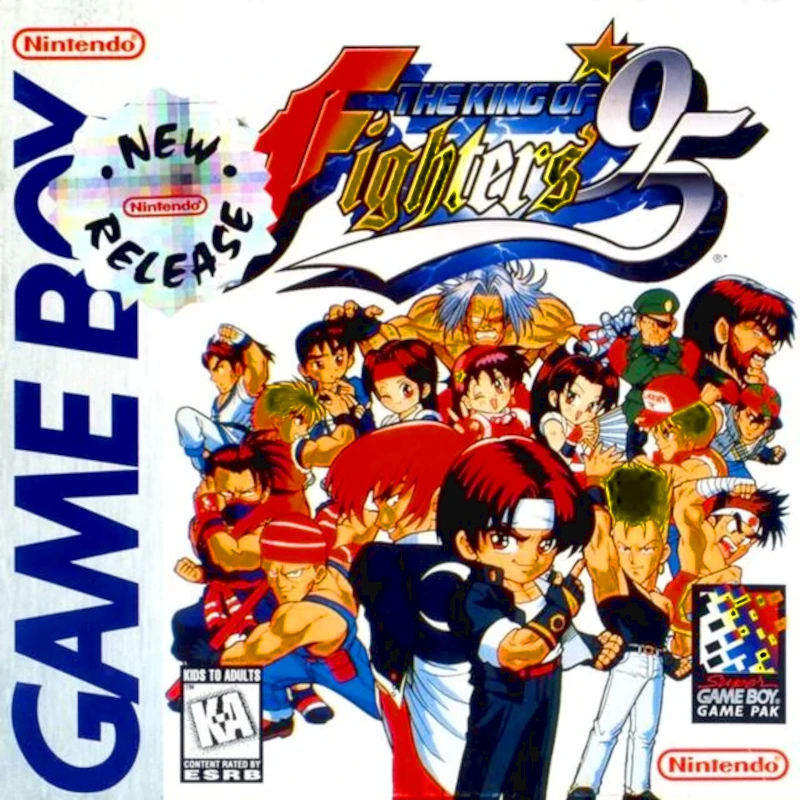
#55. – King of Fighters ’95
Tired of hearing about SNK titles on the Game Boy yet? We aren’t finished. King of Fighters 95 might just be the best one. These games basically combine all of the franchises under SNK’s belt into one fighter. That means huge character rosters, and dream crossovers. The only thing I didn’t like about them was the team based gameplay. It restricts you on the characters that you can use per go through the arcade mode. Still, the quality is undeniable.
So how is the Game Boy version? Excellent, actually. The genre really struggled on the platform. Somehow King of Fighters 95 was able to get past this issue. It has a nice flow to it, and the animations are surprisingly nice. It also has that huge character roster. This certainly helps. Rather than make all of the characters chibi forms of their prior selves this iteration just shrinks them down. It makes King of Fighters 95 feel distinct from the other SNK fighters on the platform. If you’re a fan of SNK, and want something to play on the Game Boy, then pick this one up.
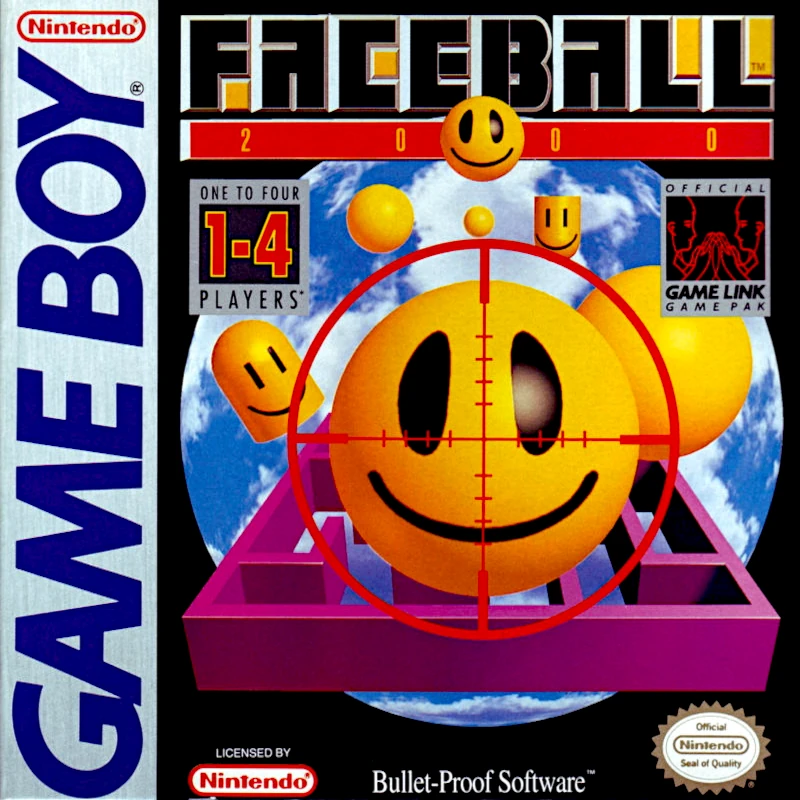
#54. – Faceball 2000
The Game Boy had a first person shooter. Hard to believe, isn’t it? Faceball 2000 isn’t particularly advanced compared to something like Doom. On the Game Boy though it’s very impressive. Faceball 2000 is most remembered for the fabled deathmatch mode that supposedly allows for sixteen players to link up their consoles and duke it out. Some have claimed to have gotten this to work. I’ve never seen it, but then again, I haven’t exactly tried. Shame on me.
Faceball 2000 has you playing as shapes with faces. Weird, right? Your goal is to eliminate all of the enemies in enclosed arenas, and you do so by shooting balls at them. It’s very rudimentary, but you know what? It works. The game clearly pushes the hardware unlike pretty much any other game. This little cartridge is sheer wizardry. It’s also pretty fun. Faceball 2000 isn’t perfect, but it’s good in short bursts. You won’t find a happier first person shooter anywhere.
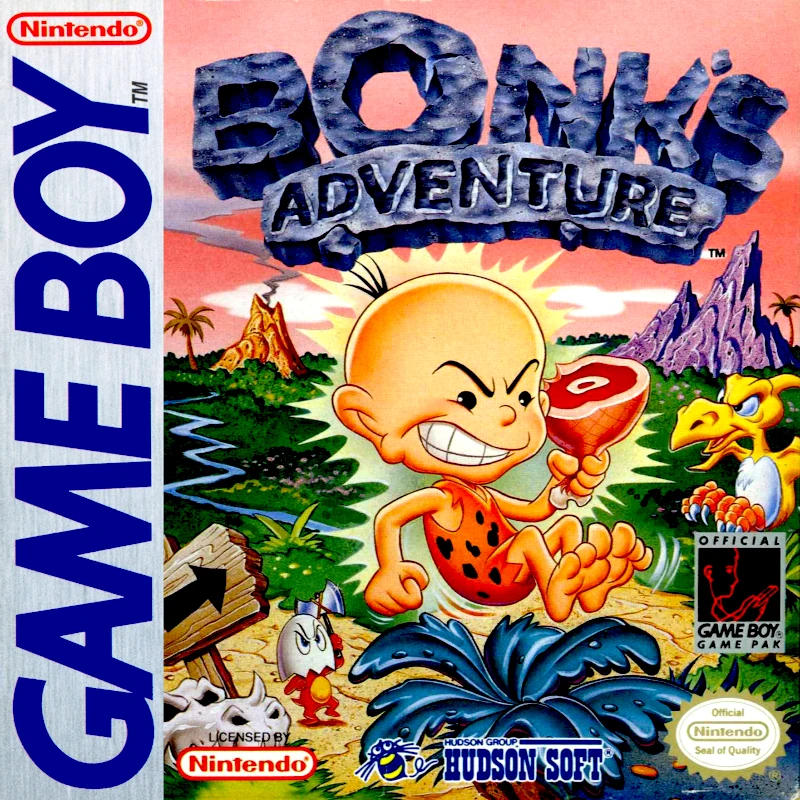
#53. – Bonk’s Adventure
Wait. Wasn’t Bonk the mascot for the Turbografx-16? Yep, it’s the same Bonk. The developers decided to make an original adventure on the Game Boy. I mean, why not? It’s not like the Game Boy and Turbografx-16 were in direct competition. I’m not even being sarcastic here. Regardless this isn’t the same game. It’s a case of the developers not bothering to change the title. In this case it probably doesn’t matter. I mean almost no one here played the original anyway.
Bonk’s Adventure is a 2D side scrolling platformer. Here you play as the a caveman child. Can you guess what his name is? Either way the name fits the character. You see, he hits enemies with his noggin. Hence, Bonk. Neat right? This one has some fun mechanics and great level designs. While some of the stages are heavily based on the original they’re mostly new. New enough to be considered it’s own game at least. Bonk’s Adventure is a pretty neat little Game Boy adventure.
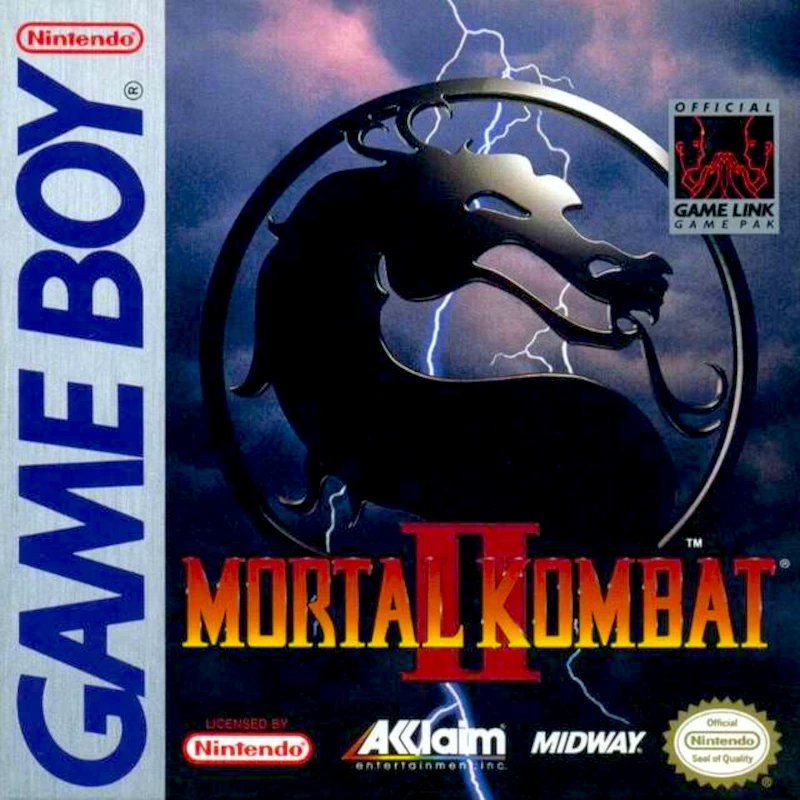
#52. – Mortal Kombat II
The Game Boy never really played well with fighters. The first Mortal Kombat is the perfect example of that. It’s hard to call it a game when that one is more of a slideshow. I had very little hope for the sequel. To my surprise Midway got their act together, and delivered some blood spilling violence done right on the go. It also helps that Mortal Kombat II is pretty much the best game in the series. Even the modern titles can’t compete. The Game Boy isn’t the ideal place to play this, but it’ll do in a pinch.
Unfortunately this one is missing a few characters. The developers made the wrong choices here. Johnny Cage, Kung Lao, Raiden and Baraka are nowhere to be found. Come on. These were the best guys! Despite these omissions the game is still good. Gameplay is surprisingly fun and flows much better than in the Game Boy original. Best yet it still feels like Mortal Kombat II. Limited hardware and all. Honestly this is one of the best fighting games on the Game Boy. Not that there’s a lot of worthwhile competition or anything.
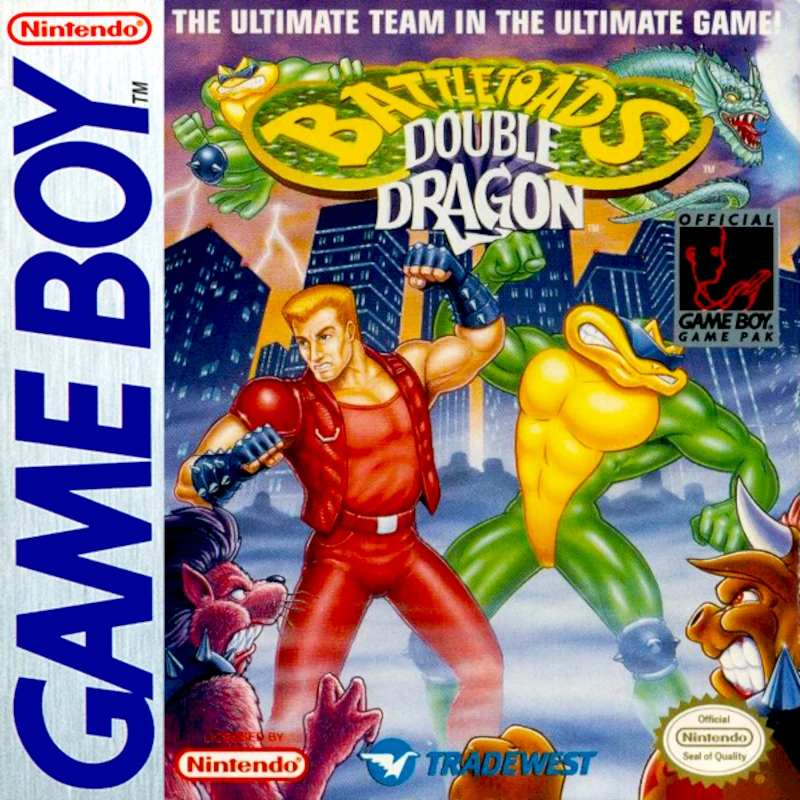
#51. – Battletoads & Double Dragon
What do Battletoads and Double Dragon have in common? Nothing. Well, aside from both being beat ’em ups. The minds at Rareware decided that they would combine the two flavors for one all out brawler. On console the game was overshadowed by better beat ’em ups. It was the Game Boy’s timet o shine, and it did just that. The game looks and plays surprisingly well for a handheld title of this era. So many other developers tried, and only Rareware got the genre right on Game Boy.
Right off of the bat the game is cool. You get to choose from either one of the three Teenage Mutant Ninja… I mean Battletoads, or Billy and Jimmy. Make the right choice. You know in your heart it’s all about the toads. Right out of the gates you’re fighting enemies on top of a giant spaceship. Battletoads & Double Dragons doesn’t even wait to get over the top. It plays like a pretty traditional beat em up game, but with some light platforming elements. The stage designs are good, as is the enemy variety. This is how you do a Game Boy port.
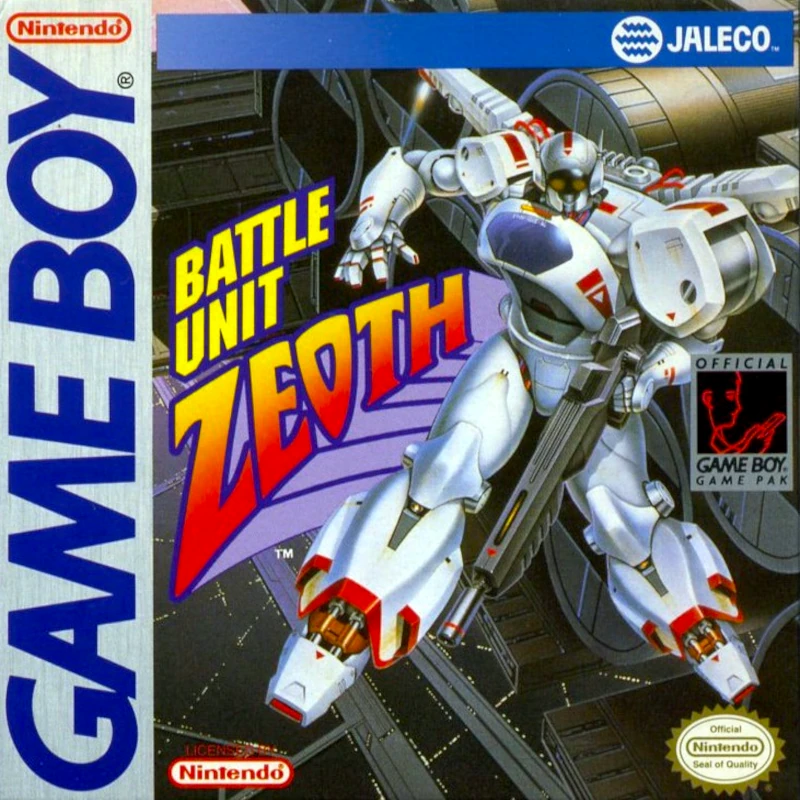
#50. – Battle Unit Zeoth
This one caught me by surprise. On the surface Battle Unit Zeoth looks like any old shmup. It’s not. The game is a strange combination of shooter and platforming. By default your mecha robot walks on the ground. That’s fair, after all, gravity is a thing. You can however use its boosters to fly in the air. You have to constantly use these to stay afloat. It sounds like this would get annoying but it never does. What’s more is the fact that you can shoot in all directions at any time. In some ways this one kind of feels like a run and gun. That’s just fine by me.
The jet pack ability is really what makes this one feel unique however. You now have to worry about descending. It takes time. Yes it feels floaty, but that’s a design choice. Dodging enemy fire is no longer as simple as flying down. You have to plan ahead, and figure out how long it’s going to take you to fall. The game is downright challenging because of this. It never feels unfair. On the contrary learning the mechanics is really rewarding. The ability to shoot in any direction forces you to pay attention to more of the screen than you otherwise would. Battle Unit Zeoth feels really unique, and it’s a lot of fun.
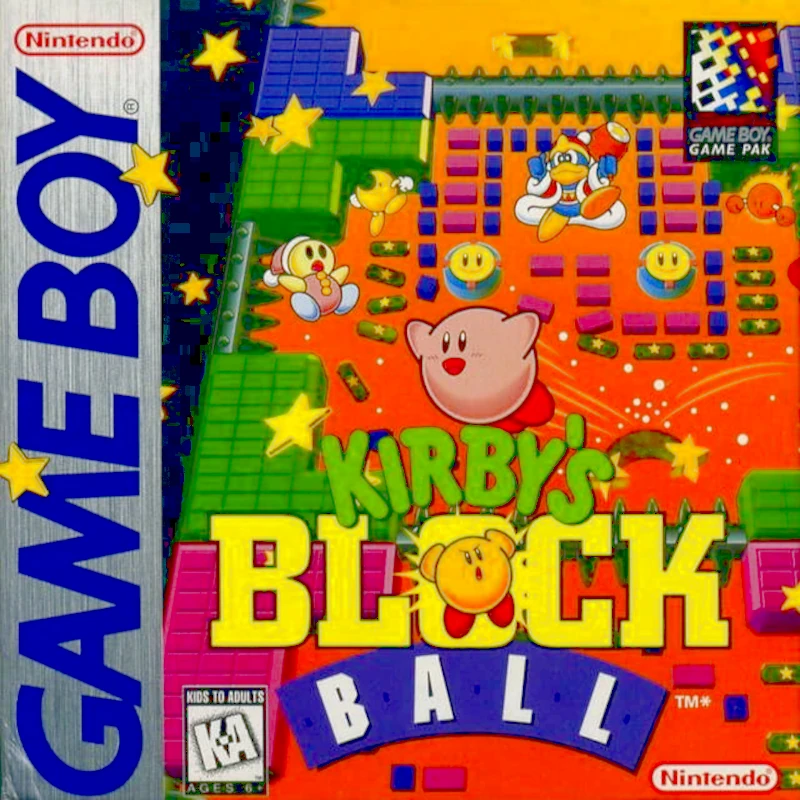
#49. – Kirby’s Block Ball
Kirby makes just about everything better. This character has almost as many spin-offs as Mario. Almost all of them are good. Kirby’s Block Ball is no different even if it’s not terribly original. You see, this is a Breakout/Arkanoid clone. Luckily it plays a lot with the formula injecting some of Kirby’s trademark abilities into the mix along with that classic Nintendo magic. This is one of those clones that is much better than its source material.
Only in the most basic sense does this play like Breakout. You guide paddles across the edge of the screen and use these to bounce a ball off of. Your goal is to eliminate all of the blocks, by hitting them with the aforementioned circle. You lose a life when the ball (it’s actually Kirby) gets past your paddles. Things get immediately interesting with boss fights. Then there are Kirby’s trademark abilities. These change the way the ball interacts with the blocks, and some can only be destroyed with specific powers. You’ll also find some stages have both horizontal and vertical paddles. At the same time. It’s a really interesting twist that pushes the genre forward. Plus it’s Kirby. Who isn’t already a fan?
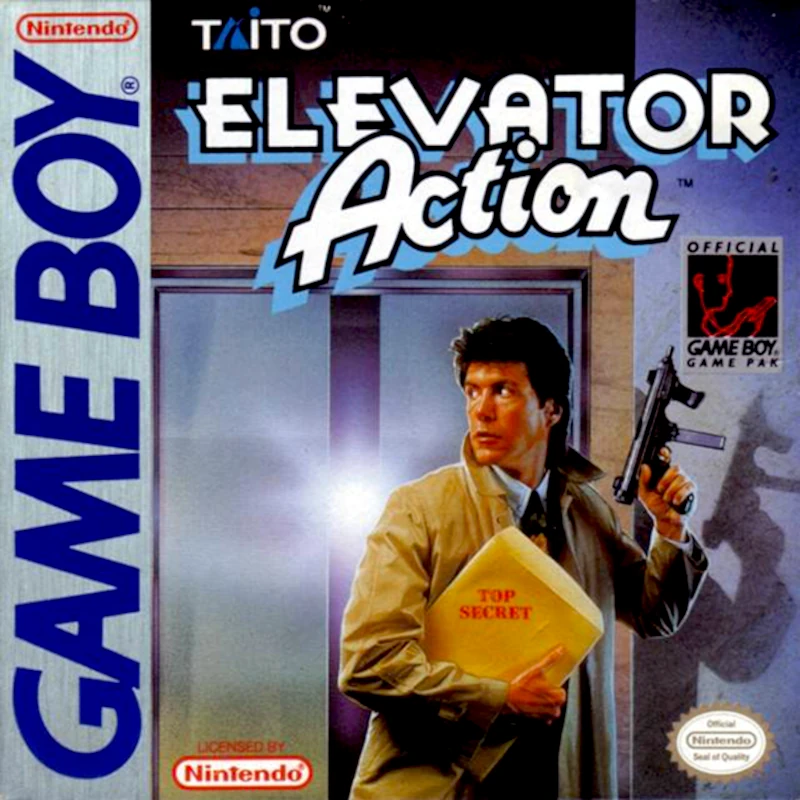
#48. – Elevator Action
I’m not embarrassed to admit that Elevator Action has long been one of my weaknesses. I played it mostly on the NES, but I was elated in the late 90s to discover that the Game Boy got its own version. Of course I had to get it. To my surprise it’s even better than most of its console counterparts. Surprisingly the graphics even had a significant upgrade. Even with the black and white display. The backgrounds look amazing considering the platform, and additional animations were added to the characters.
Elevator Action also plays better on the Game Boy. There are some pretty significant changes. The levels are re-designed and feature new elements. Furthermore there are also new weapons to use. How cool is that? The basic gameplay is still the same though. It’s a game based around elevators. I’m specifically talking about using them. It’s a side scrolling action game where your goal is to get to the bottom of the screen in any stage. Oh, and you have to collect disks. You’re a spy, or something. Enemies pop in and out from doors as you move downward, and you can dispatch them with a single shot. The game is addictive, and perfect for pick up and play gaming.
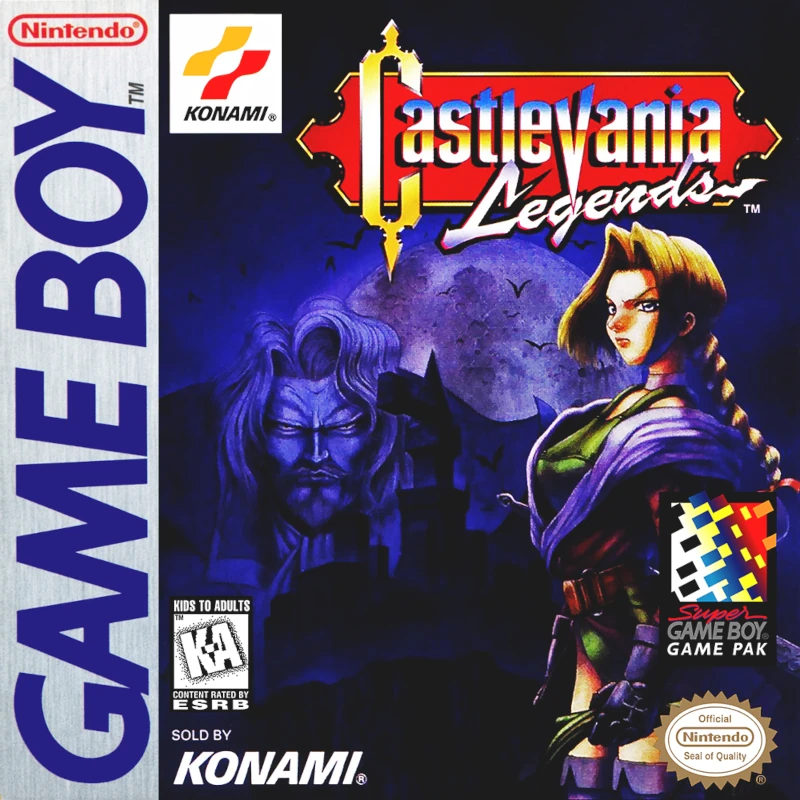
#47. – Castlevania Legends
I don’t care what Konami says. I consider Castlevania Legends to be canon in the story. This one serves as an origin story, and is one of the few titles that has a female main character. It also has the highest production values of any Game Boy Castlevania installment. There’s actually a story here, dialogue, and all the trappings we expect from the series post Symphony of the Night. It’s clear they put some real effort into the continuation of the story here. Even Alucard rears his ugly head in this one.
Castlevania Legends improves on the formula since Belmont’s Revenge in some pretty significant ways. For one thing there are less climbing segments. There are still far too many of these, but at least the mechanic is kept in check a bit here. You also have less frustrating platforming sections, and Sonya controls far better than the Belmont’s of Game Boy past. Castlevania Legends is kind of a polarizing title. I really like it, but I get why others may not. In my eyes it’s the best Castlevania game on the platform.
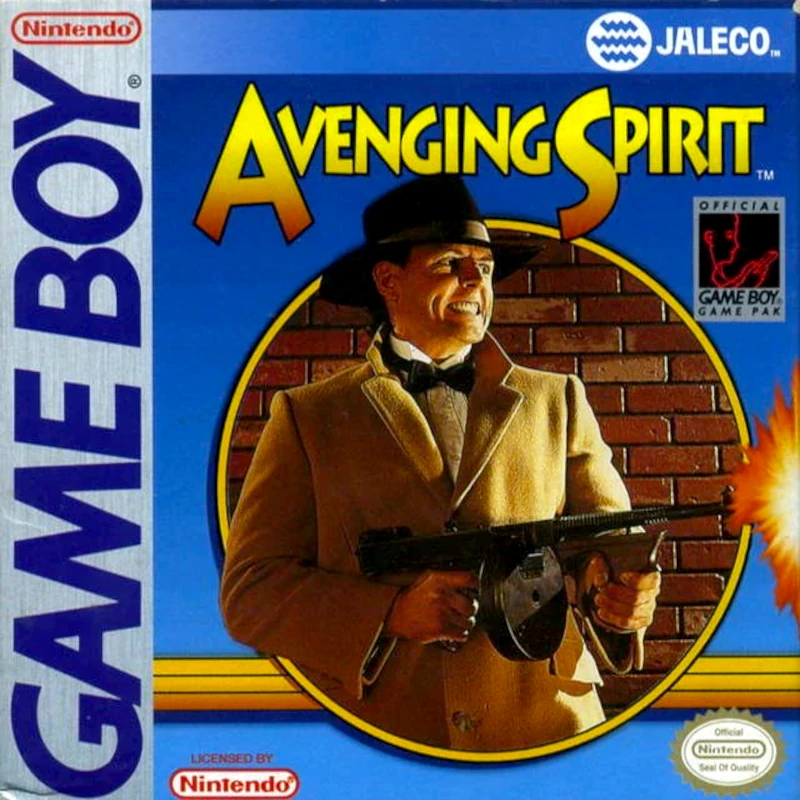
#46. – Avenging Spirit
First of all, that boxart is hilarious. Oh lordy just what were they thinking? Avenging Spirit is a port of an arcade game. No one remembers it. Odds are if you’ve experienced this wonderful game it was on the Game Boy. Basically you play as a ghost here. By default you can fly, but because you’re not alive there’s a life bar that constantly counts down while in poltergeist form. That’s no bueno. You have to possess enemies in order to stay alive (or undead?) and when doing so you gain their abilities. In this way it feels a little like Kirby. I assure you though; Avenging Spirit is very much its own thing.
The game is a side scrolling platformer. As I mentioned you have to possess enemies and gain their powers when you do so. There are over twenty characters that you can take control of. This includes gangsters (complete with firearms), robots, kangaroos, etc. Yes, you read that right. Each has their own life bar that depletes as you take damage. When they run out your ghost is thrust out of the body, and you have to quickly find your next victim to possess. It’s a compelling mechanic that works amazingly well. Initially I didn’t expect much from this one. It blew away all of my expectations.
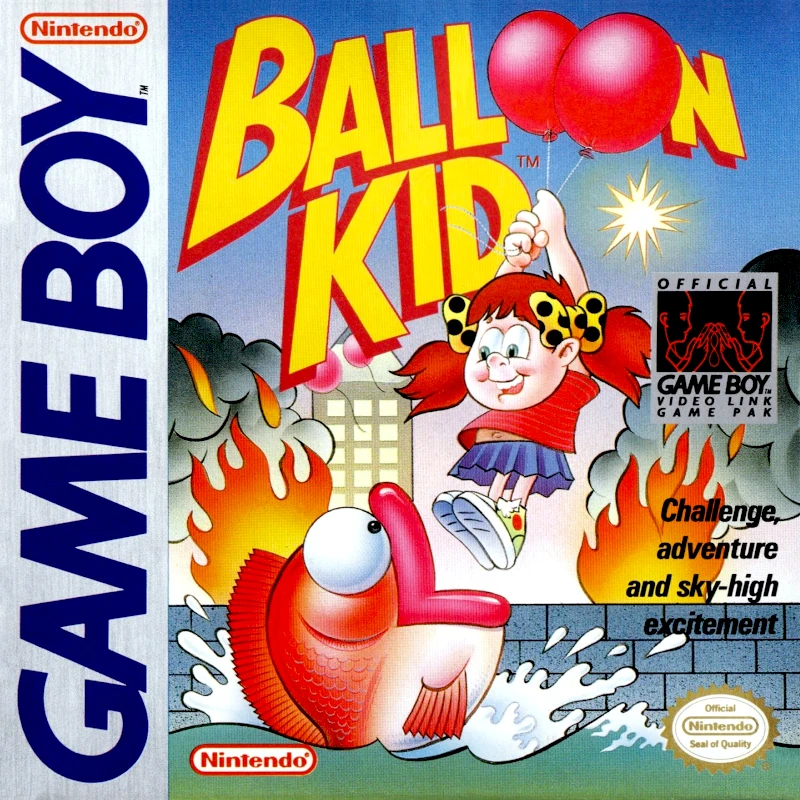
#45. – Balloon Kid
Remember Balloon Fight on the NES? That game was amazing. It was basically a clone of the arcade classic Joust. That too was excellent. With Balloon Kid the developers tried something different. It’s clearly based on the NES game as far as themes go. The gameplay however is not the same. Instead of being a single screen versus title this is more of a side scrolling platformer. The Game Boy had a lot of those, but this one is special. Nintendo was good at that especially back then.
This one is a more fleshed out version of the Balloon Trip mode in the aforementioned NES title. Your goal is to float from one edge of a stage to the end. It’s easier said than done. The main character is kept afloat by one or two balloons. You fall constantly. When pressing the A button she flaps and gains the slightest bit of elevation. This mechanic is very challenging to get used to especially with all of the hazards you have to avoid. Of course you can drop these balloons and continue on foot. You always have the option of inflating new balloons, and will need to, because the main character can’t clear vast stretches of space with a mere jump. Simply put the game is amazing.
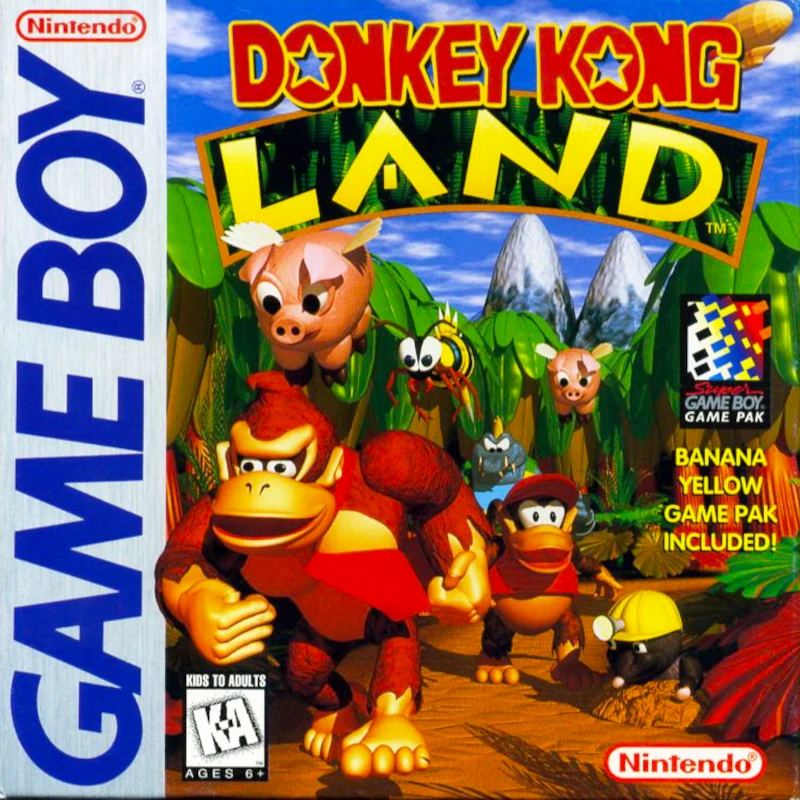
#44. – Donkey Kong Land
Donkey Kong Country was a hit on the SNES. Rare had caught fire with their re-envisioning of Nintendo’s classic franchise. Clearly they wanted to cash in on the Game Boy. Unfortunately the hardware wasn’t up to the task of re-creating the digitized graphics and fidelity that was the main selling point of their 16-bit title. Somehow they managed to catch fire with Donkey Kong Land. This was their first Game Boy iteration, and it pushed the hardware in ways that didn’t seem possible at the time.
With that out of the way this has to be said. Donkey Kong Land doesn’t look as good as Country. Clearly that was never going to be the case. Somehow they managed to downport a lot of the visual elements of that game. It’s some crazy wizardry. The game plays like Donkey Kong Country but it’s a little more floaty and less precise. The levels share the same themes but they’re brand new here. I mean, they aren’t as interesting, but at least Rare tried here. Donkey Kong Land, despite its flaws, is one of the best platformers on the Game Boy.
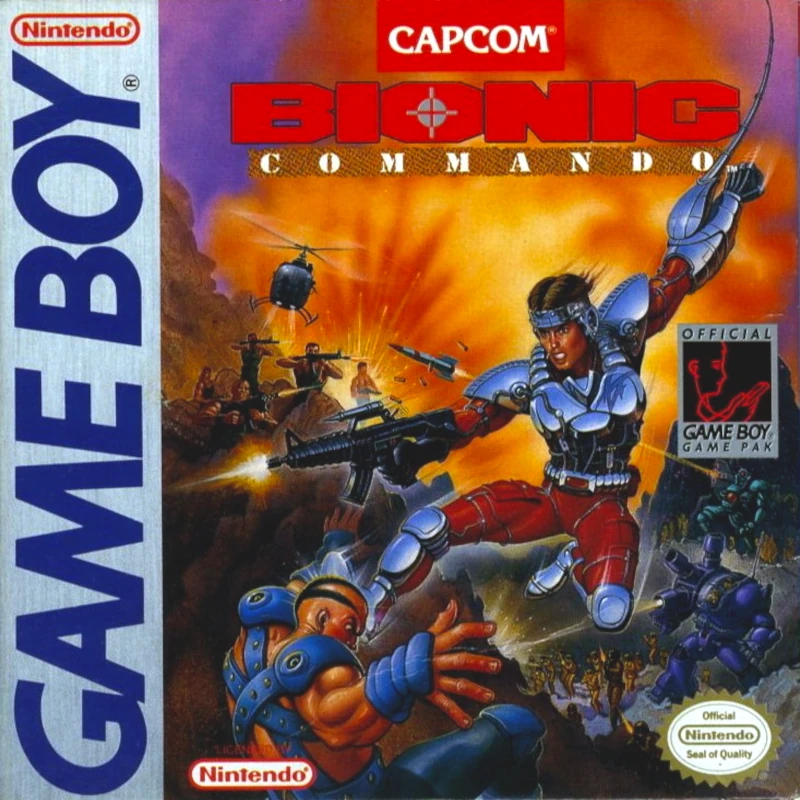
#43. – Bionic Commando
If you know me then you know that I love Bionic Commando. The NES version, at least. The Game Boy edition is more of a new friend. This version isn’t a total remake, but it’s not all new either. Bionic Commando on the Game Boy lands somewhere in between. The most major change is that the landscape and setting is now futuristic. Besides the graphics some of the stages have been changed around, but only slightly. It’s largely the same game, but in the future. If that makes any sense.
Despite the changes gameplay is largely the same. It’s an action platformer with the major difference being that you cannot jump. What? It’s true. Instead you have to rely on the main character’s grappling hook. You use this to pull yourself upward, and even swing across chasms. Just like in the NES version this takes some getting used to. Nothing comes easy, after all. The stages are designed completely around this mechanic. It’s no mere gimmick. This is the game. Bionic Commando is almost as fun on the Game Boy as it was on the NES. That’s saying something.
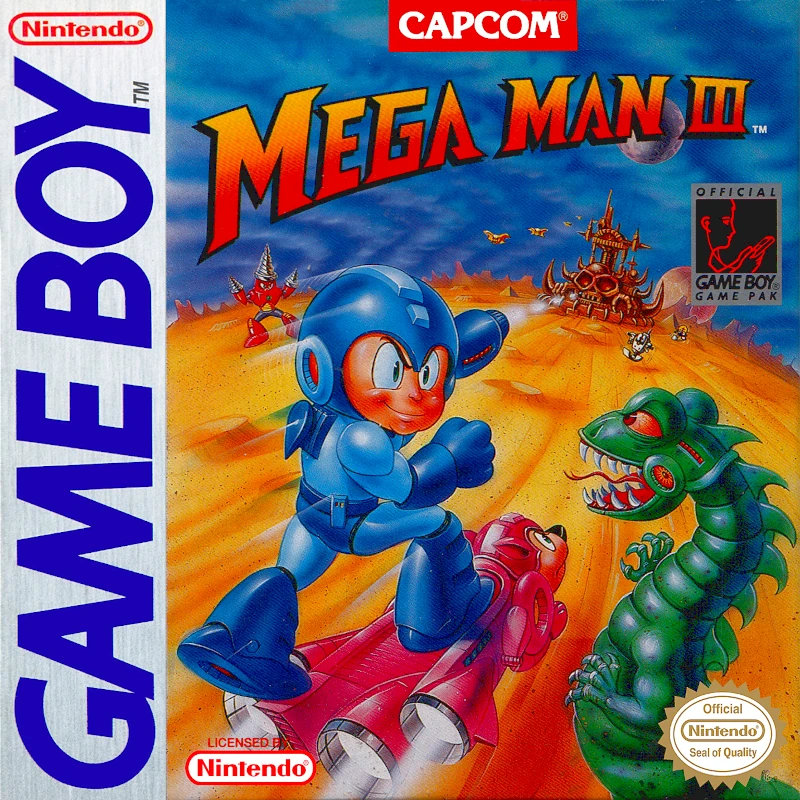
#42. – Mega Man III
The naming conventions for the series is weird considering the same numbered titles came out on both the NES and Game Boy. Here’s a trick for you. The NES games are the numbers themselves, and the Game Boy iterations use roman numerals. Got it? Good. Mega Man III follows the same basic formula as the second game. Basically it ports assets from both Mega Man 3 and 4 into one remixed adventure. I really like this concept even if I do wish that this was an original title.
As is the series standard you are given the option to choose which robot master you want to face off against first. In the beginning there are only four to select, and they’re all from Mega Man 3. The stages are re-created here on the Game Boy. It’s not a 1:1 port though. The stages have been lightly remixed. It makes sense because of the smaller display. After you beat these guys four additional robot masters become available. These are based on Mega Man 4. Unlike in the second game these have their stages intact. Kind of. At least it’s not a boss rush. Mega Man III is excellent.
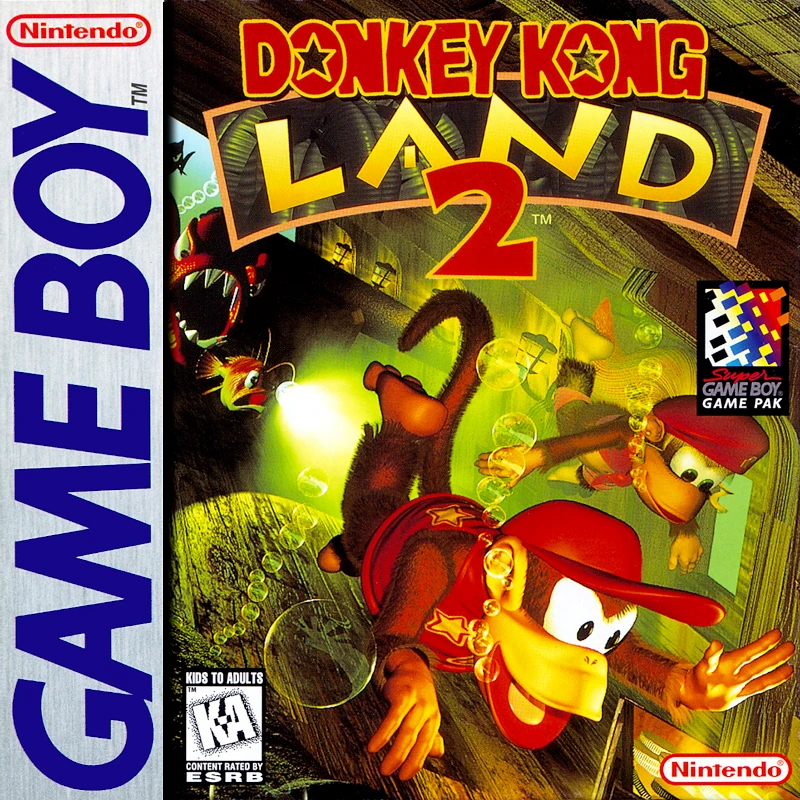
#41. – Donkey Kong Land 2
The first game must have been popular enough to warrant a sequel. As you might suspect this next iteration is based off of Donkey Kong Country 2: Diddy’s Kong Quest. Good, right? I mean that was a huge upgrade over the SNES original. It’s fair to expect that to be the case with the second Game Boy game. It is, but the difference isn’t so vast. Donkey Kong Land 2 kicks the star monkey to the curb and instead stars his sidekick Diddy and his gal pal Dixie. Many of the new conventions in the console game carry over to this iteration. Thankfully. Donkey Kong Country 2 was awesome, and the second Land game is too.
Donkey Kong Land 2 is once again a re-imagining of the second console game. It’s not exactly a downport. The levels are completely re-done. Thematically they’re the same. It even has identical enemies, obstacles, and items. The levels are smaller in scope and changed around. Basically the developers decided to lend a hand to gamers stuck on the portable by making things generally easier. I can dig it. The new levels are fantastic. I have always had a fun time with this one, and no, it’s not just because of the banana yellow cartridge. It’s a poor man’s Donkey Kong Country 2, but that game is so good that even a downgrade is amazing.
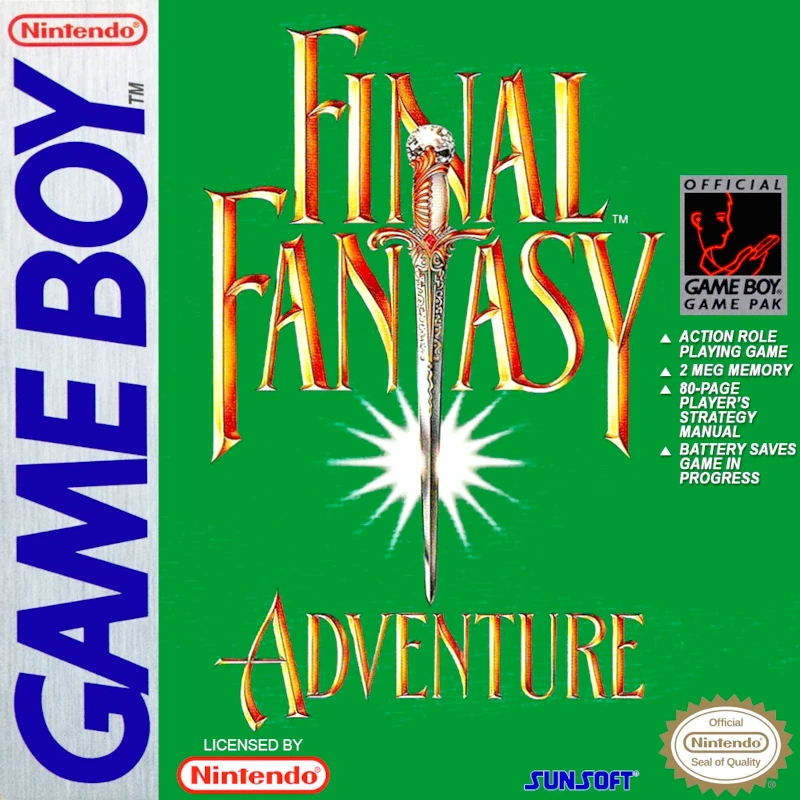
#40. – Final Fantasy Adventure
Squaresoft’s naming conventions give me a serious headache. Final Fantasy Adventure is the first game in the mana series. It’s true. There’s nothing Final Fantasy about it except for the RPG elements and it being fantasy based. Despite the name this is an action role playing game. It looks like Zelda, but with experience points, hit points, etc. It even has the classic top down camera and you fight enemies by swiping your weapon at them. I feel sorry for the kids that were expecting a turn based game. You can blame Squaresoft for that.
The game itself is a lot of fun. Surprisingly so. Like I already mentioned it’s kind of like the Legend of Zelda but you have all of those RPG variables to contend with. You also have a lot of town areas to explore, dungeons are based more on combat rather than focusing on puzzles, etc. The gameplay flows really nicely and I enjoyed the battle system. I’m a big fan of grinding (I know, I know) and this game allowed me to do so, and actually feel stronger. Final Fantasy Adventure is an excellent action RPG that fans of the genre can’t go wrong with.
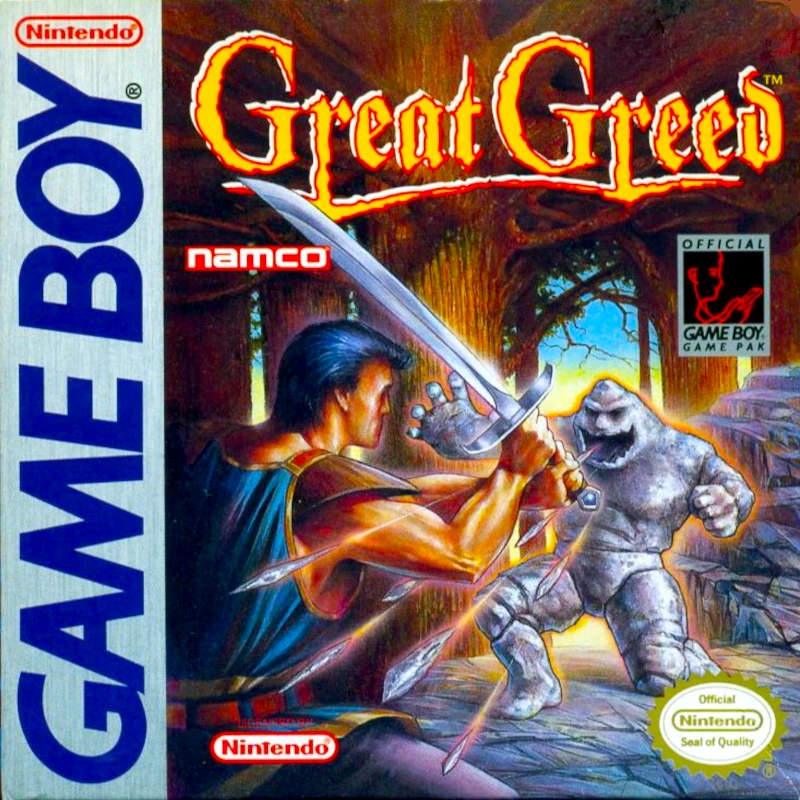
#39. – Great Greed
Here we have pretty much the only title on the Game Boy that lets players save the environment. Bear with me a moment here. Great Greed is actually really good. The themes are quirky. Even if they don’t speak to you everyone can appreciate how not serious Great Greed really is. This is a turn based traditional role playing game where you battle against foes by inputting commands. Encounters are random, but that’s just how I like them. So sue me. The Game Boy didn’t have enough traditional RPGs released in the West. Great Greed gets extra kudos for being one of them.
I’ll start off by saying that the battle system is a little clunky. The way the game displays your character from a behind the back perspective isn’t ideal. I can work with it though. This is also a really basic RPG. There aren’t a lot of abilities, weapons or items. Some may not like the simplicity. In my opinion the game’s charms make up for this. Yes the themes are weird, but I love that for this game. Great Greed got more than a few chuckles out of me because it can be absurd at times. It’s a real treat to play even not factoring in it being one of the few localized RPGs on the platform.
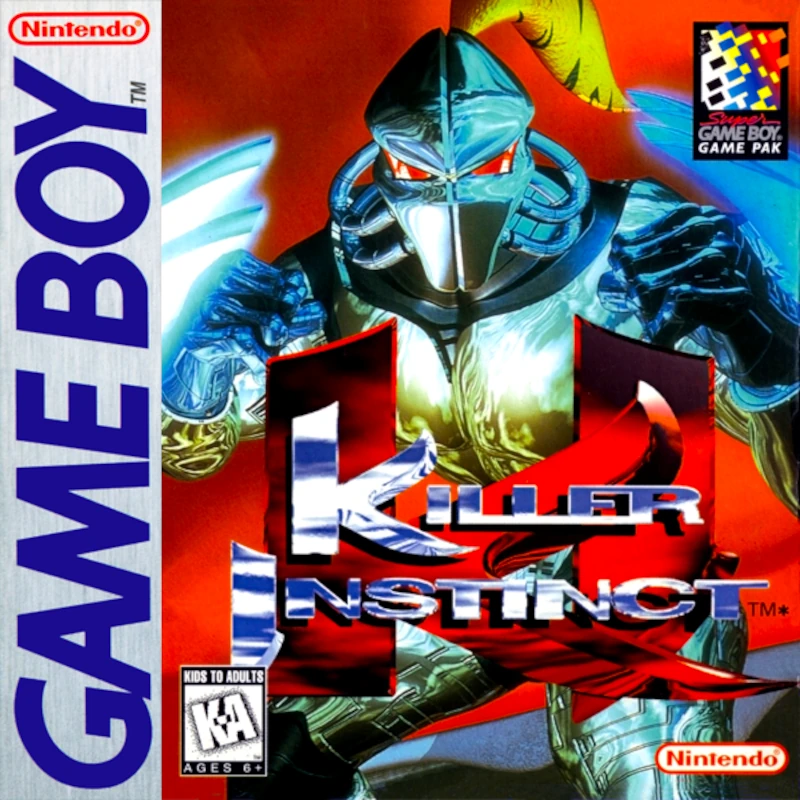
#38. – Killer Instinct
COMBO BREAKER! No, that voice sample didn’t make the cut here. It’s the Game Boy we’re talking about after all. That was just to get the attention of arcade goers from the 90s. That sound byte was unavoidable in these places back then. Killer Instinct was Rare’s take on the one-on-one fighting genre. Sure, it’s not all that original. In typical Rare fashion they outperformed most other developers with their copycat. At least that’s how the company used to be. I have no comment on their modern offerings.
So with the game’s popularity in arcades, and on the Super Nintendo, how does the Game Boy version fare? You can probably tell by the fact that it made this list that the handheld iteration of Killer Instinct rocks. It’s better than all of the Mortal Kombat and Street Fighter games on the platform. Combined. The game not only flows well, but most of the characters and special moves also return. The controls have been adapted really well for a platform with less buttons. Also, it looks amazing. Killer Instinct on the Game Boy is instantly recognizable. Killer Instinct is, in my opinion, one of the best fighting games on the 8-bit handheld.
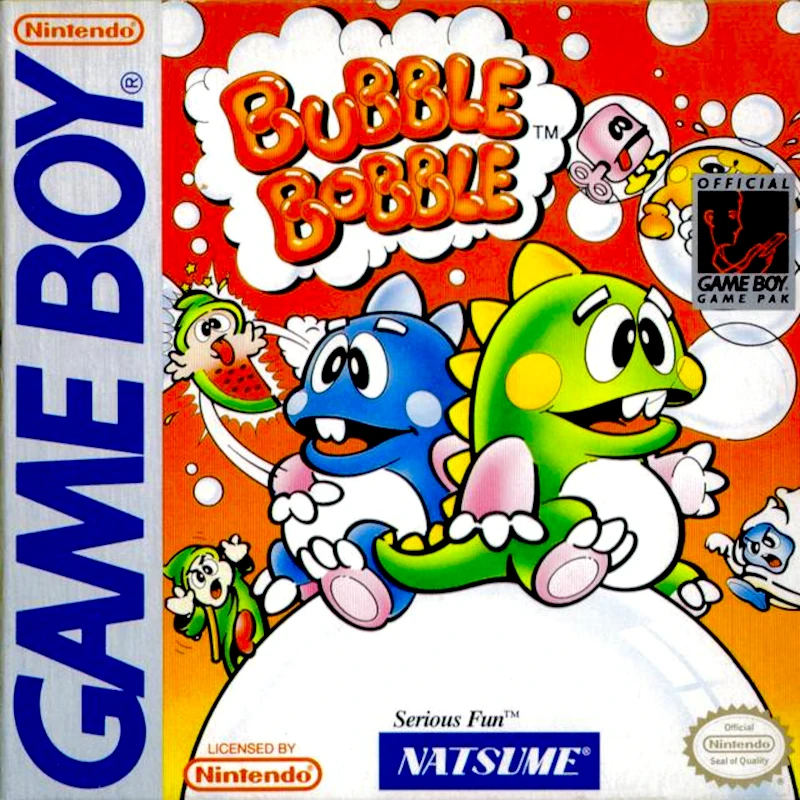
#37. – Bubble Bobble
If you’ve read any of our other best games lists for any platform then you know by now that I have a problem. It’s Bubble Bobble. Whenever I start playing it I can’t stop. I had kind of forgotten about this Game Boy iteration, so I had to give it another go while making this list. I couldn’t put it down. Bubble Bobble is truly an addictive experience. The Game Boy version is no different. Clearly. After all the Game Boy excelled at re-creating these single screen arcade games. It’s not like it’s hard though.
Here you play as a tiny dinosaur that shoots bubbles. The entire game is based on this ability. It’s a side view title where you walk, jump, and of course blow bubbles. Enemies are encased in these, and popping them destroys them. You can also use bubbles to jump off of to reach higher areas. It’s a really interesting mechanic that I get behind one hundred percent of the time. It’s still in place here. After all without it this wouldn’t be Bubble Bobble. It’s a major bummer that there’s no multiplayer. It’s still Bubble Bobble, therefore it’s amazing. I have spoken.
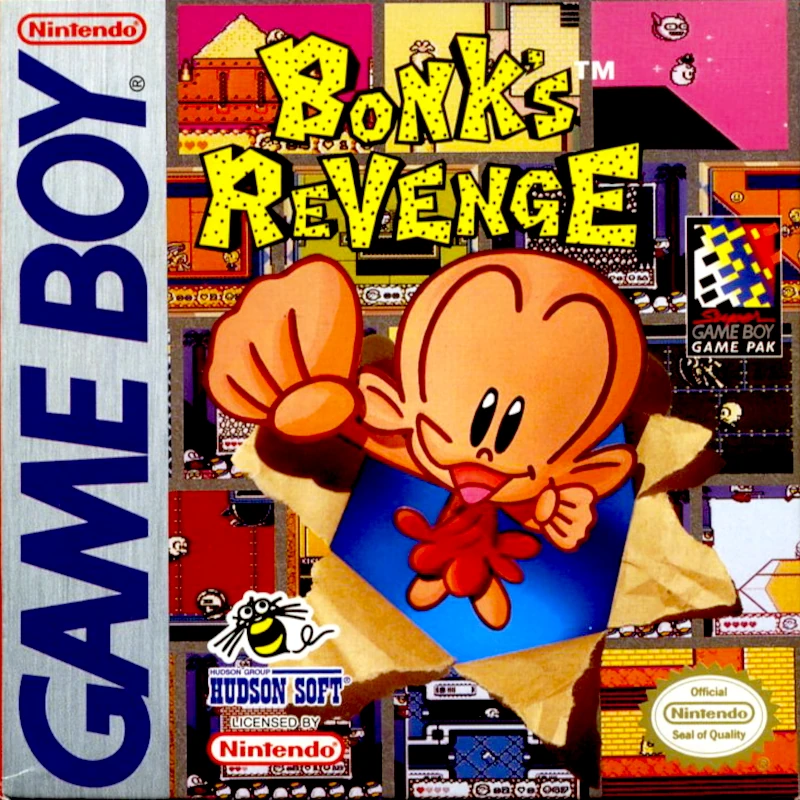
#36. – Bonk’s Revenge
Again with the recycled names for original games. Ooh, that rhymed. Bonk’s Revenge was the second installment in the series on the Turbografx-16. Here it’s an original adventure for everyone’s favorite caveman mascot. Unless you really liked Joe & Mac. In that case you’re one of the few. Bonk’s Revenge feels a little wrong to play on the Game Boy. It’s not because it’s a bad game. On the inverse it’s actually quite fun. It’s just odd to play something that was so defining for NEC’s console on the Game Boy.
As I already mentioned Bonk’s Revenge is an original game. This means the stages are brand new. Also some of the mechanics have been changed around. The game itself is still a 2D platformer. It’s the power-up mechanisms that have been changed. Now when you get a power-up there’s a strange roulette thing going on. This allows you to pick what you want. It’s unusual but it works, and after a while I got used to it. I even prefer this method now. It’s Bonk, and it’s fun. That’s pretty much all you need to know.
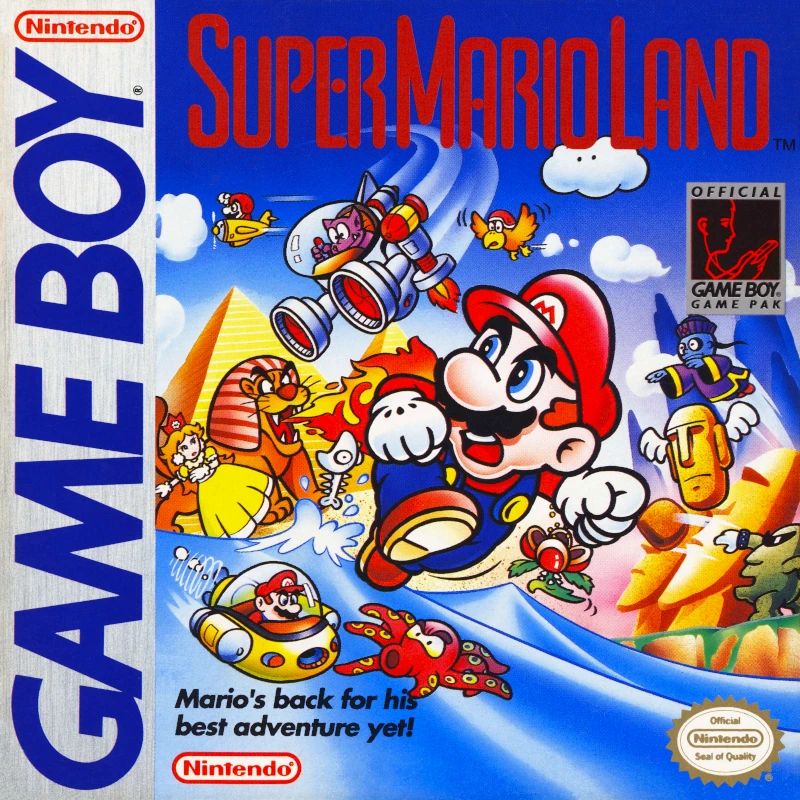
#35. – Super Mario Land
This was a stopgap release in between Super Mario Bros. 3 and Super Mario World. Ha! It definitely doesn’t bridge the two. The reality is that Super Mario Land is a weird alternate take on the franchise. It makes sense considering there was a change in developers. Also, development was early in the Game Boy. No one was that familiar with the hardware. Because of this Super Mario Land in many ways feels more archaic than the original Super Mario Bros. This was a launch title for the Game Boy and was largely overshadowed by Tetris. It’s still Mario though, and Nintendo hit a home run with this release.
Super Mario Land still has the basics that make Mario, well, Mario. It’s still a side scrolling platformer. Furthermore you run and jump your way through most stages. What’s different (and kind of weird if we’re being honest) is the fireballs bounce off of elements in the environment. The flower power up isn’t nearly as useful as it is in other Mario games. There are also some scrolling shooter stages. That’s not something that’s common in this series. Despite these changes and additions Super Mario Land is still great.
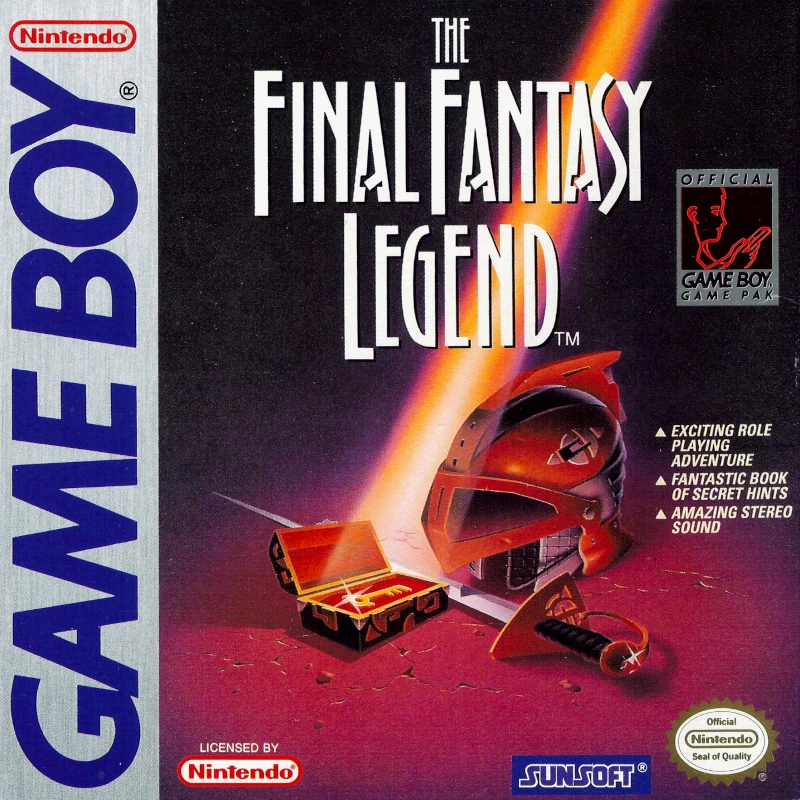
#34. – Final Fantasy Legend
Squaresoft’s naming convention issues once again raise their head. Final Fantasy Legend is actually the first SaGa game. They just couldn’t get things right. It may look like Final Fantasy, and even play like Final Fantasy, but I assure you it isn’t. This becomes readily apparent right when you start the game. You create a party of characters, but the choices are weird. Mutants? Humans? Okay. There are also some weird progression mechanics in place and most of them have some randomization driving them. It’s definitely unusual.
But hey, that’s SaGa for you. Fans of the genre either love this series or hate it. There’s no in between. I myself love these games. They’re like Final Fantasy, but weird. That might seem like a vague description but it’s nonetheless fitting. Story takes a serious backseat here. You won’t care about the final outcome of this quest. It’s the getting there part that’s fun. Bear in mind that Final Fantasy Legend does have some frustrating elements. For one thing weapons can break. What kind of masochist actually enjoys mechanics like that? Random encounters are also frequent, but that kind of comes with the territory with these older RPGs. Final Fantasy Legend is seriously overlooked.
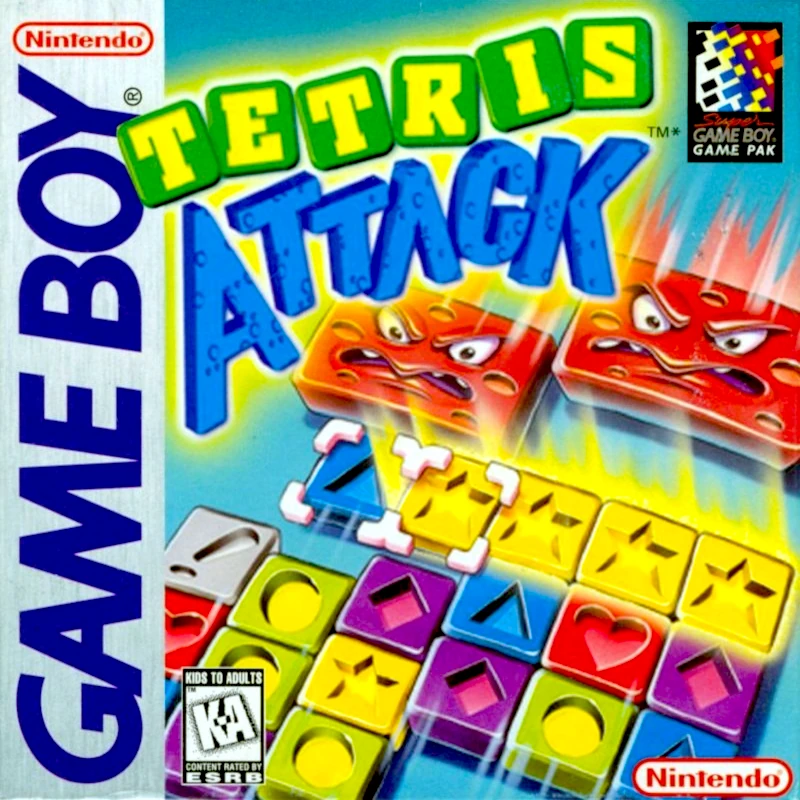
#33. – Tetris Attack
If there’s one thing I remember about Tetris Attack it’s that the game got an unusual amount of attention at the time of release. It came out pretty late, and the next generation was already in full swing. The SNES version seemed pretty popular. I didn’t even realize a Game Boy edition ever came out until years later. I know, I’m lame. The most surprising part of this title is that it’s not Tetris at all. There are no falling blocks whatsoever. Instead gameplay is more based on the Panel De Pon series. That’s just fine because those games are fun too.
Tetris Attack is still a puzzle game though. It’s a match three tile game where blocks rise from the bottom of the screen, and you have to flip them around horizontally. When you line up three of the same kind they’re eliminated. Simple, right? It’s not as strategic as vanilla Tetris but it’s still quite good. Plus, the classic Nintendo characters being thrown in is fun. It might not require as much planning as regular Tetris, but there’s still a lot of depth to gameplay. This is a great alternative style puzzle game that’s worth checking out. The SNES version is better though.
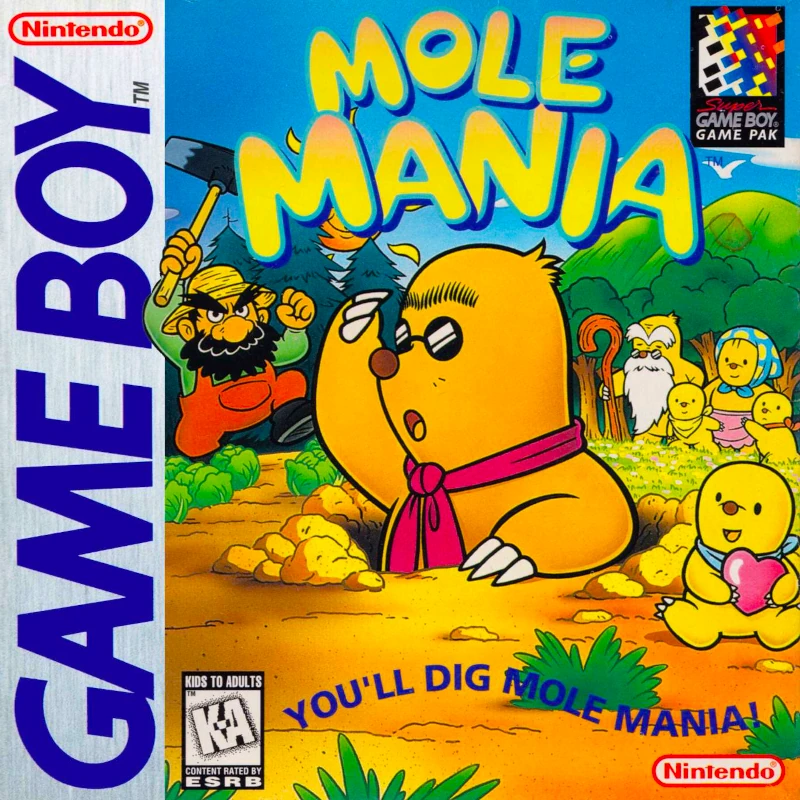
#32. – Mole Mania
For as hyped as each Shigeru Miyamoto game is some have fallen through the cracks. To put it bluntly the guy has released some bombs. Mole Mania is one of these. It has never received a sequel, and the characters have long been forgotten. It’s a shame because it has that classic quirky breed of gameplay the legendary developer is known for. It’s clear that the concept had a lot of planning, and the stages are extremely well designed. Mole Mania is basically the best Game Boy game that no played.
As you may have surmised you play as a mole in this game. What do moles do? They dig. Oh, and apparently they also drag items around various environments to solve puzzles. I’m sure glad this breed of mole doesn’t live in my yard. The goal of the game is to guide a black ball to a gate. Gameplay remains largely the same through each single screen stage. These levels are actually multi-tiered though. Our mole character can go underground which is used mostly to get past obstacles. Mole Mania does a fantastic job of introducing variety as you progress. There are so many different mechanics thrown at you that it’s astounding. More than you can shake a stick at. Mole Mania is absolutely amazing.
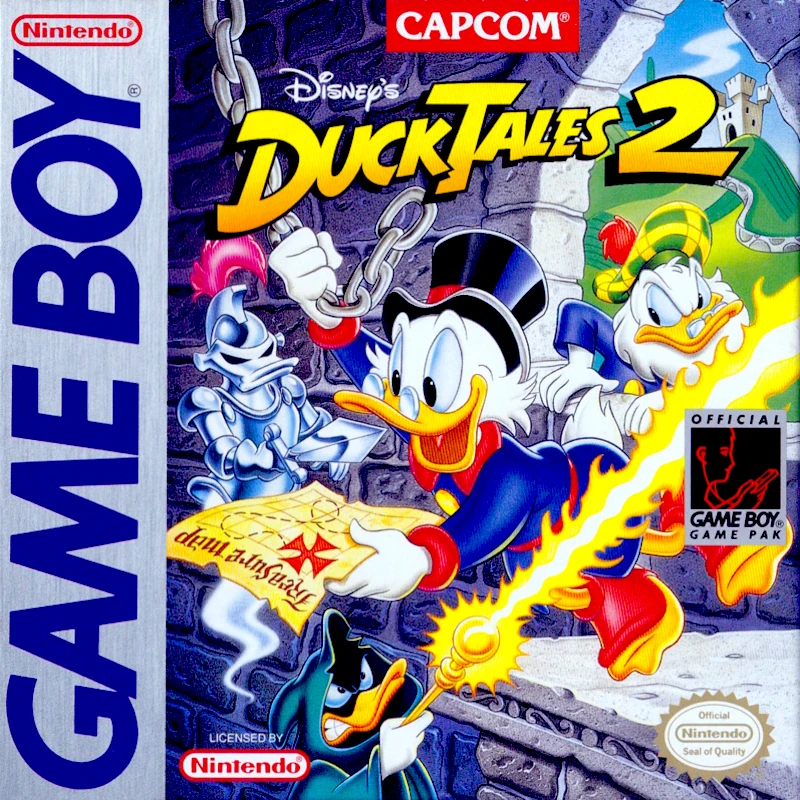
#31. – Ducktales 2
When Capcom and Disney combined forces it was magic. Seriously, they were one of the few developers that could do any license justice. In this case they chose Ducktales. It was a mighty fine choice if I do say so myself. The NES game was amazing and gamers from the time still talk about it. A sequel came out, but it came at an awkward time when players were transitioning to the SNES. Thankfully they released a version of both titles on the Game Boy.
Ducktales 2 in particular is fantastic. This is a side scrolling action platformer where you play as Scrooge Mcduck, and he’s doing what he does best. Basically, you’re trying to find even more riches for the wealthy bird. The platforming mechanics are on point with the character’s ability to pogo off of his cane. This is used to dispatch foes and traverse otherwise harmful environments. It even allows our guy to reach higher areas in each stage. I was surprised to discover that this isn’t a total port. It shares the same level themes and enemies, but has been re-designed in many areas. An original game would have been better, but I’ll take what I can get.
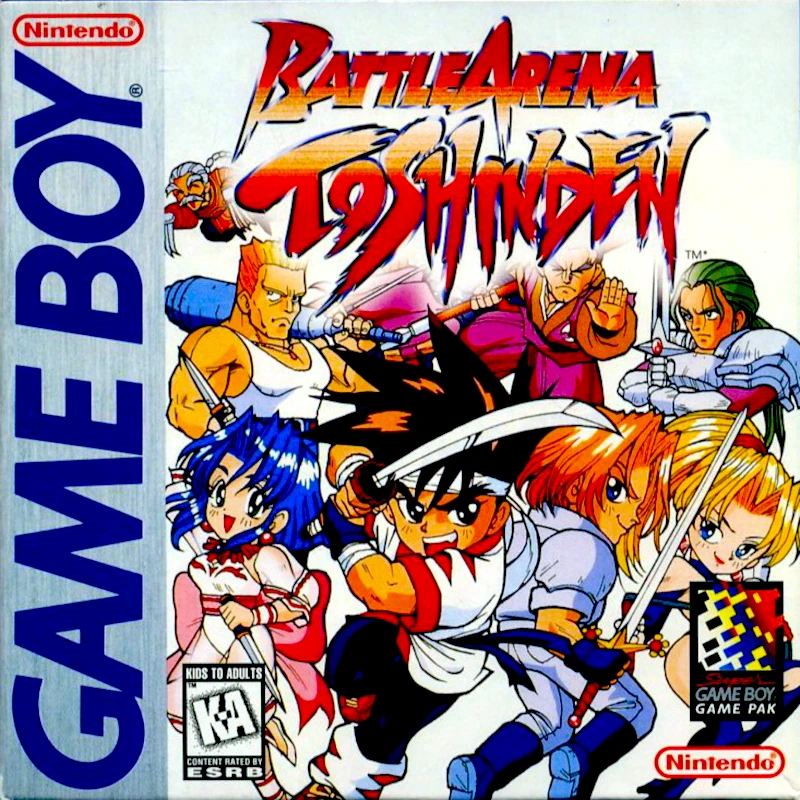
#30. – Battle Arena Toshinden
The original Battle Arena Toshinden is awful. The critics were clearly wrong when it launched. I don’t even know how it could have been fixed. It’s downright bizarre that the Game Boy version is so good. Who would think that it was apparently the 3D graphics that were the problem. This version of Battle Arena Toshinden is purely sprite based. The Game Boy couldn’t handle polygons. Rather than trying to recreate the entire game in 2D the developers instead opted to make something a little different.
What I mean is they opted for those cute chibi characters that fighting game fans on the platform are all too familiar with. You know what? They work. I’m no hater. In this case I actually prefer these new designs to their console counterparts. Gameplay flows surprisingly well. I had little problem performing special moves, and even linking together combos. If you’re looking for the best fighting game on the Game Boy then this is it. You don’t even need to be a Battle Arena Toshinden fan to like this one. Honestly, you probably shouldn’t be. The other games are the worst.
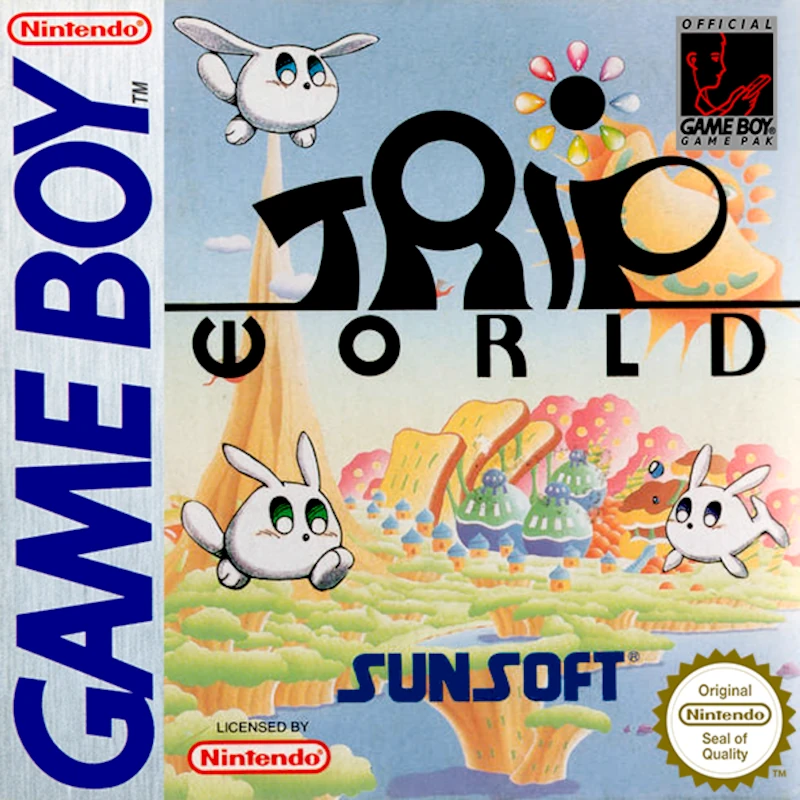
#29. – Trip World
Trip World is incredible. I could stop there, but I won’t. The world needs to know about Trip World. This game has you playing as a cute little bunny rabbit. I guess that passes as a bunny? He’s more of a ball to be honest. Our main character can walk and jump. You know, the standard platforming conventions. What makes the game unique is that our character can transform into a variety of different forms. This gives him new abilities, and the game is designed in such a way that all of these are required to progress.
This was a Japan only release. Shame on them. Trip World has some excellent level designs. I love the platforming challenges, and the enemies and their attack patterns are really technical for a Game Boy title. It also doesn’t hurt that the game is beautiful. The soundtrack rocks too. Trip World is incredibly charming with shades of Kirby and Mario, but in the end it is its own thing. I just hate that difficulty spike at the end of the game. Trip World is generally easy, but if you want to see the credits you better get good. Trip World deserves more attention than it has received.
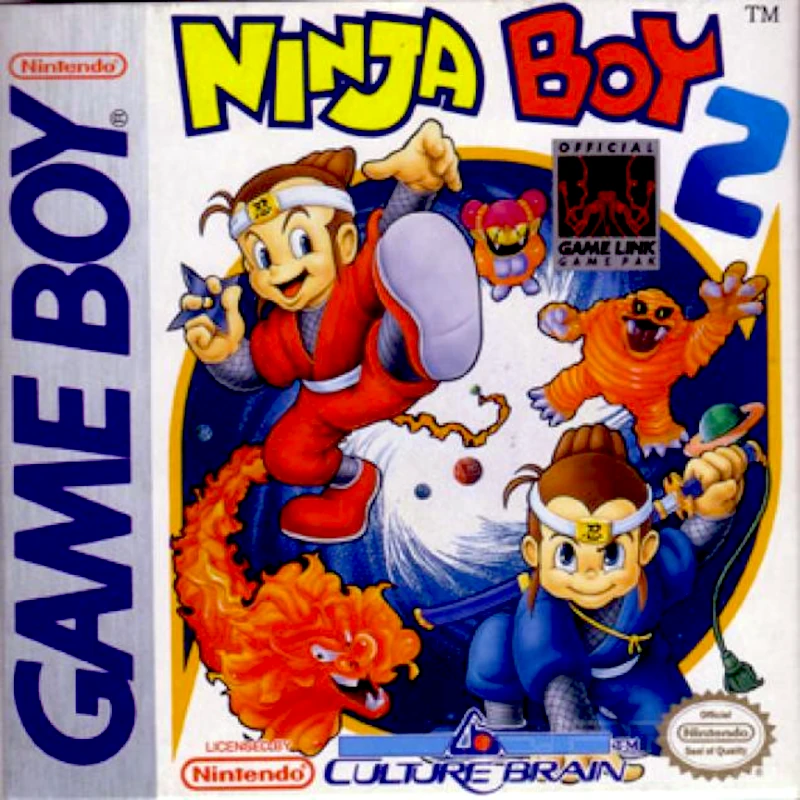
#28. – Ninja Boy 2
Remember Little Ninja Brothers on the NES? No? Well, you aren’t alone. That was one of the true hidden gems on the platform. The first Ninja Boy on Game Boy ditched the RPG elements for a focus on action. It was a weaker game for it. Ninja Boy 2 plays more like Little Ninja Brothers. What this means is that it’s an action RPG with shades of beat ’em up. That’s just perfect if you ask me. This is one of those zany games from Japan that we would typically not get. That alone warrants a look.
The game itself looks like a traditional role playing game. You play as one of two ninjas as they traverse an overworld map containing within it towns, dungeons, and other points of interest. Battles occur at random but are entirely action based. Here is where the game is reminiscent of a beat ’em up. It’s a really interesting mix of gameplay mechanics, and it works very well. Ninja Boy 2 has another thing going for it. Multiplayer. You can link two systems together and tackle the main adventure together. A multiplayer action RPG on the Game Boy was extremely ambitious, and they pulled it off. The game is one of the craziest games localized for the platform. Check it out.
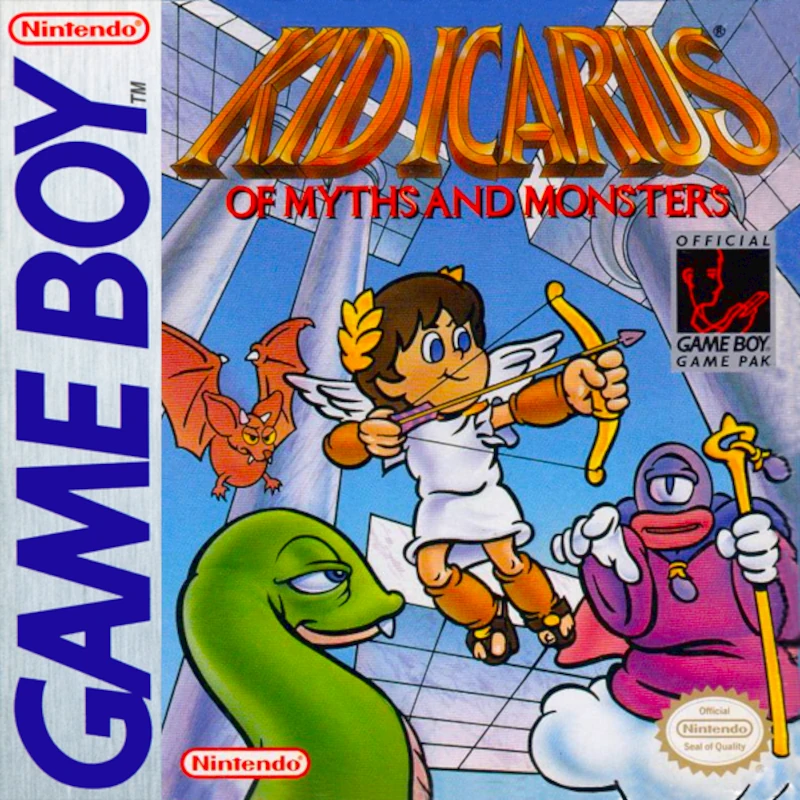
#27. – Kid Icarus: Of Myths and Monsters
Hey all you! I’m speaking to the people who begged for a sequel to Kid Icarus on the NES. We had one all along. It was on the Game Boy. Kid Icarus: Of Myths and Monsters is even better than its predecessor. For the most part it plays the same. This is a side scrolling platformer with an emphasis on action. Pit is an angel kid, and has wings (that he can’t use). He’s armed with a bow as his main method of attack. Unfortunately this has a short range, but works perfectly for dispatching the fantastical foes coming for Pit’s guts.
Like the original Kid Icarus, Of Myths and Monsters is a bit more technical than your typical platformer. You have a variety of different stage types. Some are vertically scrolling, others move only horizontally. There are even labyrinths that function like mazes. The stages are all new and they are a joy to explore. Furthermore you’ll also find a lot of quality of life enhancements. You no longer die when you fall down to areas you’ve already been. Praise the heavens. Pun intended. This is a worthy sequel and as I already said is better than the original. Kid Icarus: Of Myths and Monsters is clearly one of the best Game Boy games of all time.
#26. – Dr. Mario
Dr. Mario may not have the allure of Tetris, but in my opinion it’s almost as good. Nintendo didn’t just copy the formula thankfully. They added their own twists to it. Dr. Mario is a side view dropping block puzzle game where your goal is simply elimination. It has an actual goal unlike Tetris where you just play endlessly. Here you want to get rid of viruses. The blocks that fall are colored pills, and you eliminate the microscopic parasites by lining up pills of the same color. Hence the ‘doctor’ in the title. Not sure what Mario has to do with any of this. He’s a man of many professions so I’ll let it slide.
This is one of the many cases where Nintendo released a game on the NES, and then ported it to the Game Boy. Is Dr. Mario as good here as it was on console? No. The black and white display makes it less fun to look at. Instead of the pills and viruses being multi-colored they are now different shades of white and gray. It works, but it’s an obvious downgrade. Is the trade off for handheld play worth it? Absolutely. Every time I pop Dr. Mario in I end up losing a few hours of my life. Gameplay is absolutely addictive, and the ramp up in difficulty is masterfully done. It’s may be a twist on Tetris, but it’s a really good one.
#25. – Kid Dracula
It’s kind of funny that the best Castlevania game on the Game Boy is a spin-off. You don’t play as any sort of Belmont, or even as one of their friends. Instead you play as Dracula’s son Alucard. Symphony of the Night eat your heart out. Kid Dracula is also a light-hearted spin-off. It’s refreshing to see the series not take its horror themes so seriously. I love them, but sometimes they try too hard. Kid Dracula is whimsical, funny, and goofy. That’s just perfect for a spin-off in my opinion.
Kid Dracula is a two dimensional side scrolling platformer. As I mentioned earlier you play as the spawn of the king of the vampires. Alucard has a number of different abilities that are really interesting. My personal favorite is that he can transform into a bat and fly through stages. He’s a vampire after all. It just makes sense. There are even some sections where you can walk on the ceiling, use spells to defeat monsters, etc. The level designs are imaginative and quite varied. Konami loved making fun of themselves and their classic franchises. I’m here for it. Kid Dracula is charming and fun.
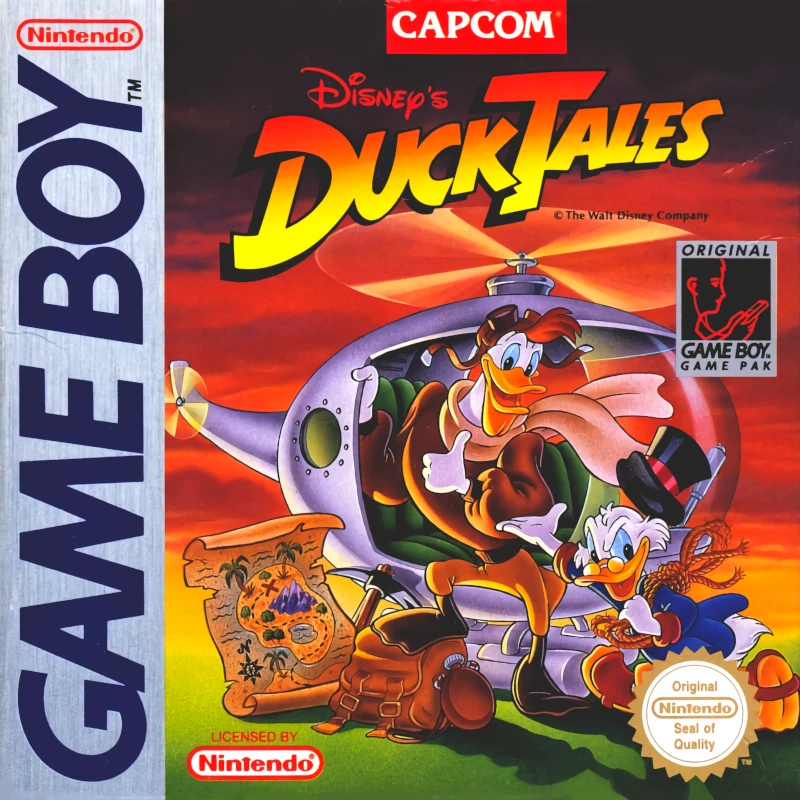
#24. – Ducktales
One of the most special NES games is also a fantastic release on the Game Boy. Plus, who doesn’t love Ducktales? I still get that dang theme song stuck in my head at the most random times. On console Ducktales was one of Capcom’s premier releases. It was a two dimensional platformer where you play as Scrooge Mcduck on his never-ending quest to find treasure. It was better than any licensed game at the time had any right to be. The Game Boy version is largely more of the same. It’s not an identical release, and instead features some remixed elements.
Thankfully these actually work pretty well. The controls have been simplified. I’m speaking specifically about Scrooge’s default pogo jump on his cane. That’s definitely a good thing. Additionally some of the stages have been toned down. They obviously had a hard time fitting everything on such a small screen. Unfortunately this overall simplification means this handheld edition isn’t quite as good as its console counterpart. It’s close though. There are few platformers better than the original Ducktales on any portable.
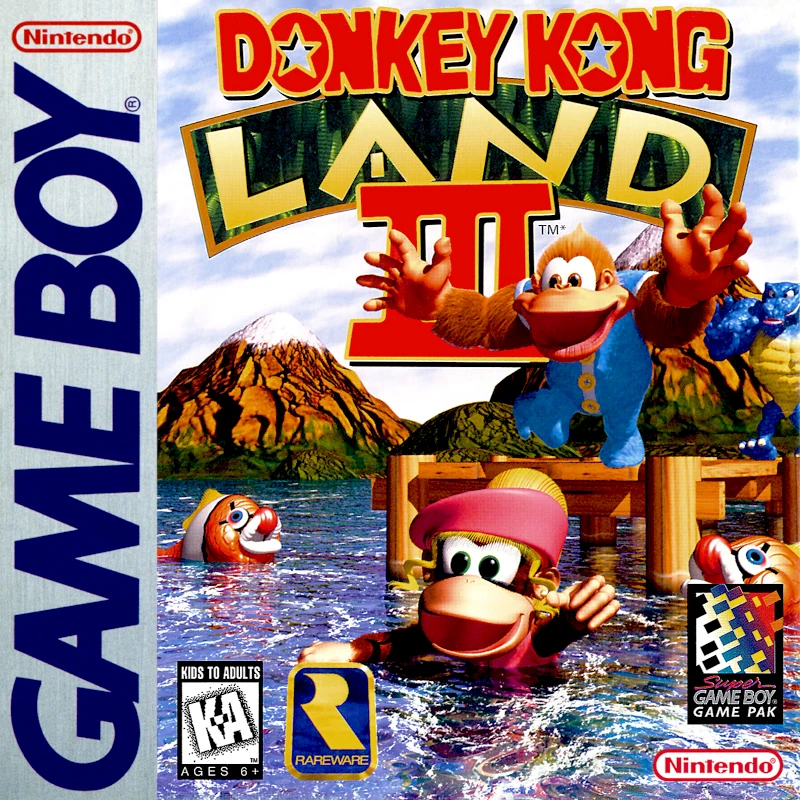
#23. – Donkey Kong Land III
The Donkey Kong Land series was great. With the first two releases developer Rare seemed to have some trouble understanding just what gamers wanted from a handheld iteration of the series. They took two different directions, and both had their issues. It wasn’t until this third release that they finally found the perfect marriage. Donkey Kong Land III had incredible graphics not scaled back like the second. Gameplay was also tighter than both of its predecessors. It was fantastic and allowed them to focus on level designs, and they did just that. This is a really ambitious Game Boy release.
First of all it’s beautiful. Rare was able to re-create the digitized graphics of the SNES game even on such limited hardware. Once again this is not a port of the third Country game. It looks and plays like it, but the stages have been completely re-designed. Everything is more simple. Despite this Land 3 still manages to introduce some new ideas that didn’t even make the cut in the console game. This feels like an expansion of the SNES title. That’s exactly what I’ve always wanted with a Game Boy counterpart. This one is still a side scrolling platformer wherein you play as both Dixie and Diddy Kong, and it features plenty of animal friends as well. It’s a fun banana snagging quest, but falls just short of the third Country game.
#22. – Kaeru No Tame Waru
The title loosely translates to something along the lines of the Frog for Whom the Bell Tolls. Or something like that. I don’t speak Japanese so sue me. This one is kind of a Zelda clone, and comes from Nintendo themselves. It’s an overhead action adventure title with a semi-overhead perspective. You travel the world, fight your way through dungeons, collect items, and solve puzzles. There are a few twists however. Some of them good while others are bad. I may have claimed this to be a Zelda clone but that’s admittedly an oversimplification. Kaeru no Tame is largely its own thing.
The game uses auto combat. I realize I’ve probably lost some readers with that statement. When you run into a foe your main character (in this case a prince) fights monsters on his own. There’s no swiping your sword, or using tools to slay these foul creatures. Instead you have to wait and see what happens. Success is largely based on the prince’s stats. You can use items to try and sway the battle, but if you’re underpowered there’s not much you can do to overcome these challenges. Living up to its name there are underwater segments (in the side scrolling sections) wherein you transform into a frog. It’s a cool mechanic that makes sense. The game is a gem.
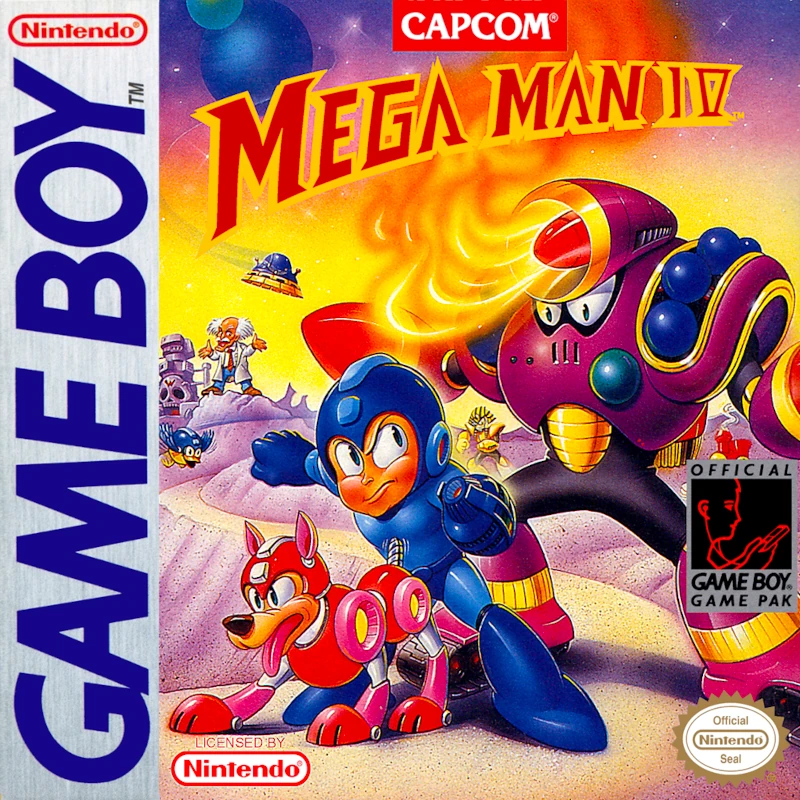
#21. – Mega Man IV
It’s interesting that by the fourth installment on the Game Boy Capcom was hitting their stride. When they hit part four on the NES it was running out of steam. Mega Man IV once again follows their established formula. At least for the handheld games. This one combines robot masters and remixed versions of their stages from both Mega Man 4 and 5. Somehow they aren’t as stale here. I think they chose the best boss characters from the two games. Not that it’s saying a lot. The stages are slightly more interesting, and the graphics are incredible for a Game Boy title.
Best yet it still feels like Mega Man. For once Capcom got the difficulty just right. It’s challenging but not as much as the NES titles. We’re playing on the Game Boy after all. Capcom needs to give players a hand. The boss battles are fun, and I loved seeing which of the mixed robot masters were weak to specific weapons. This one has the lame slide move, and the awesome charge up shot. Despite it’s problems Mega Man IV is something special. It might just be one of the best Mega Man games around. In the original series at least.
#20. – Contra: The Aliens Wars
We all know the Game Boy was capable of reproducing NES games fairly well. How about the Super Nintendo, though? If Contra: The Alien Wars is any indication then it can do a proper right job of it all. Cheerio. Obviously it’s not a 1:1 port. That would be preposterous. Instead it’s a scaled back version that is missing content and features, but maintains the original game’s spirit. It’s the Game Boy, and that’s enough for me.
Contra: The Alien Wars has you playing as the fan favorite strong man Bill. He has some aliens to gun down, and you’ve got the job of controlling him through this vendetta. Gameplay is best described as a run and gun with action platformer elements mixed in. It’s Contra. You know what you’re getting into here. The stages throw a lot of enemies at you, but thanks to your multi-directional shots you’ve got just the tools for the job. The levels have been cut back, and less enemies come at you in this version. There’s even a missing stage. The biggest offense is that you can only carry one weapon at a time. In spite of these blemishes it’s an excellent Game Boy game.
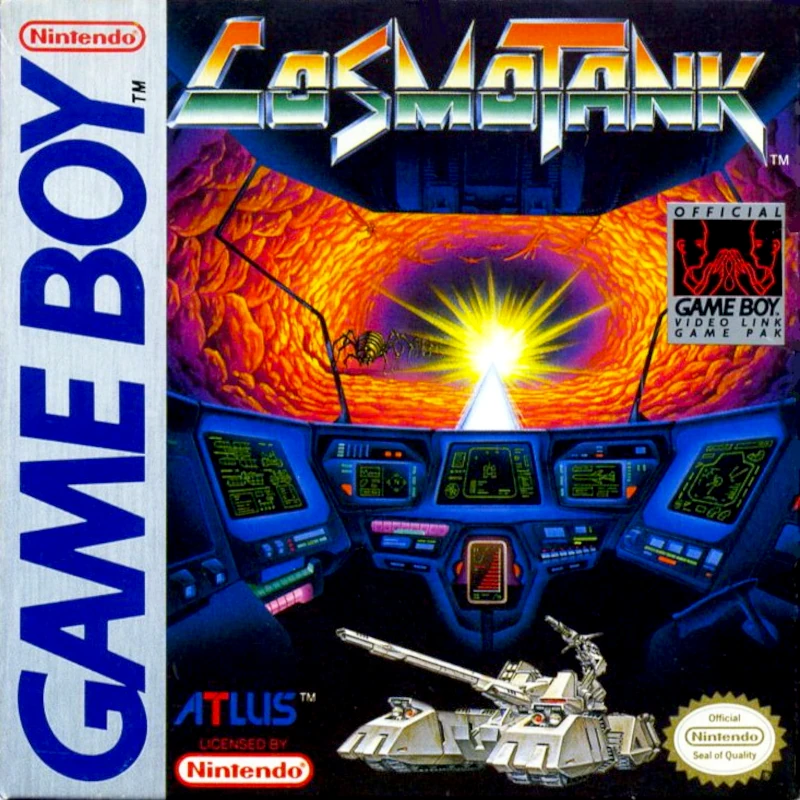
#19. – Cosmo Tank
Tanks are the weapon of choice for anyone looking to blast and destroy alien scum. Didn’t you know? Cosmo Tank has a not so unique premise, but the gameplay is amazing. It features three different styles of play. The first is a top down exploration mode. Here you guide your tank around the surface of various planets shooting aliens and dodging their attacks. It’s pretty neat, and works really well. It’s nothing we haven’t seen before, but I’m a creature of habit. I dig it.
Where the game gets really unique is when you go inside caves or into holes. While indoors you view the action from a first person perspective. Yep, this is one of those rare fps games on the old 8-bit handheld. Here you explore labyrinths and aim your weapons at any oncoming enemies. This is also how you fight against the boss characters. It’s a little difficult to dodge attacks because your hit box isn’t entirely clear. Finally we have segments of the game that play like a top down auto scrolling shooter. This is really basic and not all that impressive. Still, the fact that Cosmo Tank mixes three different gameplay styles into one is amazing. It’s one of the best Game Boy hidden gems.
#18. – Wario Land II
The first Wario Land was okay to decent. It didn’t push the envelope, but was a safe side scrolling platformer with that classic Nintendo polish. Wario Land II is where the character finally came into his own. He stopped piggybacking off of the classic Mario gameplay. This is not like one of those games. For all the best reasons. Wario Land II focuses more on exploration and puzzle solving than platforming challenges. Nintendo needed to do something a little different with the character. This wasn’t what I had in mind but it works.
First of all, Wario cannot die. He’s like Bill Murray in Groundhog’s Day. Minus that annoying Sonny and Cher song. When he is hit by enemies and hazards his form is temporarily changed. I’ll start off with a morbid example. Wario can be set on fire. He runs frantically around while his skin burns. This can be used to break through specific blocks. He can also be squished down to a pancake which lets him get into tiny areas, eat projectiles which cause him to gain significant weight, and more. The boss fights are also extremely interesting. The not being able to die mechanic makes these function more like puzzles. Wario Land II is an amazing change of pace for the anti-hero. I just wish future sequels were more like this one.
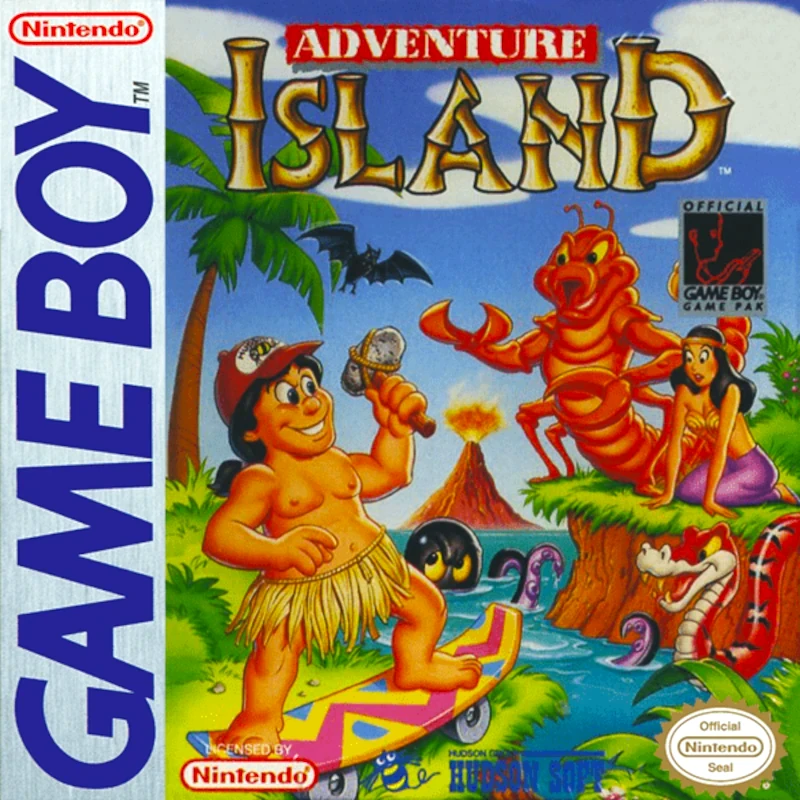
#17. – Adventure Island
Hudson just couldn’t be normal when it came to the Game Boy. No, this is not the original Adventure Island. It’s the first sequel. Why they didn’t call it that I’ll never know, but this is where we’re at. Adventure Island is a direct port of the NES version. That’s not a bad place to be though. After all the NES game made our list of the best NES platformers. Deservedly so. Adventure Island on Game Boy has you play as a portly guy with a baseball cap and grass skirt. Our hero, Master Higgins, has one major problem though. He’s hungry. It never ends. The guy can’t stop eating or he’ll die. You have to constantly gobble down fruit to stay alive.
Besides this it’s a pretty basic side scrolling platformer. It’s not particularly polished, but makes up for this with fantastic level designs. Oh, and the power-ups make a difference too. Master Higgins can pick up hatchets that can be thrown, but that’s not the best part. It’s the dinosaur buddies. He rides on their backs and gains a myriad of different abilities from them. My favorite is the pterodactyl character that allows for flight. Another dinosaur lets you glide effortlessly through the water. Yes, it’s even better than the Frog Suit in Super Mario Bros. 3. You can even stockpile these guys for use in later stages. It makes losing them by being hit all the more tragic. This port of the game is amazing.
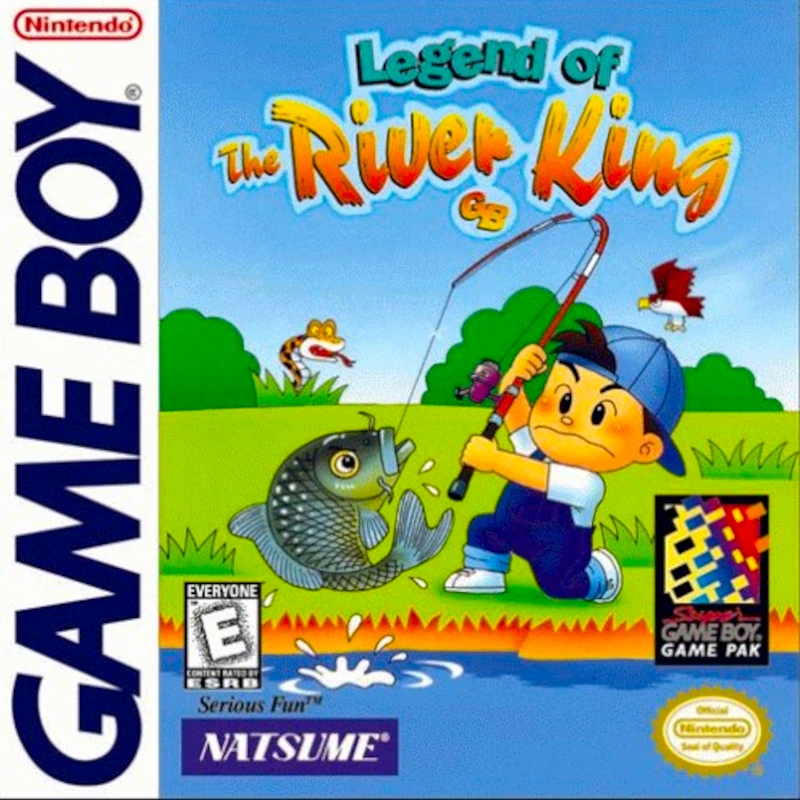
#16. – Legend of the River King
This was the first taste of fishing RPGs we got in North America. It’s an oddly great combination Legend of the River King did for fishing what Harvest Moon did for farming. This is actually the third release in the franchise, but the first we got in North America. We just weren’t ready for such a weird game. It was a simple and cozy release, and never got a lot of hype. Few gamers gave this one a chance which is a shame. Legend of the River King is clearly one of the best Game Boy games of all time.
So what do you do in it? Fish. That’s the focus. You travel to new areas trying out new rods and bait to figure out the best way to catch specific species. Neat, right? I mean that’s pretty similar to fishing in real life. The catching mechanics are interesting with an underwater view while you fight your catch. As a fishing game it’s a lot of fun. That’s not all Legend of the River King has to offer though. When I said it’s an RPG I wasn’t kidding. There are random encounters while exploring the environments. These are turn based, and have their own sets of stats. It’s mostly based on timing which is unique, and it works well enough. What’s interesting is you only fight insects and animals. No dragons to slay here. You’re a fisherman and not a paladin after all.
#15. – Dragon Warrior Monsters
This is what you get when you combine Dragon Quest with Pokemon. In other words something amazing. That’s what Dragon Warrior Monsters is. The game stars the main character from the sixth mainline installment. He’s a kid here who lives in a fantasy world wherein he is whisked away to another fantasy world to save his sister. It’s like Inception I guess. The game has you traveling through various dungeons with one hub town and an ultimate goal of winning a monster battling tournament. You gotta catch ’em all, and that’s the primarily what you’re going to be working on.
The battle system is classic Dragon Quest through and through. Just with monsters doing the battling instead of human characters. You travel through randomly generated dungeons and recruit monsters that you defeat in battle. From here you can breed and combine them to make more powerful creatures. The best part is they’re all based on the Dragon Quest world. You can even get Dragonlord on your team. That’s pure hype for any fan of the franchise. It’s a bit simple, but fun start to finish. Dragon Warrior Monsters is simply incredible, and has all the classic multiplayer options you would expect from a monster catching RPG.
#14. – Donkey Kong
What? Plain old Donkey Kong? That’s what I thought when this game released. That’s just how it starts. You play as Mario (or Jumpman if we’re going to be snoody) as he scales construction areas to save his girlfriend Pauline from the evil ape. Donkey Kong re-creates all of the classic stages but something is different. You might notice that Mario has a set of new abilities including a handstand and he can jump do a spring jump from this position. That becomes important later. After defeating Donkey Kong this adversary drags Pauline into the real world and here’s where the game actually begins.
Now it becomes more of an action puzzle title rather than pure platformer. Gameplay here is super interesting. You have to manipulate Mario in some new ways to get past obstacles, and there are even items to collect. Our plumber even has the ability to throw items including the classic hammer. There’s even a level select. Donkey Kong screams classic Nintendo polish, and it’s a really unique take on the classic gameplay. This is the point where Nintendo’s in house developers began to lean more into puzzles in this franchise. Remember the Mario Vs. Donkey Kong series? That’s largely a follow up to this one. It’s an amazing game, and I love the direction they took here.
#13. – Final Fantasy Legend II
If there was just one problem with the first Final Fantasy Legend it’s that it wasn’t focused enough. The story was almost non-existent, for one thing. You traveled from area to area but it never felt like anything you did mattered. That all changes with Final Fantasy Legend II. It has a distinct main character, and a quest with interesting locales and even cool characters. The basic premise is the same, and it stays true to the SaGa series. You play as a rag-tag band of characters (most of them you create) as you embark on a quest to find out what happened to our hero’s father. It’s basic, but perfectly functional.
What makes this one so interesting is that you have more types of characters to create and use in your party. Humans and mutants return, and you can still choose between male and female versions. My personal favorite new addition is robots. These guys seriously mop the floor with groups of enemies. Unfortunately a few things work against it. The game follows SaGa conventions with breakable weapons. This means you’re going to have to buy multiples, and keep them equipped on your party members. It’s a little cumbersome to be honest. You’ll get used to it, and you should take the time to, because Final Fantasy Legend II is incredible.
#12. – Operation C
You know, the 16-bit Contra titles are nice but something was lost in the move to more powerful hardware. On the NES these titles were incredible. Absolutely unforgettable. On the SNES and Genesis they were good, but not great. Operation C continues the lineage of the NES titles. It’s a sequel to Super Contra after all. It lives up to the pedigree. For all intents and purposes this is the final classic style Contra game. In my opinion of course.
Gameplay is largely the same as it was in previous Contra games. It’s just on a smaller screen, and with worse graphics. Plus it’s black and white now. You have the standard side scrolling run and gun stages which are just as fun as they always were. You can fire your weapons in various directions and even while jumping. You’ll need to master these skills pretty quick because Operation C isn’t easy. I really like the fact that rapid fire is now the default. You no longer need the machine gun to use it. The other weapons all return including the spread shot and flamethrower. Operation C introduces one of my favorite in the series; the homing missile. You also have overhead stages and while these aren’t as fun they’re perfectly serviceable. If you want Contra on the go then this is the one you’ll want to pick up.
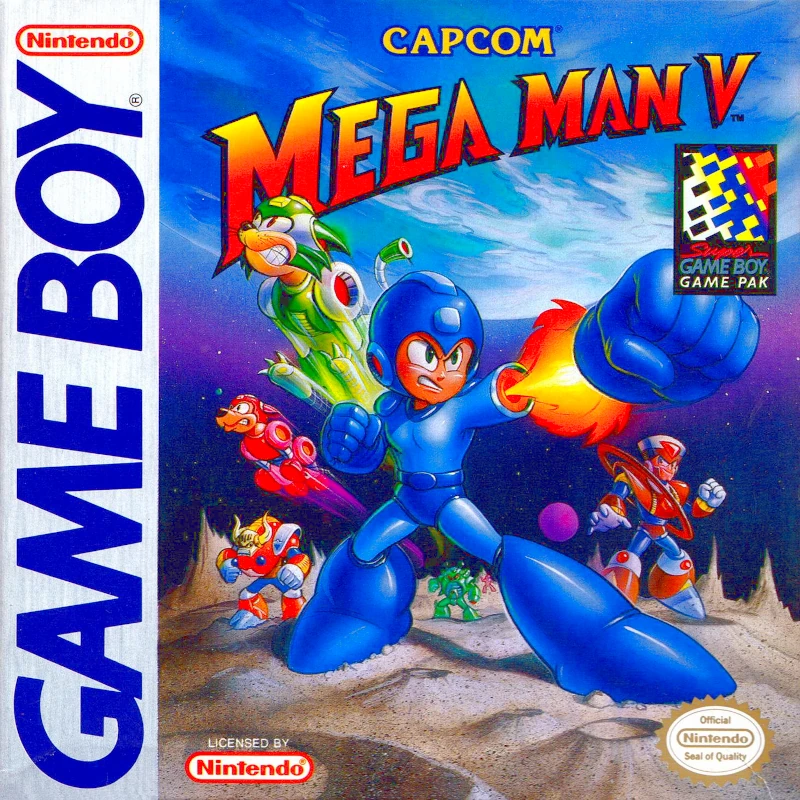
#11. – Mega Man V
The last Mega Man (at least from the vanilla series) released on Game Boy is also the best one. The others were good, but they were operating on borrowed content. They simply recycled bosses and stages from their NES counterparts. The mix and match concept was fun, but ultimately, the past games felt recycled. Mega Man V was completely original. Yes, Capcom finally put in the effort. No more leftovers for Mega Man fans. This iteration has all new bosses and weapons to be pried off of their robotic corpses. It’s amazing that they finally went the extra mile for handheld gamers.
Here we have a set of eight brand spanking new robot masters that you won’t find anywhere else. Instead of being based on everyday utilities the theme instead revolves around the planets in our solar system. They’re called the star droids, and the concept rocks. I really like the new designs and think they’re some of the best in the Mega Man series. The stages were designed with the small screen in mind. They’re all the more stronger because of this. You don’t feel like you’re playing a condensed version. Instead this is an optimized Game Boy title. Plus, the soundtrack rocks. I consider this the ‘lost’ Mega Man game. It deserves its place on this list.
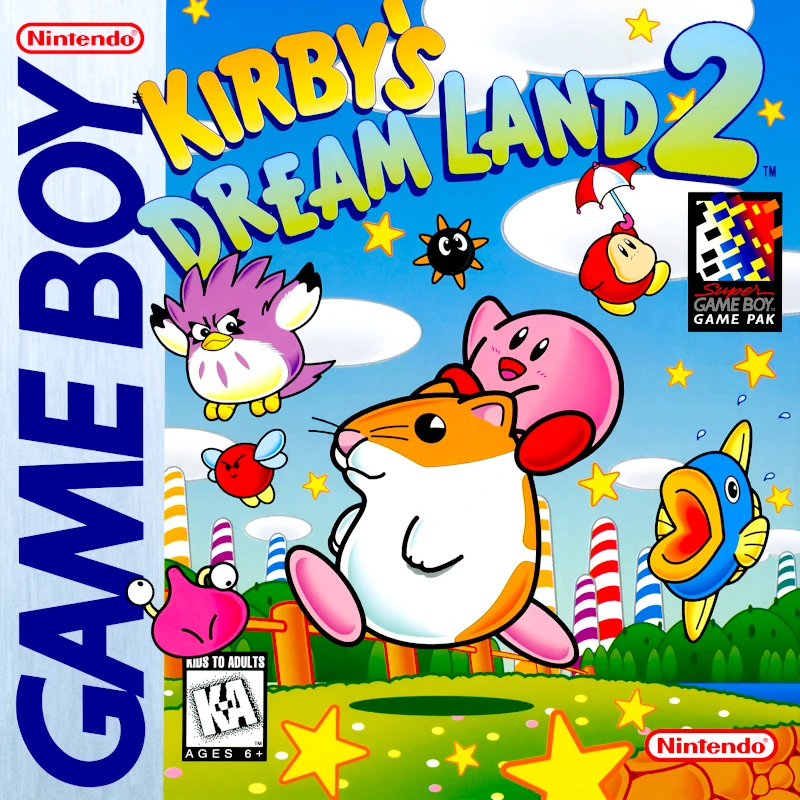
#10. – Kirby’s Dream Land 2
Who doesn’t love Kirby? These titles are like video game comfort food. Sometimes you just want to hop and bop your way through stages that aren’t frustrating and don’t push back in any significant way. Not just any old slop will do. You want something good. Kirby’s Dream Land 2 is fine dining. Not only does the character’s trademark ability to eat everything in sight return, but there are a lot of new abilities for the pink puff to gain. The stages are also masterfully crafted and this is one of the few games where it’s just fun to see everything it has to offer. It’s low on challenge, but high on fun.
Kirby’s Dream Land 2 essentially doubles or even triples the abilities Kirby can use. This is thanks in full part to the animal friends he can work with. There are several animals that Kirby can befriend and ride on, or in the case of the fish, in. These come with their own innate abilities, but also provide significant changes to whatever absorbed ability our guy is currently using. It’s an intelligent addition to the series that pushes things to the next level. Kirby’s Dream Land 2 is also a very beautiful game. The backgrounds can be lacking, but the enemies and characters look incredible by Game Boy standards. Some days I even consider this to be the best game in the series.
#9. – Adventure Island II: Aliens in Paradise
This one might upset some readers. After all Adventure Island never got much attention. Is it really that good? Yes. Adventure Island II: Aliens in Paradise is easily one of the best Game Boy platformers. You once again play as the eternally hungry Master Higgins, and the rules are mostly the same as in the last release. You have to eat food, throw stone hatchets to defeat enemies, and ride on the back of various dino buddies. The stages in this version have been kicked up several notches. There are way more obstacles, and the designs have improved creativity.
With that said this is still a port of Adventure Island III. It’s also not quite as good as the NES title. Why didn’t they just call this by the same name? That’s because Hudson gonna Hudson. They didn’t always make the best decisions. Perhaps that’s why they aren’t around anymore. Regardless the game has a ton of variety. It’s also quite difficult with a great learning curve. It’s a simple platformer but has a lot of power-ups. If you’re looking for a good game that you probably haven’t played then this is a good choice. It’s perfect for the pick up and play experience.
#8. – Tetris
Of course it had to be Tetris. Who in their right mind would leave this landmark title off of a list such as this? It’s unfathomable to think about. Tetris defined the Game Boy. That was true at least until Pokemon came out. This launch title might be responsible for the platform being the runaway success that it was. It’s bizarrely simple too. From a side view you guide falling blocks to the bottom of the screen. You can’t stop them from dropping, but you can move them left and right and even rotate them with the press of a button. Your goal is just to line up blocks horizontally. Doing so eliminates the entire line.
It’s basically a score attack to see how long you can survive. The thing is this type of gameplay perfectly fits handheld play. It’s something anyone can understand within mere seconds, but takes a long time to master. The game is a blast in short spurts, and serves as the perfect time waster. You can even link together two Game Boys (provided you both own a copy of Tetris. Chances are you did) and compete against one another. Odds are if you own a Game Boy then you already have Tetris. It’s also most likely one of your favorite games for the platform. I know it’s one of mine.
#7. – The Legend of Zelda: Link’s Awakening
I’ll start this one off by choosing violence. Link’s Awakening isn’t the be all end all Zelda game. It’s the best original handheld iteration, but it’s a side story, and it feels like one. Is that a bad thing? Absolutely not. The most impressive thing about this game is that it doesn’t feel like an 8-bit title. It compares very favorably to A Link to the Past. That’s a high compliment. The action is scaled down beautifully. Once again the game is a top down action adventure game where you play as everyone’s favorite elf kid Link. This time the setting is a dream world called Koholint Island, and his goal is to return to Hyrule. How can he do this? By awakening a giant whale called the Wind Fish, of course. To do so he’ll need a set of magical instruments tucked away deep inside dungeons.
What I like most about this one is how different it is from the rest of the series. Link’s Awakening marked the series’ first departure from Hyrule after all. Koholint Island isn’t as interesting, but it’s something different. In this case that’s not a bad thing. The world map is divided into sections like the original Legend of Zelda. It’s your job to locate the dungeons, acquire the tool within them, and use it to reach a boss character you’ll face off against. It’s the typical classic Zelda formula, and it never gets old. You have some cool new items like the Roc’s Feather that let’s Link jump. This is especially handy for the side scrolling sections. Tools can also be combined for a variety of neat effects. It’s Zelda, and it’s good. For the Game Boy it’s amazing.
#6. – Dragon Warrior Monsters II
Enix was never quite able to out-Pokemon Nintendo. For my money this is the closest they ever got. Dragon Warrior Monsters II leans even heavier into the Pocket Monsters franchise by featuring two different versions. Rather than being color coded they’re differentiated by the protagonist with both a male and female version. Neat idea, right? Gameplay-wise it’s very similar to the last Dragon Warrior Monsters. It’s just more polished, has a bigger lineup of monsters, more interesting world to explore, etc. Basically, it’s better in every way.
The game’s greatest strength is that the monsters you gotta catch all of are based entirely on the Dragon Quest series. The battle system is largely the same as what you’ll find in classic installments of the franchise. It works, and it’s perfectly functional here. You go on a quest starting with just one monster. As you overcome enemies encountered in random battles you’ll occasionally get the option to recruit them. Or you can feed them meat. Recruiting monsters lets you breed them with another for more powerful options. The story may be short, but there’s no end to the vast customization and experimentation here. Dragon Warrior Monsters II is still worth playing even with its low-fi graphics.
#5. – Final Fantasy Legend III
Okay, this is where the SaGa series started to get really serious. The developers ditched some of the series conventions in favor of a more traditional RPG experience. Final Fantasy Legend III is all the more stronger for it. There’s now traditional experience points and level gains, distinct characters with specific abilities, and weapons no longer break with use. It feels more like Final Fantasy. The adventure is still seasoned with some SaGa spice however. Characters can change into robots and monsters, and they have their own unique abilities and growth. Mainly I just stuck to the regular humans/mutants.
So what does this game do well? There is a ton to explore here. You have various world maps with multiple modes of travel. Sometimes you’ll fly through the sky, and in other moments your party will explore the sea floor. There’s even time travel. This is all very technical for a Game Boy game. The battle system is also quite polished. There are a lot of options at your disposal and with a party of up to five characters you’ll have plenty of opportunity to experiment. Best yet it’s weird. The game doesn’t take itself too seriously. This is common in SaGa games and I love it.
#4. – Dragon Warrior I & II
What can I say? I’m a glutton for Dragon Quest. This package includes both the first and second titles. Enix didn’t just port them though. Instead they based these versions on the Super Famicom remakes. They include a lot of quality of life enhancements that make the games more accessible. They’re also rebalanced. This is both a blessing and a curse. On one hand Dragon Quest II is significantly improved. Characters are no longer useless in battle, instant death isn’t as cheap as it was before, and the difficulty is more appropriate. The original Dragon Quest unfortunately shows its blemishes. With the toned down difficulty you’ll find it to now be painfully short.
To recap, Dragon Quest II is a massive improvement in this package. The original though? It’s not as good. Still, with two NES RPGs included in one tiny cartridge you’re getting one heck of a bargain with this package. I even prefer the graphics in this version. Even when playing in just black and white. The graphics are blockier with heavy outlines and it looks much better. That’s my opinion, of course. The soundtrack however has been toned down quite a bit. Each track is recognizable but the bleeps and blips are different. The change in pitch is a little off-putting if I’m being honest. Dragon Warrior I & II is one of my favorite compilations regardless of platform.
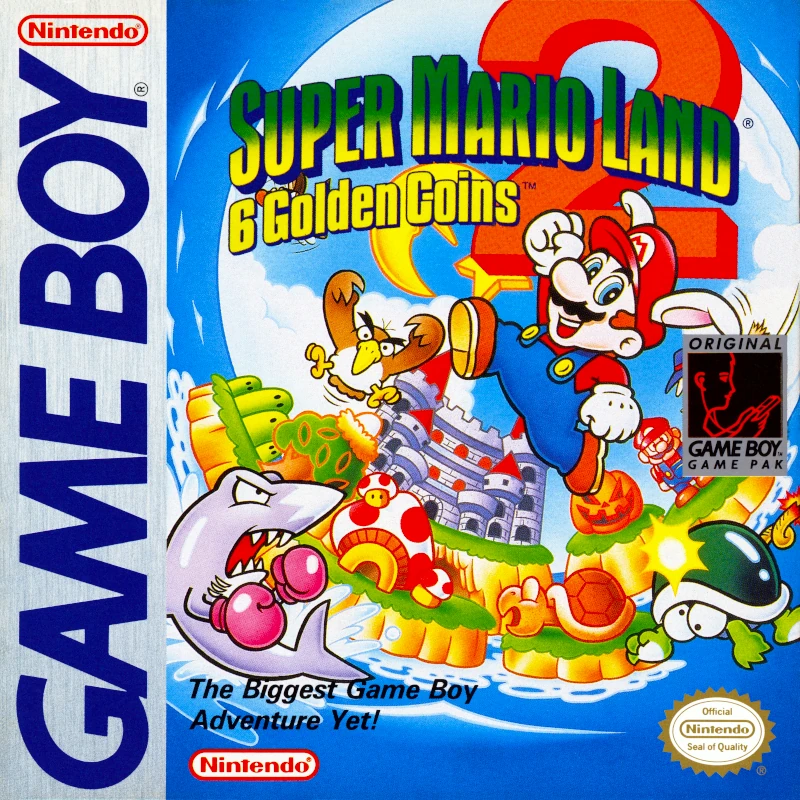
#3. – Super Mario Land 2: Six Golden Coins
The original Super Mario Land was a little disappointing because it felt like a step backward in the series. Six Golden Coins moves it forward, but in some really weird ways. Bowser doesn’t return. Heck, the game doesn’t even take place in the same world as Super Mario Land. Instead it’s a new setting… where Mario lives in a castle? King Mario? The game begins with his new nemesis Wario taking over, and capturing the keys to the front gate. These are the six golden coins in the title. It’s up to Mario to get them back and claim his rightful throne.
Right off the bat you have access to just about all six worlds. Except for the one in space. That’s hidden away. This open ended approach is neat but it does have one major problem. There’s almost no difficulty ramp. Super Mario Land 2 is pretty easy, and stays that way until you get to the final stages in Mario’s castle. Enemies are also different. They’re weird. The traditional super mushroom and fire flower return, but new to the mix is the carrot. This sprouts bunny ears out of Mario’s hat and flapping these lets him slow his fall during jumps. It’s pretty neat. The level designs are incredible, and the boss encounters are a ton of fun. Super Mario Land 2 is one of the most polished and playable Game Boy games ever released.
#2. – Pokemon: Yellow Version
You’re crazy if you thought Pokemon wouldn’t make this list. The original version through the world of Kanto was, and still is, magical. This popularized the monster catching sub-genre, and to this day the original games still sit on a pedestal. So where are Red and Blue then? Because these are largely the same games I went only with one version. Yellow was the third release and featured several improvements. It didn’t add any Pokemon to the roster, but switched up its line-up to blend the base games together. It also had enhanced graphics that looked really good for the time. The biggest difference though? You start with Pikachu. Oh, and he can say his name. How cute, right?
Pokemon Yellow has a few other features too. It’s the only one of the three original releases where you can get bulbasaur, charmander, and squirtle all in a single playthrough. That alone was every kid’s dream at the time. Furthermore some elements of the anime series make their way into this edition. For one thing you’ll encounter Jesse and James of Team Rocket in some sections. The show was really popular at the time so it makes sense, and this is addition is small but cool. The best part of this game is that you can link together with the old versions to battle and trade. If you want to experience the original Kanto adventure then this is the one to get.
#1. – Pokemon Gold & Silver Versions
Crystal didn’t make the cut because it’s a Game Boy Color only game. I wanted to get that out there before getting yelled at. Pokemon Gold and Silver are easily the most impressive Game Boy games, and deserves this spot on the list. Had they not been so good Pokemon may have lived up to the fad prediction many had. Who knows. Game Freak really broke the bank with this one. Not only are there around one hundred new Pokemon but all the old critters return too. You even have two new types added to the mix. The game even has a new region to explore. Johto was almost as interesting as Kanto despite being much more compact.
Besides these changes it’s still Pokemon, and that’s never a bad thing. Your goal is to catch all of the creatures, challenge gyms in specific towns, and eventually fight it out with the elite 4 trainers in Johto. Combat is still turn based, but this title adds the new held item mechanic which adds a ton of strategy into the mix. The best part of Gold & Silver however is that after completing all challenges in Johto you get to travel to Kanto. Yes, it has basically the original game thrown in as post-game content. Kanto is a bit more compact but this is a tiny cartridge after all. You can’t expect them to include all of the content. These titles are the biggest, deepest, and most feature rich titles ever released on the original Game Boy. They’re still incredible to play.

CoolUncleVince
Fun list! I’m surprised I didn’t see Spanky’s Quest on here. It’s a Top 10 Game Boy game for me. A good little single-screen 2D platformer with dozens of levels, sorta like DK94 or Bubble Bobble. It’s completely different from the SNES version, and mucu
Dilf
I’ll check it out. Your comment has not been in vain.
Ashley
Revenge of the gator not in the top 100?
Jack the Ripper
Hidden gem – Monster Max for Gameboy
Mike Oxard
Well this is definitely an opinion piece.