
The Legend of Zelda: Link’s Awakening is one of the more interesting releases in the Zelda franchise. It was the first handheld installment, and until Majora’s Mask was the only side game in the series. I didn’t get a chance to play it at release but I drooled over it in kiosks and often wondered what it was like. There were few instances where I played it as a kid; I recall a field trip where a friend brought it and their Game Boy and let me take a spin. I didn’t get a chance to play through it until I was an adult though. Today I’m here to take a look at this oddball Zelda game.
For some reason this game can be a touchy subject amongst fans of the series. Side games in the franchise are generally heralded as the best ones by the vocal minority, and this one in particular is held sacred. I grew up on a Link to the Past, and I often replay that one. This one takes the basic mechanics from that, but is quite different in tone and mechanics. I’ll start this review by saying that I like it a lot, but it’s far from the best. Much of what makes it different also holds it back.
Link’s Awakening picks up some time after the ending of Link to the Past. Our green tunic hero has taken to the high seas, and the opening sequence depicts him battling a storm aboard his tiny boat. He succumbs to the elements when his vessel is struck by lightning, and the screen fades away from here. Link then awakens in a hut wherein he learns that he has washed up on a mysterious land mass known as Koholint Island. As the story unfolds (via a rather chatty owl) we learn that the only way for our hero to return to Hyrule is by awakening a local deity known as the Wind Fish. To do so Link must collect eight magical musical instruments. The bad news? They’re all located deep within the local monster filled dungeons.
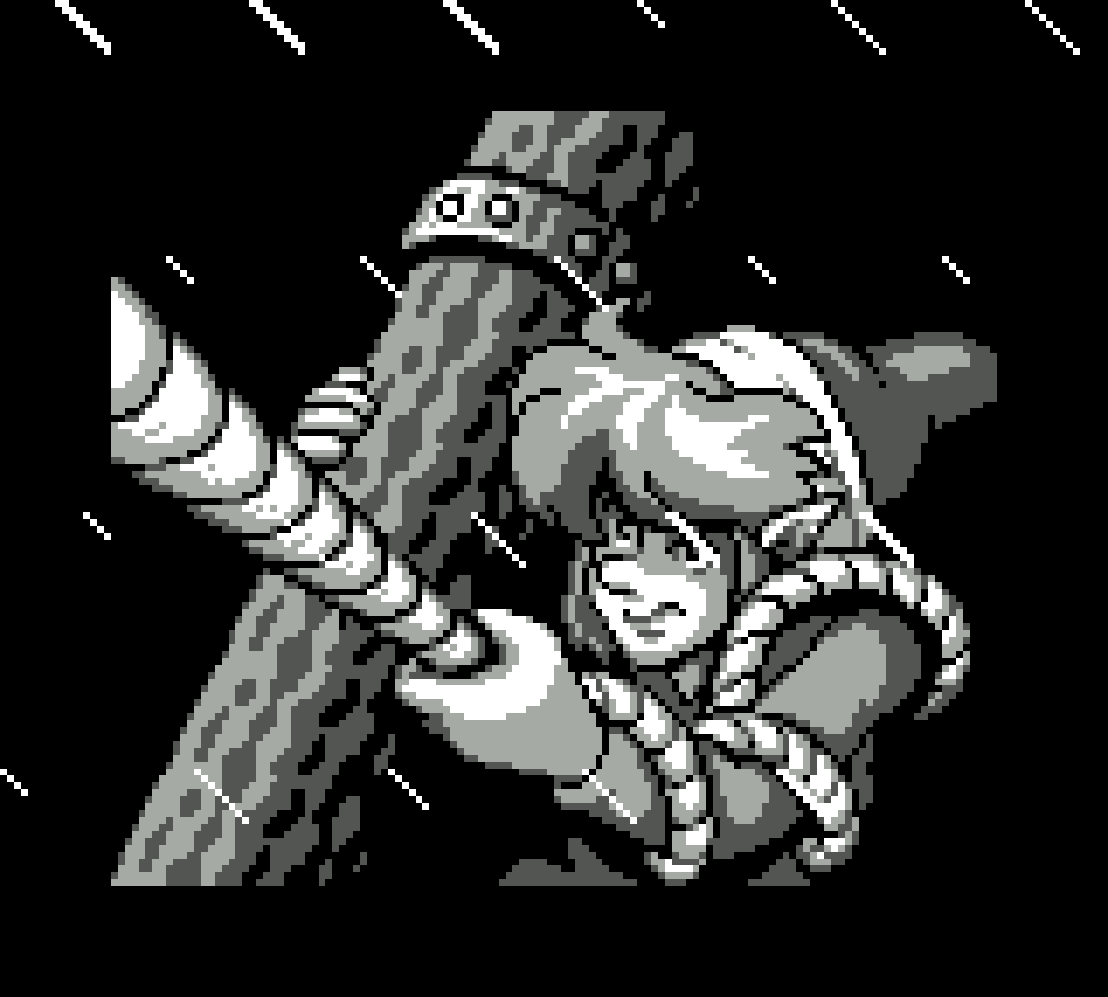
It must be said; the scenario and story are very different by Zelda standards. For starters there’s almost no references to the princess Zelda herself. Or even Hyrule, for that matter. This is far less of a sequel and more of a side story. The premise behind it is a lot more dark than typical Zelda fare. This is the only installment in the series where the bad guys aren’t necessarily ‘bad guys.’ The big plot twist is very deep by series standards. I really like the story and tone of Link’s Awakening.
The Legend of Zelda: Link’s Awakening plays in a very similar fashion to the traditional Zelda titles. You view the action from an overhead perspective as you guide Link across a world map containing within it town areas as well as dungeons. The wilds are full of monsters that try to stop you every step of the way. These are typical fare; you have everything from octoroks to moblins. There are a lot of original faces, but they’re largely forgettable. Your main method of attack is your sword, but what’s interesting about this installment is that the shield is far more useful than before. You can actually set it as an item and even hold it out to block enemies and their attacks.
Other items are generally obtained in the dungeons. You can find a few at intervals on the world map, but for the most part your tools are acquired in specific dungeons. Speaking of which this game has some of the most unique ones in the series. Roc’s Feather is the highlight. This allows Link to jump, and you’ll need to use this frequently in the game. Most dungeons even have side view areas where you have to rely on platforming to progress. It feels very unique and keeps gameplay fresh. Another interesting aspect is that you can combine effects from items. Using the pegasus boots allows you to gain momentum with your jumps from roc’s feather. You can use your bow and arrow and bombs at the same time allowing you to shoot explosive arrows.
For the most part the other tools at your disposal are commonplace in the franchise. Things like the boomerang and magic powder are typical fare. Link’s Awakening does however have some unique usage for them. Basically, if you find an item in a dungeon chances are you’ll need it to progress past the obstacles within it. The game never spells this out for you. For example, in the first dungeon you have a boss that rolls a spiked beam at you. How do you survive? You have to jump it. Basic stuff but sometimes I found the implementation to be rather clever.
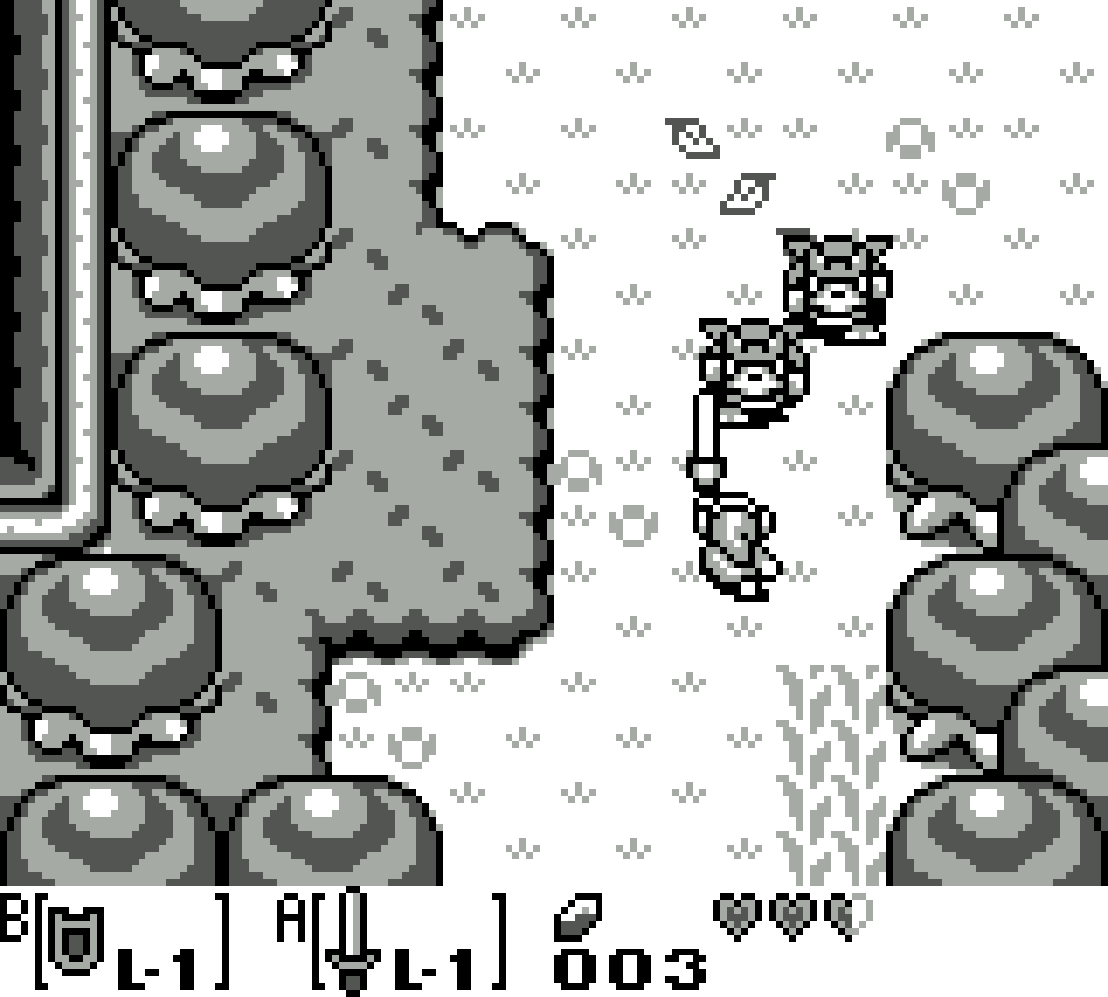
There are a few areas where Link’s Awakening falters however. The dungeon designs are great, but later on they require a lot of memorization. You’re shown items you’ll only later be able to gain access to when you get the appropriate tool. The later dungeons become very confusing because of this. There are some instances where the designs are more complicated than in a Link to the Past, but not necessarily in a good way. I like the puzzles but I think some can be a little vague.
This brings me to the issues with the world map. A Link to the Past showed us how massive overworlds could be in a game like this. Link’s Awakening dials it back a few notches. Yes, I’m aware this game takes place on an island and portable hardware holds it back a bit but the world map could have used a bit more thought. In many cases it’s heavily segmented. You move from one screen to the next and suddenly you’re in a different biome. You’re walking across grassland and suddenly it’s swamp or desert. There’s also not nearly as many interesting secrets to uncover or sights to see as in a more traditional Zelda title.
Link’s Awakening is a very good looking game by platform standards. The Game Boy was a bit limited but Nintendo was still able to make an engine for it that looks fairly close to that on the SNES. Link looks amazing, and animates much better than most characters in the 8-bit era. The backgrounds are chock full of detail, and the game supports a lot of enemies on-screen with very little slowdown or flickering. The boss characters are huge as well. I really like the fact that Nintendo included several Mario enemies and references here. The soundtrack however is one of my least favorites in the series. Some of the dungeon themes are too simplistic. The overworld music is great though. Overall the audio is a bit lacking however.
