
A first person shooter for the plain old Game Boy? You bet. Faceball 2000 is a port of one of the original FPS games for PC titled MIDI Maze. In it you traversed maze-like maps and shot circular bullets at face icons controlled by the CPU all the while completing basic tasks. That sounds fair for a PC game, but 3D gameplay isn’t exactly something the Game Boy is known for. It’s pure wizardry that Faceball 2000 even exists. Sure, it’s a basic first person shooter, but even that seems beyond the scope of anything the Game Boy should be able to re-produce. Yet, here we are. The big question though is how does it play? Faceball 2000 has some hiccups, and it’s a far cry from the SNES version, but I’ll be darned if it isn’t impressive. Let’s check it out.
There’s no story here. You play as a 3D face hovering above the ground. Your objective is to reach the end goal of each three dimensional map. It’s not as easy as it sounds though. Along the way you’ll encounter various other shapes with faces, and they want you dead. Your only means of fighting back against them is by shooting a circular based shot, and successfully hitting them. Your life bar is measured at the bottom of the screen by a face icon. There are three levels; happy, normal, and sad. Each time you’re hit by an enemy this is reduced. If you take a hit when in sad status then you lose a life. It’s a simple set up, but gameplay has a few bells and whistles to keep things interesting.
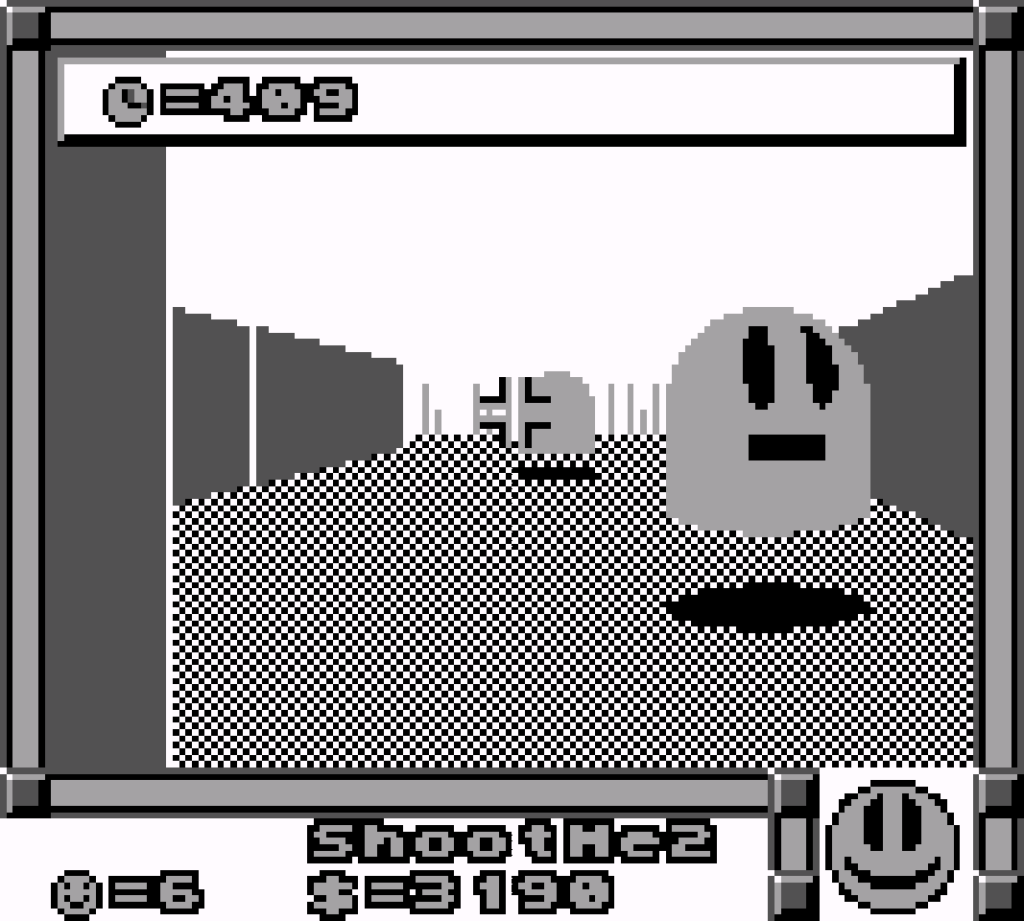
True to the game’s original name each stage is set up like a maze. There are walls that you cannot pass through that close off areas into hallways as well as more open areas. I would compare the level designs to those old fashioned trace the pencil through the maze activities we all played as kids in school. The arenas are generally not very large, but there’s a distinct lack of scenery. This means it can be pretty easy to get disoriented. Thankfully by pressing Select you can bring up an overhead map that shows your current location. In the later stages you’re going to be relying on this a lot because it can be difficult to figure out where you need to go next. Unfortunately this doesn’t show you item or enemy locations, but that’s not a big deal.
One of Faceball 2000’s biggest weaknesses is its simplicity. For one you only have the default weapon from start to finish. It’s the same circular shot, one bullet at a time, from start to finish. Additionally there aren’t many power-ups. You’ll find coins that increase your score (when you reach a certain point threshold you gain a life), band-aids that recover life, another power-up that gives you extra armor, and shoes that make you move faster temporarily. There’s also not a lot of diversity in enemy types. You’ll only see five different types of foes throughout the main game. This includes basic shapes that stand in place and charge if you get too close, others that rotate and fire but remain stationary, faster foes that focus on ramming your character, and enemies that both move and fire. These are distinguishable by their basic shapes.
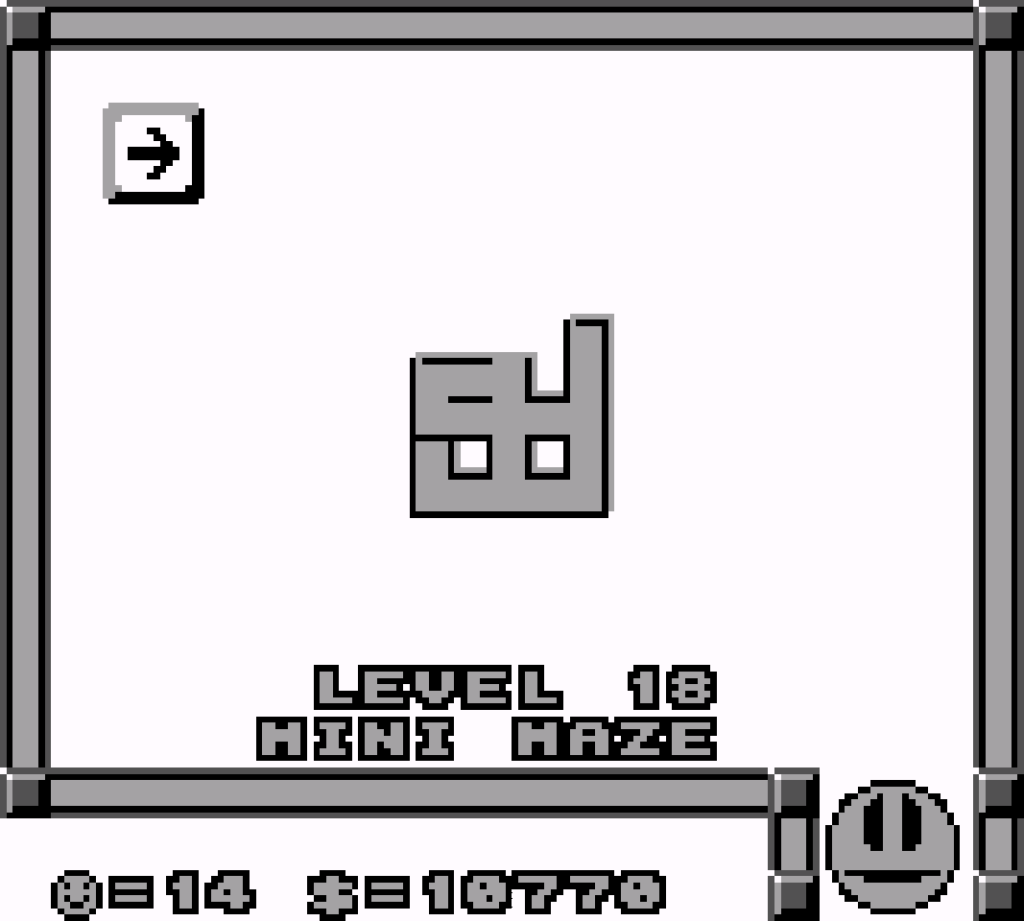
The level designs tend to be very basic as well. These are enclosed arenas shaped either like squares or rectangles. The first few levels are linear and have you simply moving from point A to point B. Later stages have you exploring the box shaped arenas in more depth. There’s a surprising amount of variety here though. Sometimes your goal is simply to make it to the exit door. Other times you’ll need to find a key to unlock it, or even activate a switch before you can progress. A few walls are even destructible. You can tell which ones are simply because they’re more lightly shaded. Some stages even feature transparent walls (bullet proof glass as the game refers to these) which are deceptive, but only represent a minor inconvenience. The aforementioned obstacles manage to keep things somewhat interesting.
It’s no surprise that the gameplay engine struggles. This is the Game Boy, after all. The game runs at a sluggish framerate and movement is rather slow. The worst offense however is that you can only fire one shot at a time. You’re basically stuck until your last projectile makes contact with something and disappears. This is unfortunate because the game holds no qualms with throwing several enemies at you at once. With no option to strafe or dodge you’re pretty much limited to backing up to avoid enemies and their fire. It doesn’t always work very well. This is especially true on the higher difficulty levels. I found the best way to deal with multiple foes was to keep my distance, and retreat often. Thankfully these guys don’t simply regenerate when they go off-screen. The game is playable, but the limitations take some getting used to.
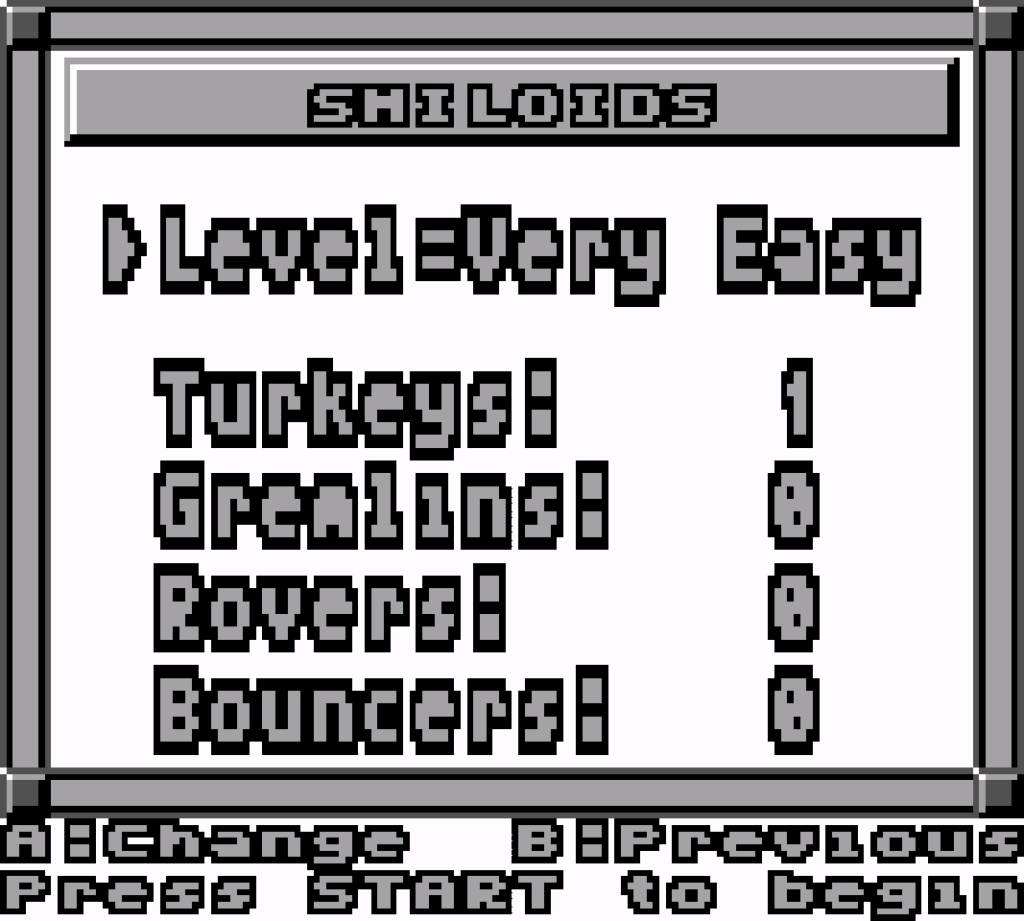
The best, and most surprising part of Faceball 2000, is how much content is packed into this tiny cartridge. You have two basic modes of play; Cyberscape and Arena. The first is best considered to be the single player campaign. This is where you complete simple goals in each level to reach the exit door. Combat is secondary here. This mode has a whopping seventy five different stages. The first twenty are small, but that’s still impressive. Arena has you battling CPU controlled opponents and setting the parameters of each match. The difficulty determines which enemies appear, and how many there are. You can also select which stage you want to play in here. This is the combat focused mode, and it’s fun to mess around with in short bursts. Sometimes you just want to play a few rounds, and so this option is appreciated.
The best part of the game is the multiplayer mode. Rumors persisted for years that it supported sixteen, but that turns out to be false. Still, being able to play an FPS on the Game Boy with four people total is really impressive. I haven’t had a chance to max this out yet but battling against one other human is surprisingly fun. Even with the game’s limitations. What’s more is that the engine runs comparatively well in multiplayer. You just don’t have a lot of options. It would be nice if it allowed you to include bots, but alas, I suppose the hardware wasn’t up to the task. A first person shooter on the platform is impressive enough, but a multiplayer one? That’s amazing. Faceball 2000 is definitely one of the best multiplayer Game Boy games.
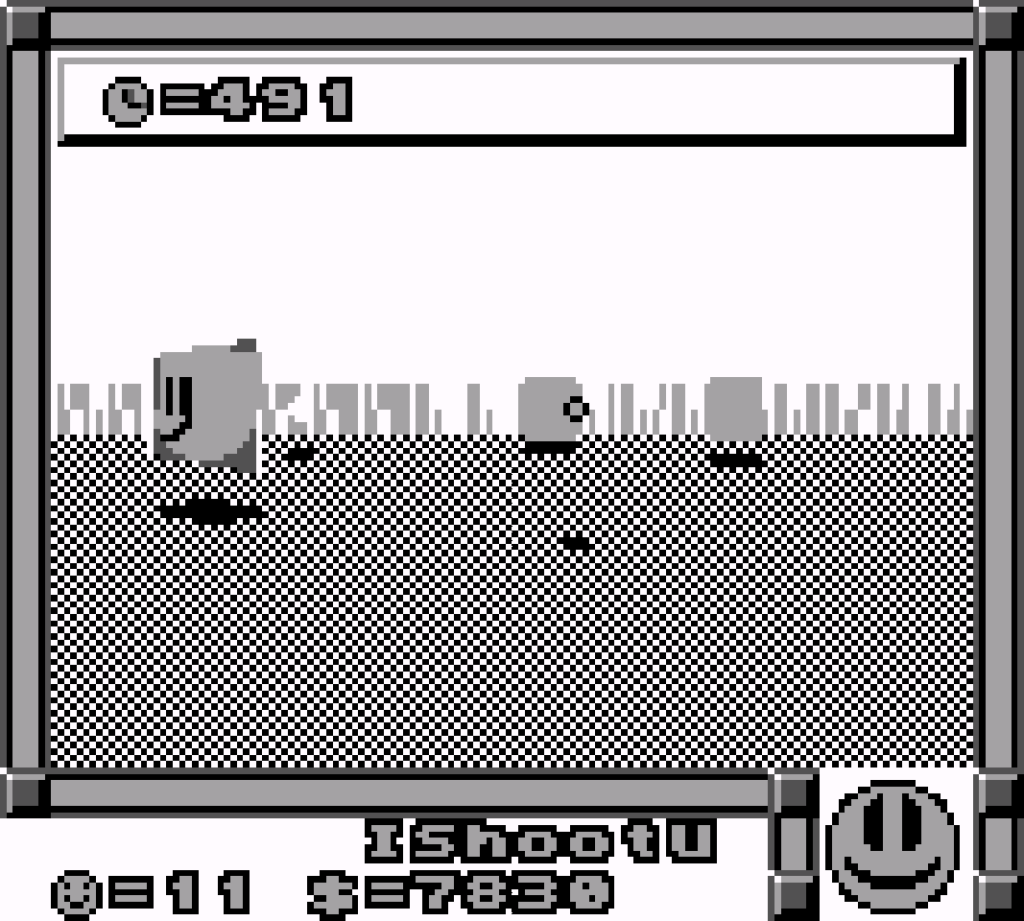
Unfortunately the game isn’t particularly pretty. It’s 3D on the Game Boy. What did you expect? There’s no textures beyond flat coloring on pretty much anything here. Luckily it’s easy enough to make out things like power-ups, as well as destructible walls. As I mentioned earlier Faceball 2000 does struggle with its framerate. At its best the game is barely better than a slide show. It’s surprisingly playable despite this issue. I really dig the art style. I know, it’s just simple faces, but it’s really charming actually. The music on the other hand is pretty good. There aren’t a lot of different tracks but I really liked the bouncy theme during gameplay. The sound effects are just kind of there. There are only a few different bleeps and blips. They serve their purpose to let you know when damage has been taken or when you’ve hit something though.

UncleBob
>Rumors persisted for years that it supported sixteen, but that turns out to be false.
Woah! I’m not sure if you’ve followed all the work that went into it, but… The retail release absolutely supports 15 players – the only thing stopping someone in 1991 from doing it would have been figuring out the custom hardware needed to link everything together. And, of course, getting 15 cartridges, GameBoys, people, etc…
The 16-player mode had a small glitch that caused it to crash at 16 players. This has been corrected and we’ve gotten 16-player matches up and running!