
Super Nintendo platformers. That’s the topic for today. Specifically we’re going to cover the best ones. The console came out at the height of the genre’s popularity. The side scrolling hop and bop gameplay started out on the eight bit Nintendo, but it was refined, and dare I say perfected in the generation that followed. That’s where the Super Nintendo comes in. Developers released follow ups to their big hits from the preceding generation along with many original titles. To put it bluntly there are some absolute bangers on the console. Those are the games we’re talking about today. Without further delay let’s get started. This is our list of the Top 25 Best SNES Platformers of All Time. Let’s get started.

#25. – Smart Ball
I was shocked to all heck to discover that this game was made by Game Freak. They existed before Pokemon? Apparently so. It was also published by Sony. It’s a bizarre world. Anyway, the title is kind of deceiving. You aren’t playing as a ball. You’re a blob of slime. I guess the latter would be a harder sell to North American audiences. This one is a pretty typical 2D platformer of this era. You primarily walk and you jump. This one is a little different in that you can’t stomp on enemy heads. Instead you flatten out while riding on top of them to squish the little guys. There’s quite a bit more to it though.
So what can a slime do? Shapeshift. Unfortunately this mechanic is limited. You can stretch upwards, flatten, and shrink down to move through pipes. The primary idea here is that your character can absorb balls. These are your traditional power-up style items. There’s a whole lot of them too. These give you added abilities such as being able to shoot projectiles, jump higher, make our blob heavier, and more. These really enhance gameplay and I loved this aspect. Smart Ball is a little weird, but it’s got a lot of heart. Plus it’s fun.
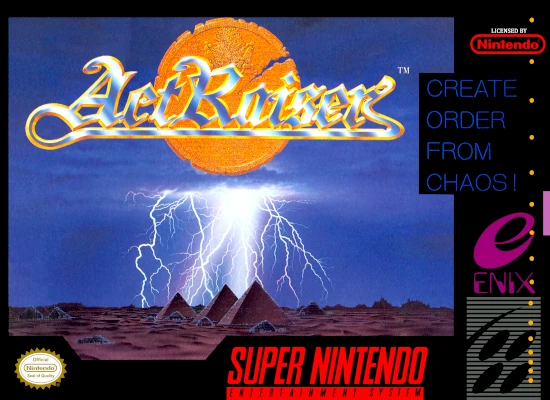
#24. – Actraiser
Spoiler alert; a lot of the games on this list are going to encompass multiple genres. Platforming just has to be a main part of them for our consideration, and Actraiser fits the bill. The game has two segments. There’s one where you play as a weak looking angel flying around stages viewed from an overhead perspective. Here you’re tasked with rebuilding civilizations. Yeah, someone has to do it. The other part of Actraiser casts you down to the surface to reign violence on evildoers. Neat. This is where the game takes the platformer approach. It’s action heavy, but there’s still a lot of calculated jumps and great level designs here.
In these sections of the game you’re no angel. You’re some celestial warrior armed with a large sword. These sections of the game are a stark contrast from the happy go lucky rebuilding of civilization. For one thing the graphics are much more dark. The enemies are also pretty intense with some amazing and devilish designs. It’s the boss fights that were the highlight for me though. These encounters will really test your mettle. They aren’t easy. That’s for sure. The platforming is fun, and the action offers a pretty decent challenge. Actraiser is definitely worth playing.
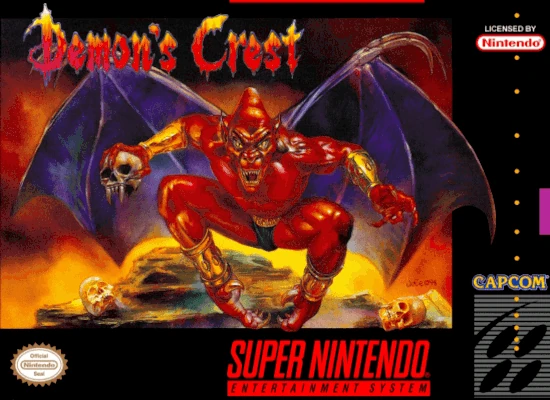
#23. – Demon’s Crest
Sometimes you just want to play as the bad guy. Am I right? We can’t be goody two shoes after all. Here you play as the gargoyle enemy from Super Ghouls ‘N Ghosts. You know, the most annoying monster you regularly encounter. It made me expect to hate Demon’s Crest. I mean, I hate the guy so why would I want to play as him? Turns out Demon’s Crest is amazing. The game plays quite differently from the franchise it’s based on. That’s not a bad thing at all in my book. Some of us don’t want to get our butt handed to us. At least not all of the time.
Firebrand the Gargoyle has a miriad of different abilities. The only ones he shares with Arthur are the ability to walk and jump. Firebrand has several of his own tricks. Those wings aren’t just for show. Our guy can hover in the air pretty much endlessly. He can also shoot fireballs. That’s his primary attack. As you progress in the adventure Firebrand gains new abilities. These are used not only for combat but also to reach new areas. This makes Demon’s Crest a bit of of a Metroidvania, but before that was a thing. Demon’s Crest is good. Get it.
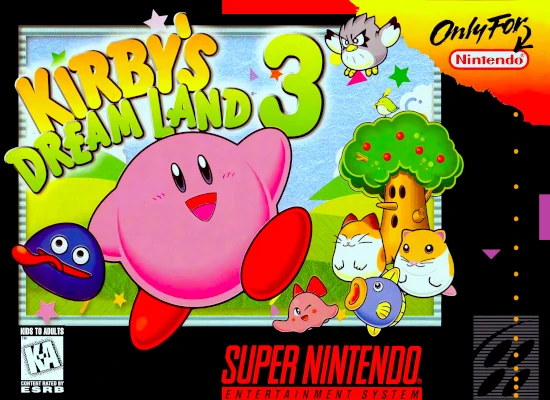
#22. – Kirby’s Dream Land 3
This is one of the worst Kirby games. The pink puffball moves far too slowly, and this messes up the pacing. Sure, there’s a neat water color art style. Because of it Kirby’s Dream Land 3 is one of the prettiest games on the platform. Graphics aren’t everything, and this is the perfect example of just that. Now this is a list of the best SNES platformers, so why would I include a bad game? I didn’t. Kirby’s Dream Land 3 is still fun. Even despite all of its blemishes.
Kirby’s Dream Land 3 plays in a very similar fashion to previous incarnates. You still play as Kirby, and his abilities are very much the same. Namely he can eat enemies and absorb their abilities. This includes things like using a sword, throwing a boomerang, breathing fire, etc. There’s a lot of them. Adding further to this are the animal buddies. These return from Kirby’s Dream Land 2, and they’re even better here. Not only do these guys have their own innate abilities, but they also change the effects from Kirby’s absorbed powers. This adds a ton of diversity and options to our fluff ball’s overall number of skills. Even the level designs are good. Kirby’s Dream Land 3 is a poor Kirby game, but a great platformer overall.
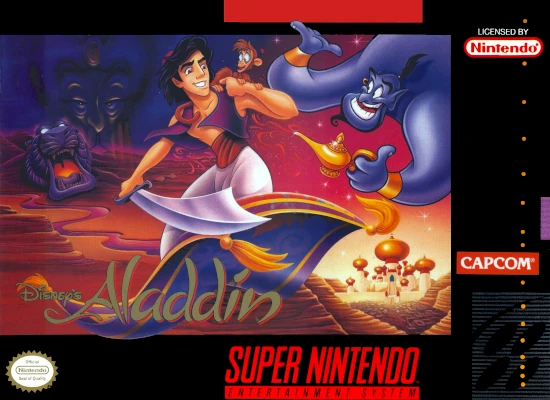
#21. Disney’s Aladdin
Capcom’s Disney games were a big deal on the NES. On the Super Nintendo though? Not so much. Aladdin is the release that has stood out to me. This game follows the movie pretty closely. You play as everyone’s favorite street rat as he advances through various developments that mirror the film of the same name. As you can probably guess this one is a side scrolling platformer. That’s par for the course when it comes to licensed titles of this era. This one has the classic Capcom polish. The graphics, animations, and music are all really good. They’re true to the film too.
For a game aimed at children this one doesn’t pull any punches. That’s the Capcom way. The level designs are excellent. You’ll have to think on your feet with well designed platforming challenges as well as intelligent enemy placement. The only thing I was disappointed with is the lack of abilities. Aladdin can run, jump, and throw apples. Yes, apples. That’s pretty much it. You defeat enemies only by jumping on their heads. Really? When did that happen in the movie? Despite this the game is a lot of fun. There’s even story content that wasn’t in the movie. Sure, it’s filler, but at least it’s something. I do hate that password system though.
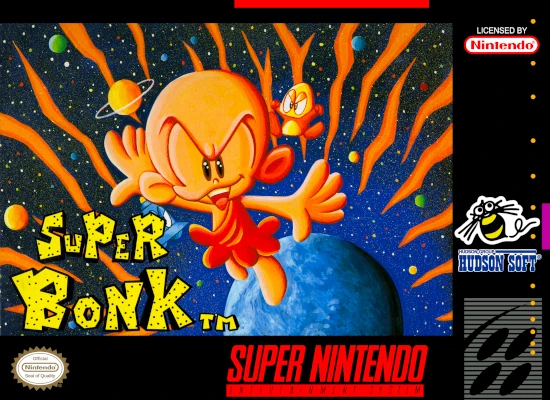
#20. – Super Bonk
Yes, apparently Bonk was cheating on the Turbografx-16. The platform’s former mascot had outings on a few different platforms, and the Super Nintendo was one of them. It’s fair to expect this one to be a port of one of the franchise’s previous iterations. I’m happy to report that isn’t the case. Super Bonk is an original sequel. For all intents and purposes this is the fourth installment. Except in name. It seems the developers weren’t totally ready to go all in on other platforms. Instead we’re left with just the name Super Bonk. That’s okay because this is one of the most creative and interesting sequels in the series.
Super Bonk plays much like its predecessors. You play as the titular character, and true to his name he smashes enemies with his head. That’s his main attack. It’s a pretty typical side scrolling platform game but the level designs are on point. The highlight however is in the power-ups. These allow Bonk to transform into a variety of different forms each of which gaining new abilities. Eating candy either makes our little caveman big, or small. Meat has another effect. The first piece makes him ‘fester Bonk’ and lets him fire projectiles. Eat more and he becomes kronk Bonk. No, not crunk. Kronk. He can hit enemies with his tongue and even clear the screen from enemies. Oh, and he looks like a zombie. It’s neat. As a sequel to one of the best platforming series Super Bonk doesn’t disappoint. Even if it’s not technically called part 4.
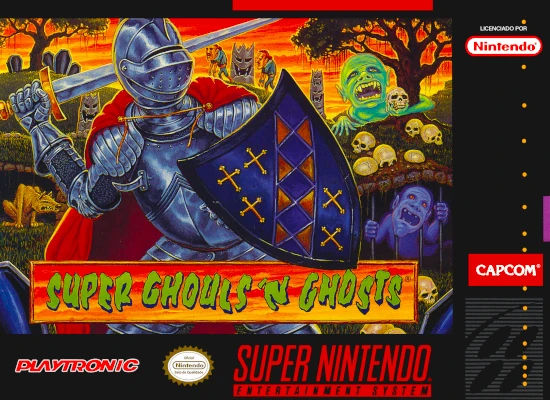
#19. – Super Ghouls ‘N Ghosts
This was one of the first video games I ever purchased. I didn’t know what I was in for. Super Ghouls ‘N Ghosts is based on the Ghosts ‘N Goblins series. This is the Super Nintendo iteration. That means it’s beautiful, and has excellent music. Oh and there’s slowdown. Lots of it. This is one of those rare cases where I welcomed it. You see, Super Ghouls ‘N Ghosts is hard. Scratch that. It’s darn near impossible. The game is unforgiving to the umpteenth degree. The slowdown often provides you more time to react. That’s why I didn’t mind it.
As you can probably guess from the name this is a horror themed platformer. You play as the legendary knight Arthur who sets out to rescue Guineverre after she is kidnapped. By whom? Demons. You are armed with myriad of different weapons, armor, and a double jump. The latter does more bad than good. Momentum cannot be changed mid-jump which results in some very challening platforming mechanics. That, and the army of enemies with crazy attack patterns. Super Ghouls ‘N Ghosts is like a puzzle game. The stages are designed in such a manner that one wrong move results in instant death. You’re required to memorize layouts, and that’s precisely what the kid version of myself did. My biggest beef with the game is that you have to play through it twice. Yes, twice, and on the second run you must use an awful weapon. Ugh.
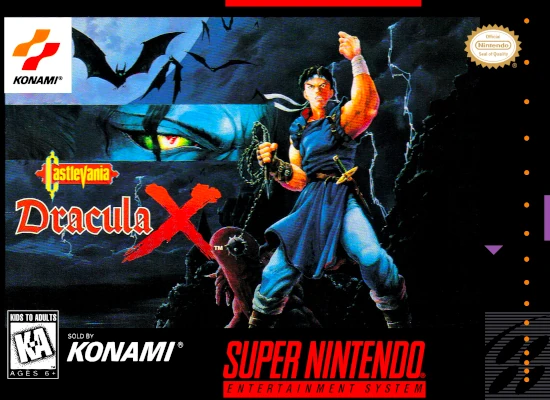
#18. – Castlevania: Dracula X
Castlevania: Rondo of Blood is largely known as one of the best installments in the series. For good reason. This PC-Engine CD exclusive was incredible. Konami eventually released a re-imagined verison on the Super Nintendo. That’s the one we’re talking about. Is it as good? Sadly, no. The developers ditched the dark style they used in Super Castlevania IV and went with something more colorful and anime based. Some loved it, and others hated this. I’m impartial.
Castlevania: Dracula X has you playing as Richter Belmont. Yes, the vampire hunter extroadinare. This is a side scrolling platformer that leans heavily into the action mechanics. Your primary weapon is a whip just like in classic Castlevania. You can no longer swing it in all directions though. Talk about a downgrade. Secondary weapons are once again a major part of gameplay and these are quite useful. I must say that the graphics are absolutely amazing. This game looks incredible in motion and makes great use of the proprietary SNES effects. The soundtrack is also rocking if not a little too upbeat. This is Castlevania after all. My only real complaint is that your character walks too slowly. Our hero is in no rush to send Dracula back to the underworld.
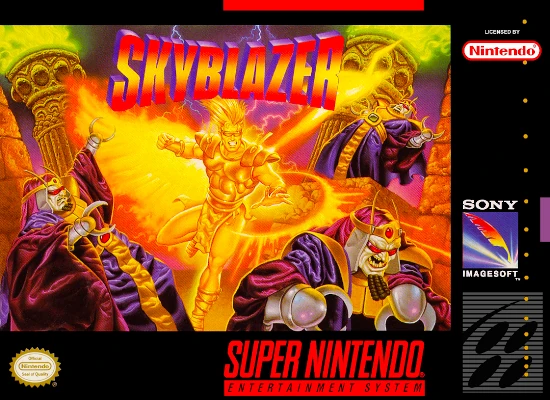
#17. – Skyblazer
There’s no getting around it. Skyblazer is a little weird. This side scrolling action platformer was a later release for the console, and its claim to fame is that it constantly reinvents itself. What I mean is that the developers threw a ton of different ideas into one single game. It works surprisingly well. The sheer level of creativity almost makes this one feel like a title from Treasure. All of this is wrapped in a unique art style which blends Middle Eastern styles with Japanese. Did I mention it’s weird? That fact can’t be overemphasized. I love it though.
The best part of this game is just how acrobatic the main character is. He can cling to walls, punch, kick, etc. Oh and you can jump super high, and in some stages even fly. It’s all pretty neat. There are even several magic attacks at your disposal. These tend to either be projectiles or screen filling attacks. They’re flashy, powerful, and a lot of fun to use. Skyblazer does have one major issue. It’s a shorty. The game can be easily completed in one sitting. Add to that the low challenge level, and you have an obvious rental only. If you could still rent Super Nintendo games, that is. Skyblazer is good, and you should play it. It’s an SNES hidden gem for sure.
#16. – Sparkster
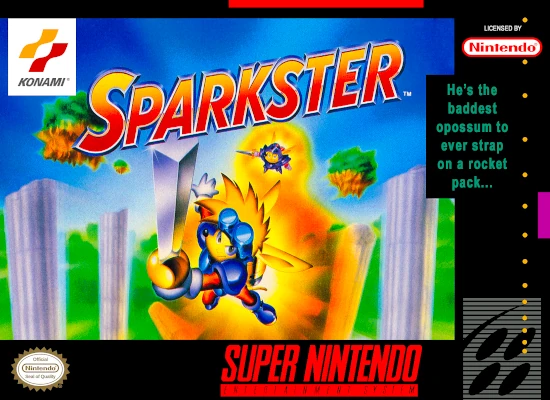
Remember Rocket Knight Adventures? Yeah, that game was amazing. This is basically that, but on the Super Nintendo. It’s also not quite as good. What’s interesting is that Konami released a game with the same name on the Sega Genesis. These are two different beasts. When it comes down to it I think this iteration is better to be honest. Here you play as an opossum knight named Sparkster. Who would have thought? He’s armed with a sword, and jet pack. By default you can slash (which fires a projectile) and boost. You’ll need to do both of these constantly. It’s classic Konami, after all. Did you think this was going to be a cakewalk?
The more interesting of the abilities by far is the jet boost. You can use this to propel your character forward, diagonal, or straight up. Hitting a wall or obstacle doesn’t bring you to a complete stop. Instead you bounce off of it and continue your trajectory. It’s a fantastic effect, and the level designs make great use of this. Speaking of which the stages are amazing. They are incredibly well crafted and quite creative. The game throws new things at you on every leg of your adventure. These are all more over-the-top than the last. Sparkster may not have the name recognition of something like Mario, but I’ll be darned if it didn’t deserve it. The game is good.
#15. – Ganbare Goemon 2
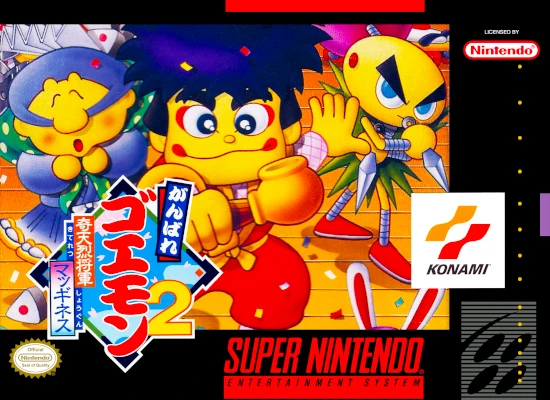
Legend of the Mystical Ninja was amazing. It was the first, and for a long time, the only taste of the Goemon franchise we got in the West. As a kid I just assumed it was the only one. I was wrong. Ganbare Goemon 2 (and its sequels) came out in Japan only. Boo. This one plays in a very similar fashion to the original. There’s more of an emphasis on platforming however. You (and a second player if you have one) trek through a bizarre version of feudal Japan here. Goemon has long been filled with humor, and this one is no different.
As I said this one is more of a straight forward platformer than its predecessor. At the beginning of the game you’re thrown right into one of these sequences. Unfortunately it’s also more rigidly structured. There are less mini-games, smaller towns to explore, and more linear overall. That’s why it’s not as good. Still the action flows nicely, and the controls are spot on. The level designs are great, and the often bizarre enemies are a lot of fun to beat down. Best yet you can tackle this one with a friend for simultaneous co-op play. Multiplayer is a ton of fun, and not enough games of this kind from used this. It’s pretty good, but Mystical Ninja is better.
#14. – Ardy Lightfoot
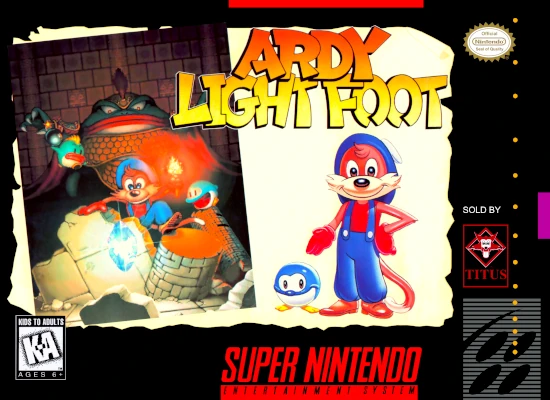
It’s fair to say that the lion’s share of mascot platformers from this era are not good. They’re mostly trash. Most of these companies put their effort into designing the main character. Everyone wanted to create the next Sonic the Hedgehog. That’s why I didn’t have much hope for Ardy Lightfoot. It’s often considered one of the true hidden gems on the Super Nintendo. That why I gave it a look. I’m glad I did because it’s surprisingly good.
Ardy Lightfoot has you taking the role of a ferret by that same name. He can run and jump by default. You know, the essentials. What’s interesting about this game is the character Peck. He’s a blue colored sidekick to our hero. This little guy follows Ardy everywhere. Throwing him at enemies is your main means of attack. He eats any foe he comes in contact with. He can even change forms via power-ups which gives you new abilities. It’s a pretty novel approach in my opinion. Where Ardy Lightfoot excels is in its controls and level designs. The latter provides enough fresh obstacles and gameplay scenarios to keep you interested start to finish. Ardy Lightfoot may look like another throwaway character, but I assure you that his game is worth playing.
#13. – Donkey Kong Country 3: Dixie Kong’s Double Trouble
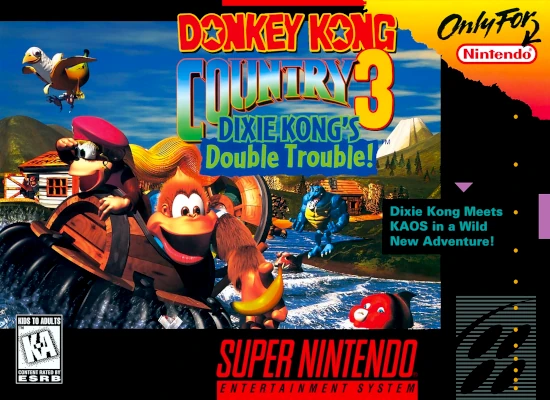
The main problem I have with the Donkey Kong Country series is that it was too much, too fast. We had three installments in a few short years. Rare was pushing for all the possible sales they could squeeze out of the Super Nintendo. Regardless Donkey Kong Country 3 was the last one to release, and honestly it’s good. The game’s major problem is that it wasn’t as much of an upgrade as the second installment was. Also, there’s still no Donkey Kong here. What’s the deal with that?
As you can probably guess from the subtitle Dixie Kong once again returns to the fray. That’s a good thing considering she’s the best character with her hover ability. New to the franchise is Kiddy Kong. He’s strong, but a little sloppier in his jumps. Besides that this is the same old banana grubbing, kremlin crushing adventure it always was. You have new hazards, animal helpers (and returning ones as well), and a cool new world map with secrets hidden right in it. Donkey Kong Country 2 was a hard act to follow. This one manages to maintain the status quo, but honestly I was expecting more from it at release. Still, if you’re looking for a solid SNES platformer then this is an excellent choice.
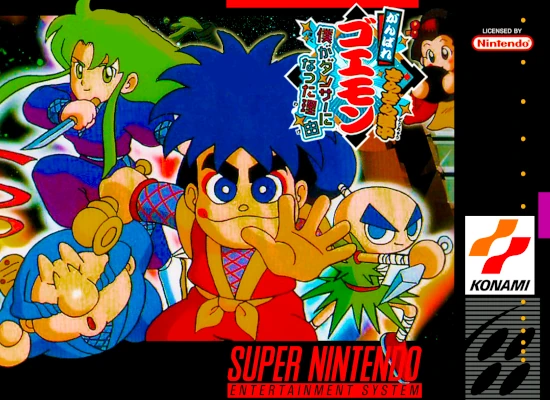
#12. – Ganbare Goemon 4
Goemon was always a weird franchise. This is the installment where they really jumped the shark and went all out with the zaniness. I always loved the bizarro feudal Japan setting these games use. That’s still here, but it’s overshadowed by aliens. Yes, extra terrestrials. Now the heroes are scattered on a variety of different planets dealing with otherworldly denizens. Both friend and foe alike. What I like is the fact that you can select from four different characters, and each of them has a separate scenario. You have to complete all of them to progress in the game. It’s a different approach to the series, but I found it to be neat. Unfortunately this also means that multiplayer is out. That is except in the mini-games. The main quest however is a solo affair now. Sad days.
The basic format however remains the same. As each character you explore town areas where the gameplay more closely resembles a beat ’em up. Only thing is there’s no enemies here. The other areas in Ganbare Goemon 4 are pure 2D platformer action. I really like some of the stage mechanics in these. For example there’s one area where you have to ride a bouncing soccer ball over chasms you otherwise would not be able to clear. Others have you swinging from ropes, swimming etc. It’s all here. The level designs are really interesting and kept fresh by the constant introduction of new gameplay elements. Also, like it’s predecessors the gameplay is really polished, and very fun. Ganbare Goemon 4 may lack multiplayer, but it’s still one of the best SNES platformers.
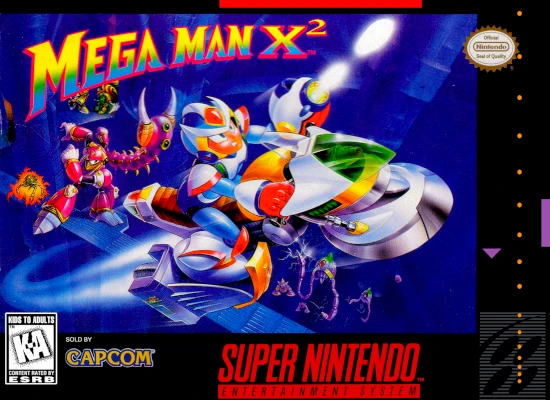
#11. – Mega Man X2
Sometimes I feel like I’m the only one that likes this sequel. Sure, it’s not as good as Mega Man X. Let’s all try and get over that though. The follow up is absolutely worth playing. Like it’s predecessor you play as X, and have eight mavericks (or rogue robots) to take down. You gain their signature weapon upon defeat, and each is weak against that of another. It’s the classic Mega Man mechanics, but with a fresh coat of paint, and a more edgy art style. The story this time focuses around the character Zero, and gathering the parts needed to fix him. Oh and Sigma is back too. It’s your standard Mega Man X plot for better or worse.
Where this one gets me is in its approach to the optional bosses. By completing stages in a specific order you’ll encounter the X-hunters. They’re hidden away, and you’ll need to take them down if you want to restore Zero. This makes the order you choose to play the stages more significant. Besides that there’s also a new air dash. This fits the gameplay remarkably well. The new weapons range from lame to good, but that kind of comes with the territory. The level designs are almost as good as they were in Mega Man X, and that’s certainly not a bad thing. Also, the soundtrack rocks. Mega Man X2 has some of my favorite music in the entire series. The game often gets crapped on, but give it a go. Mega Man X2 is a classic.
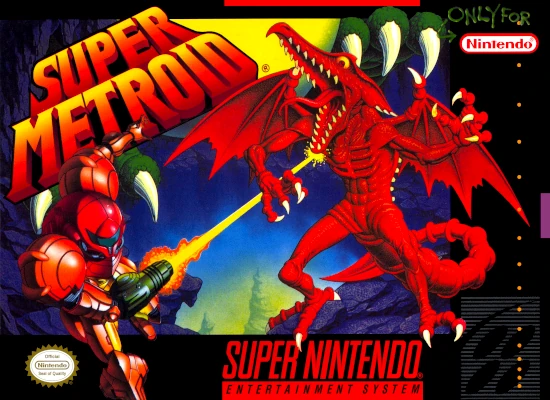
#10. – Super Metroid
I know I’m going to make some enemies with this one. I don’t love the Metroid games. There’s nothing inherently wrong with them. They just aren’t my cup of tea. Still friends. Super Metroid is the best one of the bunch. That’s why it deserves a spot on this list. The game has you once again assume the role of Samus Aran as she explores the desolate Ceres space colony, and eventually the planet Zebes. Gameplay is similar to past installments with an emphasis on action and exploration. Super Metroid doesn’t spell out the way forward for you. Instead you’re left to figure it out on your own. The game does however nudge you in the right direction, and thanks to clever design and cues it’s not that hard to meet the challenge.
The most striking aspect of this game is its atmosphere. Nintendo knocked it out of the park with Super Metroid. Few games have been as somber as this one. I’ve never felt alone quite like in here. Everything from the music to the graphics is just top notch. The controls are also excellent. Samus moves exceptionally well even with multiple abilities at her disposal. Heck, I even liked the plot. It’s an interesting build on what has already been established. At the end of the day it’s still Metroid though. This one did win me over, but I’m not as crazy about it as most fans. I can absolutely see why it’s held in such regards despite this.
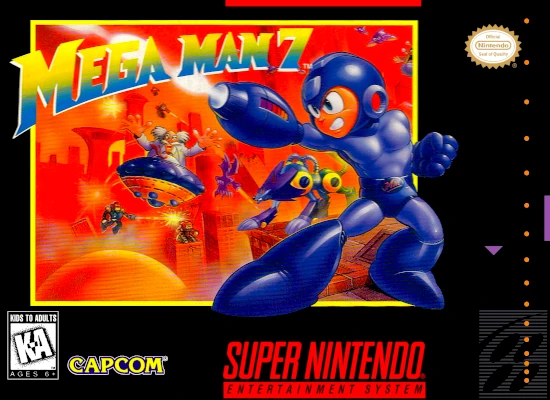
#9. – Mega Man 7
Remember when I said that I feel like I’m the only one that likes Mega Man X-2? The same goes for this one, but double. Mega Man 7 gets a lot of unnecessary hate. I admit that it was an interesting choice to continue building on the original series what with X taking over and all. Still, there’s something really special about Mega Man 7 in my opinion. It was a return to simpler times. Yeah the cutesy graphics aren’t as appealing, but this one feels like Mega Man. That’s a good thing. Of course the game has a lot of upgrades. It was the first follow up on the Super Nintendo, after all. The graphics feature more detail, sprites are enlarged, and the music is amazing.
So what else is new? For one thing there’s an intro stage. After tackling this you only have access to half of the robot masters. What gives? It’s a bit limiting but makes figuring out the proper order easier. After beating these guys the next roster opens up. There’s also a new shop where you can purchase upgrades for Mega Man with screws serving as the currency. Almost everything else is true to the classic series. I will say that Mega Man 7 has some of my favorite robot masters. Yeah you have lamers like Freeze Man and Junk Man, but how about Shade Man? He’s based on a vampire which is a really cool idea. Slash Man is also awesome, as is Burst Man. Sometimes you just want to crush some robot masters instead of mavericks. Mega Man 7 let you do just that.
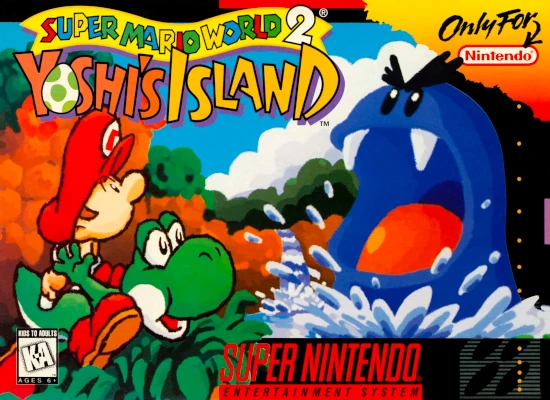
#8. – Super Mario World 2: Yoshi’s Island
This was not what we wanted in a Super Mario World sequel. The plumber brothers are now babies, and you play as various colored Yoshi’s tasked with delivering Mario safe and sound. Lame, right? This one was an interesting direction for the franchise, and really helped push Yoshi as one of Nintendo’s major mascot characters. That crying sound Mario makes when you lose him though? It’s downright painful. I can think of few more annoying sounds in any video game. Thankfully you can end it by freeing him from his bubble. Thankfully Yoshi has some new tricks up his sleeve. He can now do a sloppy flutter jump, and throw eggs. Eating enemies is still his trademark ability, and now it’s how he replaces his ammunition.
You can’t talk about Super Mario World 2: Yoshi’s Island without mentioning the graphics. This game looks better than many 32-bit titles. It’s thanks in part to the SuperFX chip. The game has a ton of effects such as advanced rotations and stretching enemies. It’s all wrapped in a unique watercolor art style that’s timeless. It all looks amazing. The level designs are also quite good and take great advantage of Yoshi’s abilities. I especially enjoyed the boss encounters. The main problem I had, and still have, with this game is that it doesn’t feel like a Mario title. It’s a fantastic platformer and all, but it’s clearly a spin-off. It’s odd that Nintendo slapped the number 2 on this one.
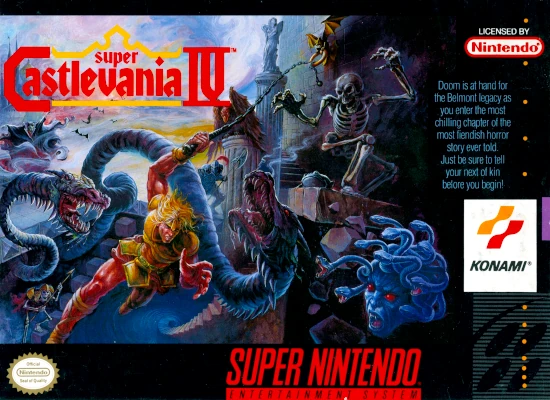
#7. – Super Castlevania IV
I was completely blown away by Super Castlevania IV the first time I played it. That’s not what I was expecting. The game takes on a much darker motif while remaining true to the atmosphere of the originals. Thing is I wanted something more colorful. After adapting I can see why they went this route. Super Castlevania IV essentially re-invented the franchise. It’s basically a reimagining of the original story. You play as Simon Belmont, and as a vampire hunter Dracula is your prey. On your way to him you’ll be battling it out with classic horror icons like zombies, skeletons, etc. You even have boss encounters against Frankenstein’s monster, Medusa, the Grim Reaper, and more.
What makes this one so special is how it takes advantage of the Super Nintendo hardware. I’m not just talking about the graphics. The first thing you’ll notice is that the whip functions in a slightly more realistic fashion. Namely, you can actually fling it in various directions. Furthermore you have sections of stages built entirely around the console’s Mode-7 effects. Things like rotating rooms and huge bosses were only possible with this mechanic. The game is super impressive by 16-bit standards. It’s crazy considering the fact that this game came out in the first year the console was on the market. Konami ditched many of these ideas in the games that came out after it, but that only makes Super Castlevania IV more special.
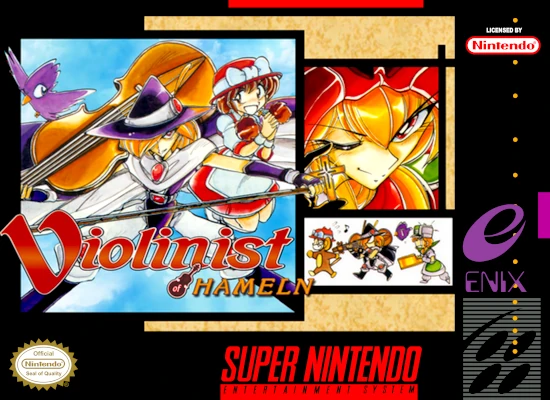
#6. – The Violinist of Hameln
This one’s a Japan only release. It’s not hard to see why. It’s based on an anime series for one thing. North America was basically allergic to that stuff back in the mid 90s. I’ve never watched this one, and honestly, I don’t really have any interest in it. Thankfully knowledge of the show isn’t a prerequisit to enjoying the game. Also, this one is very Japanese in its execution. It’s quirky and kind of crazy. In the game you play as Hameln. He’s a blonde haired hero who fires off musical shots from his violin to damage enemies. That’s not all though. Joining him is a young lady named Flute, and she has a variety of different abilities.
Basically what you need to do is put her in a variety of different costumes. Her mechanics completely change based on what she’s wearing. Dress her up as a monkey and you can use her to climb walls. The ostrich suit allows you to cross spikes on the ground, the eagle lets her fly, frog allows her to jump higher, etc. There are some really crazy ones too. For example, you can dress Flute up as a UFO, a missile, and even a frisbee. There are so many options it’s crazy, and the way the game utilizes these makes the mechanic a ton of fun. It also helps that the level designs are creative, and lean heavily into these abilities. The Violinist of Hameln is a real treat, and should be at the top of any Super Famicom enthusiast’s list.
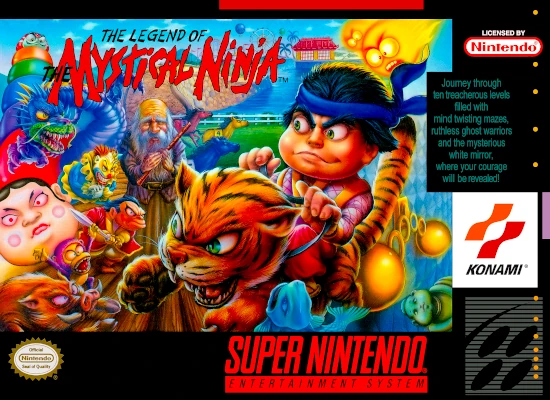
#5. – Legend of the Mystical Ninja
Here it is. Legend of the Mystical Ninja is the first Goemon title ever localized for North America. It’s also the best one in my opinion. It blends genres in some really neat ways. Also, there’s multiplayer. You can play through the main quest start to finish. The game is basically divided into two sections. There are town areas that are functionally similar to a beat ’em up title. You walk around smacking enemies with your weapon, buying supplies, playing mini-games (of which there are a lot), etc. The ‘dungeon’ areas are pure platforming bliss however. I love the level designs here. You have a lot of moving parts which can make gameplay a little disorienting, but it’s downright fun. Especially when playing with a friend.
I absolutely love how crazy and wacky the game is. Even as an adult I still find myself laughing at some of the game’s antics. There’s one boss encounter in particular where you fight a floating face that just gets bigger and bigger as you hit it. Pretty soon it takes up the entire screen and you’re stuck in the corners. Also, the mini-games are surprisingly fun. Many of them are multiplayer as well. In particular I found the fact that they threw the entire first stage in the original Gradius in to be a real treat. Legend of the Mystical Ninja is still one of the most unique games on the Super Nintendo. It’s blend of genres, and excellent level designs have kept it fresh even after all these years. Oh, and the multiplayer absolutely rocks.
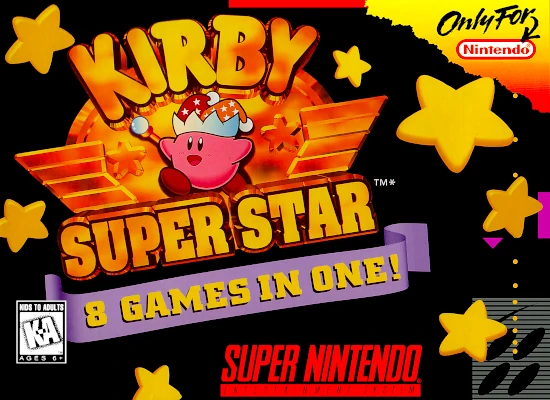
#4. – Kirby Super Star
Kirby is a liar and a fatmouth. Why? The cover advertises eight games in one. This is not that. Instead it’s eight separate sections of the game. For the most part they play the same or at least similarly to one another. At its core this is still just classic Kirby. Like that’s a bad thing? He retains all of his trademark abilities such as being able to float in the air and eat enemies thus absorbing their powers. It’s the new stuff that makes Kirby Super Star so good. For example you now have multiple abilities per absorbed power. Also, Kirby can summon a helper partner which can be controlled either by the CPU or a second player. That’s a really neat idea for the series.
Besides all that the level designs are incredible. Due to the vast number of abilities at your disposal there are multiple ways to tackle any given situation. It’s a lot of fun to experiment in this way. There’s also quite a bit of variety in gameplay. Although it’s a huge stretch to call each game mode it’s own game (again, shame on Nintendo) some of these play quite differently from one another. For example we have Gourmet Race. As you can imagine this has you competing against King Dedede in a timed competition. That’s unique for the series. Milky Way wishes changes the absorb mechanic allowing you to collect and switch amongst them on the fly. Kirby Super Star may be a victim of false advertising, but it might just be the best game in the franchise.
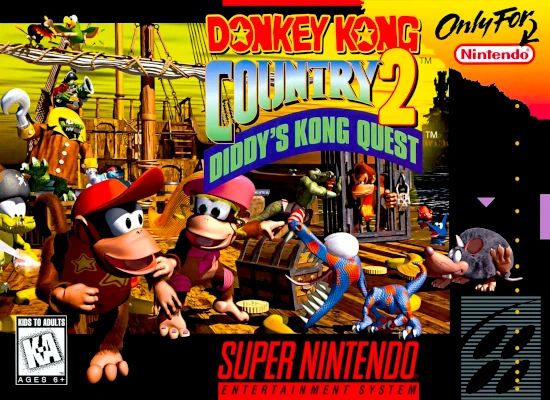
#3. – Donkey Kong Country 2: Diddy’s Kong Quest
You won’t find the original Donkey Kong Country on this list. Why? It wasn’t a very good game. DKC had questionable level designs and hit detection. It felt kind of thrown together. With Diddy’s Kong Quest Rare made the game the first one should have been from the start. It features incredible level designs, creative enemies/bosses, and some fantastic challenges that are tough but never feel unfair. It’s the culmination of everything they had learned about platformers up to this point. It also doesn’t hurt that the game is drop dead gorgeous, and has one of the best 16-bit soundtracks of all time.
It must be said though that this was the start of Rare leaving Donkey Kong out of his own games. This time you’re in control of Diddy Kong and his new partner Dixie. This is a little off-putting at first but I absolutely love the new character. She can hover in the air by twirling her hair, and this makes many of the platforming challenges that much less frustrating. This sequel is also more interesting thematically. I love the pirate costumes on the enemies. The new nautical theme fits the franchise surprisingly well. The best part however are the new animal buddies. Squitter the spider can make platforms with his own webs, and in some stages this is allows for some really interesting challenges. Donkey Kong Country 2 may be missing the franchise’s star, but it’s not short on compelling levels and mechanics.
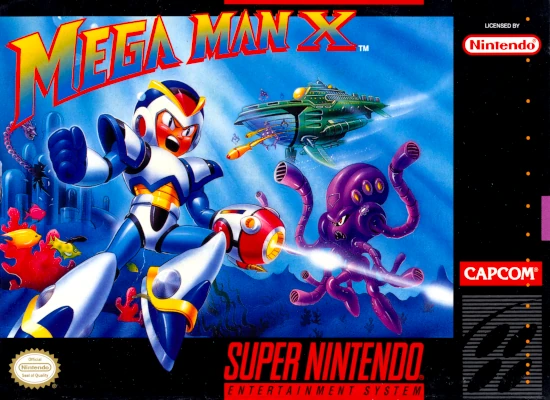
#2. – Mega Man X
Mega Man X might just be the most interesting and thoughtful reboot of a franchise of all time. Capcom knew by now that the formula was getting stale. They released six installments on the NES alone, after all. With this one they took a more edgy approach. Mega Man (now called X) is more realistic as far as proportions go, and he has a myriad of new abilities. The ability to cling to and jump off of walls is downright inspired. Furthermore the dash is amazing and pairing this with his signature jump allowed for some very compelling platforming challenges. That’s not to mention the amazing graphics and soundtrack. Seriously, Capcom went all out.
Gone are the classic robot masters. Replacing them is the new maverick robots. These are based off of animals. It’s a fantastic idea that allows even more freedom in their designs. Capcom took advantage of this with some amazing boss designs. Sting Chameleon is one of my favorite enemy encounters in the entire series. I love how he can turn invisible and cling to walls. Even the boring ones like Chill Penguin are still better than most of the really good robot masters of old. The new weapons are also fantastic. There isn’t a single dud among them. Even the buster shot gets an upgrade with a new fourth level of charge. Mega Man X is incredible even now. No notes.
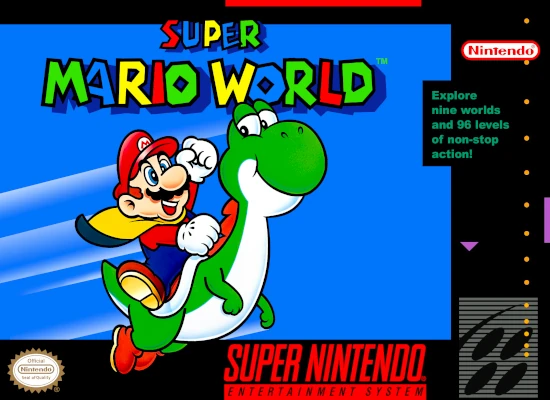
#1. – Super Mario World
Super Mario Bros. 3 is a tough act to follow. After all many (including myself) consider it to be the best 2D platformer of all time. Super Mario World ditches the numbering scheme as well as the Mushroom Kingdom. The game takes place in Dinosaur Land. It’s a departure, but the new prehistoric enemies and setting fit the franchise really well. Who cares about that though? Mario games live and die by their power-ups. In this area Super Mario World fares extremely well. You have all of the basics but new to the series is the super cape (which let’s Mario fly endlessly) and small additions such as Lakitu’s cloud. It’s all really interesting, but I do miss the frog suit.
So what makes Super Mario World such an amazing game? It’s the level designs and secrets. This is the game that taught me to explore every nook and cranny. Not only are the basic levels interesting with thoughtful obstacles and fun enemies, but the secret exits are placed with extreme care. You can stumble upon many of them accidentally, but others you have to put some effort into. What’s cool is you don’t even need them. Super Mario World is so rewarding however that it’s worth the effort. The game is just peak Nintendo magic, and it’s all wrapped into a beautiful game. With that said it’s not as good as Super Mario Bros. 3. Then again, what is?

James
Nice list! On mine I also have the Lion King, Asterix and Pitfall: The Mayan Adventure