
It’s a common misconception that there weren’t many good Sega Genesis RPGs. That’s because the lion’s share of role playing games were released on the Super Nintendo in that era. This is due in large part to Squaresoft and Enix backing the console. The Sega Genesis wasn’t left in the dark though. Sega themselves filled in most of the gaps, but third parties also lent a hand. In the end the Genesis managed to amass a respectable library of RPGs. Today I want to talk about them. What better way to do so than to write them all out in a list? Perfect. This is our list of the Top 15 Best Sega Genesis RPGs of all time! Let’s initiate the blast processing and get on with it.

#15. – Sword of Vermillion
There’s no sugar coating it. We’re starting out with kind of a dud. Sword of Vermillion is not an amazing game. It is however an RPG, and it’s on the Sega Genesis. It does have some good qualities though. I find it really impressive with how many different gameplay styles the game makes use of. Exploration in towns has the traditional overhead view as you interact with NPCs, advance the story, gather supplies, etc. You know the drill. When you hit the world map however everything is 3D. It doesn’t look pretty, but in 1989 I’m sure it was mind blowing. Battles feature a side view perspective and take place in real-time. Boss encounters are pure side view. None of these gameplay styles are particularly fun, but hey, at least it’s diverse. Sword of Vermillion is a tough sell in this day and age, but it’s kind of okay. Sometimes.
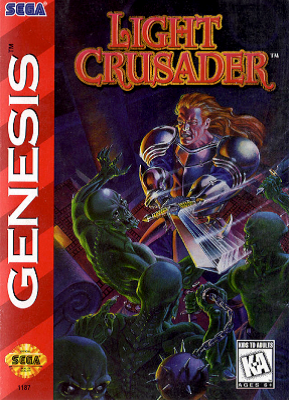
#14. – Light Crusader
Have you ever wondered what a Treasure RPG would be like? There’s no need to ponder the idea, because Light Crusader is it. Unfortunately it doesn’t match their legacy of polish. It’s also hyper serious which doesn’t make sense for this developer. Regardless, Light Crusader is barely an RPG, but still has enough conventions to be included on this list. It’s a hack and slash dungeon crawler that uses an awkward isometric perspective. Unfortunately it looks ugly, and is pretty awkward in motion. I hated it immediately. After spending some time with Light Crusader it grew on me a little. Many of the dungeons are well designed, and I had fun with the puzzles. I just wish hitting enemies wasn’t so difficult, and that jumps weren’t so awkward to land. It feels like Treasure were trying to bring in new fans here, and I don’t think it worked.
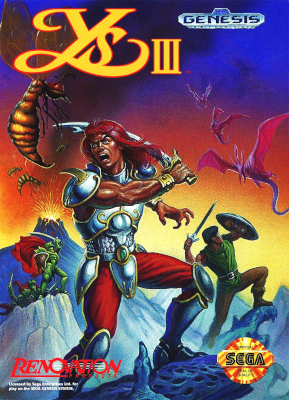
#13. – Ys III: Wanderers from Ys
All right. Now we’re talking. After all, you can’t go wrong with Ys. Right? Unfortunately this isn’t your father’s Ys. After the first two fantastic installments Falcom decided to try something different. They made Ys III a side scroller, and for the first time the main character Adol can actually slash his sword. The latter is a good change. The former? Not so much. The side view severely limits the complexity of dungeon designs. The improved combat does make up for this, but in the end Ys III is still a mixed bag. What’s more is the Sega Genesis version just doesn’t stack up to the SNES release. This is another one that grew on me. Despite the drastic change to gameplay it still feels like Ys, and that’s always a good thing. This may be one of the black sheep of the Ys series, but it’s still mildly enjoyable.
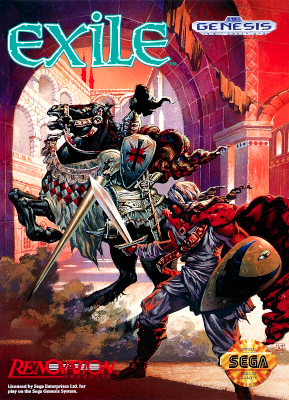
#12. – Exile
Exile was one of the more popular RPGs on the Turbografx-CD. Most people don’t even know it had a Sega Genesis port. This version also doesn’t have the benefit of being published by Working Designs. Regardless it’s still Exile, but with a whack translation. The game itself is an action RPG with some twists. For one thing it has a storyline based around religious elements. That was a big no-no in the 90s. It’s surprising that this game was even released on the Sega Genesis. At its core this is a pretty basic action RPG. You explore towns via an overhead perspective. In these sequences you advance the plot, get back story from NPCs, and purchase supplies. Dungeons are entirely side view and they’re well designed. Combat is in real time and your character has the ability to jump and slash their sword. I especially like the Arabian theme here.
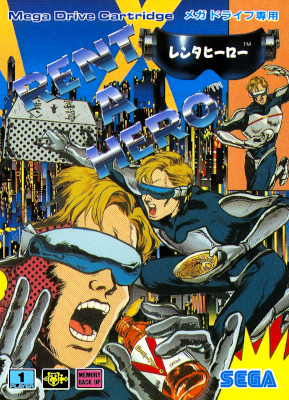
#11. – Rent-A-Hero
Sega has proven throughout the years to be one of the zaniest and most talented developers of all time. Rent-A-Hero is a perfect example of this. It’s an RPG set in the modern day where you play as a boy who, by accident, receives a set of battle armor in the mail. This allows him to transform into a cheesy 90s era comic book hero. Unfortunately it comes at a cost. He’ll have to pay off the balance by doing odd jobs. Hero stuff. Not only is the premise laughable (in the best way possible) but it’s a perfect explanation for the set up of this game. You’ll be transforming and completing odd jobs to earn money. Exploration is the typical overhead perspective stuff with lots of NPCs and side quests. Battles however are real-time, and here the gameplay more closely resembles that of a 2D fighting game.
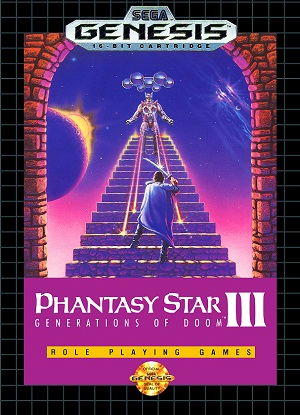
#10. – Phantasy Star III: Generations of Doom
Phantasy Star III is a big question mark. The second game was a hit, and why they decided to change so much with the next sequel is puzzling. Sega removed most of the sci-fi elements and instead focused on medieval settings and themes. At first this one seems completely removed from the franchise. Later on the connection is revealed, and it’s pretty cool to be honest, but I still don’t understand Phantasy Star III. Like its predecessors this is a turn based classic style RPG. What’s new however is the generation system. At the end of each chapter you can choose a bride, and this affects how the next one will play out. Many locations and story elements are shared, but the paths are different enough to make them interesting. Unfortunately the graphics are really bland, and the soundtrack is downright abysmal. Phantasy Star III is a good game though.
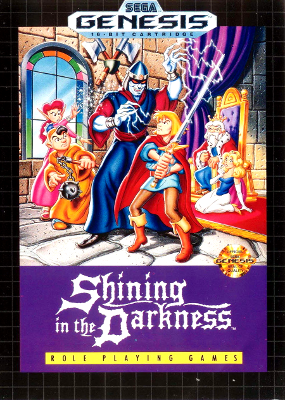
#9. – Shining in the Darkness
Here’s a little known fact. Shining in the Darkness was actually the first game in the Shining series. Unlike the releases that followed this one is about as traditional an RPG as you can get. Combat is strictly turn based, and there’s only one dungeon to explore. It’s up to you to unlock additional floors in it. What’s neat is that you explore the dungeon from a first person perspective. Enemies simply appear on-screen when they’re encountered, and then the battle commences. There’s only one town area too, and with a limited number of NPCs. Really this just serves as a hub to purchase new weapons and items in. I absolutely loved exploring the dungeon. It’s really well designed and there’s an excellent sense of progression. Battles are also fun and the interface uses the classic Shining Force icons which are easy to read.
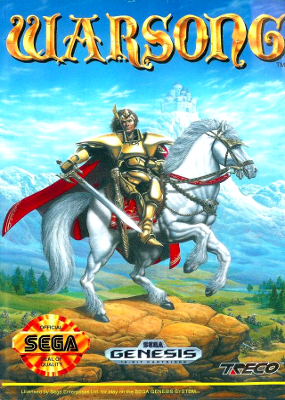
#8. – Warsong
While it seems like Warsong was a one off (there’s no Warsong 2, just saying) this is actually the first installment in the well known Langrisser series. Never heard of it? That’s not surprising. Langrisser was big in Japan but seldom released in the West. This is one of the rare strategy RPGs of the 16-bit era. Battlefields are displayed from an overhead perspective, and movement is entirely grid based. My favorite part are the fighting sequences. Here your armies engage the enemies. It’s basically little mini versions of soldiers or whatever unit you’re using fighting it out against other little guys. It’s cute, and downright charming. These sequences are also a lot of fun to watch play out. Warsong has some entertaining gameplay scenarios, and fun battles. It’s one of my favorite strategy RPGs of the era.
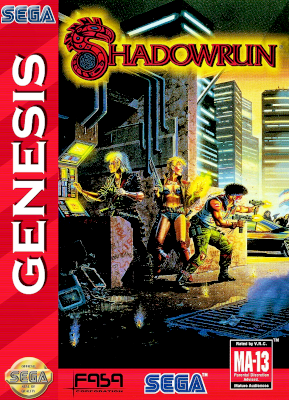
#7. – Shadowrun
Western RPGs weren’t really much of a thing on consoles in the 16-bit era. Among the ones we did get Shadowrun is the most popular. For good reason. The story, world, graphics, and music are all trash. Let’s get that out of the way right now. It’s the battle system that makes Shadowrun so memorable and amazing. The cyberpunk setting also helps. In this game you play as a runner. Basically you’re doing illegal stuff for shady businessmen. Combat breaks out whenever enemies appear, and it’s entirely in real-time. You have a lot of options such as attacking, using magic, etc. These fights take only a few seconds to conclude. I like that. There are also sequences where you enter the computer world, and battles here are played out from an over the shoulder perspective. The blend of the two battle systems is really interesting, and keeps things fresh.
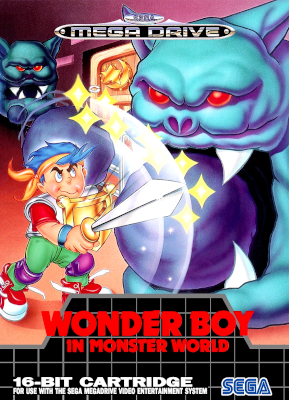
#6. – Wonder Boy in Monster World
Wonder Boy was always a really interesting franchise. It started out as the basis for the Adventure Island series, and from there it dove headfirst into the RPG genre. Wonder Boy in Monster World continues this tradition. It’s a side view game with both platforming and role playing elements. Your main attack is swiping with your sword, but you can also jump. You’ll have to hop across many a platform, and can also leap to avoid enemies. All the while you’re gaining experience points and thus levels to become stronger. The story here is simple, but charming. I also really like the colorful graphics. It’s limited in dungeon design because this is a side view game, but the developers made good use branching paths to make exploration entertaining. You know you’re always in for a good time with Wonder Boy, and Monster World is no different.
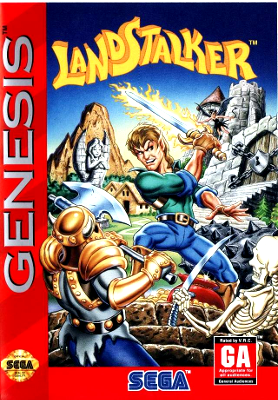
#5. – Landstalker
Okay so I’m pushing the boundaries of what is considered an RPG with this one. Landstalker more neatly fits in the action adventure genre. Landstalker has just enough qualities to consider it a role playing game. It’s a darn good one at that. Normally I steer away from isometric games but in this case it works to the game’s benefit. I absolutely love the dungeons in this game. They are both well designed and challenging with some light puzzle fare. Even combat is pretty fun. It’s clunky though. Honestly the only thing that really holds Landstalker back is the platforming. This game requires far too much precision for the perspective you’re given. Making some of these jumps will drive you crazy. Despite this Landstalker is the game that really sold me on the isometric perspective. This is easily one of the best Sega Genesis RPGs of all time.
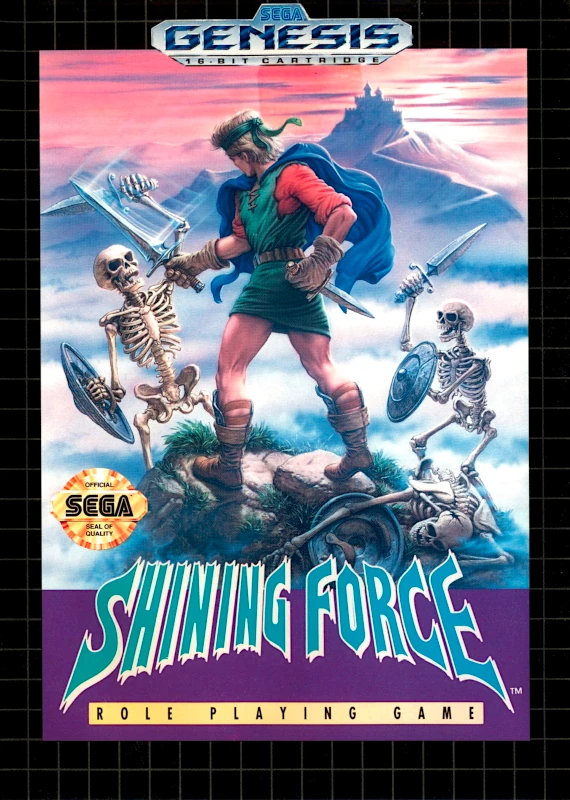
#4. – Shining Force
There’s not much I can say about Shining Force that hasn’t already been said. This game was one of the pioneers of the strategy RPG genre. It was also one of Sega’s biggest releases for the Genesis. It was one of the breakout strategy RPGs in the West. Battles here are handled via grid based battlefields. You take turns moving units across a map and attacking foes, using items, casting spells, etc. What I like about it is the different characters. Many of these fit neatly into categorizes like knights, warriors, mages, clerics etc. Some of the bunch are super unique either by movement or skills that they have. Exploiting these against the enemies is a ton of fun. Shining Force may seem archaic compared to the Fire Emblem games of this time, but it has a lot of that classic Sega charm to it. The game is a classic.
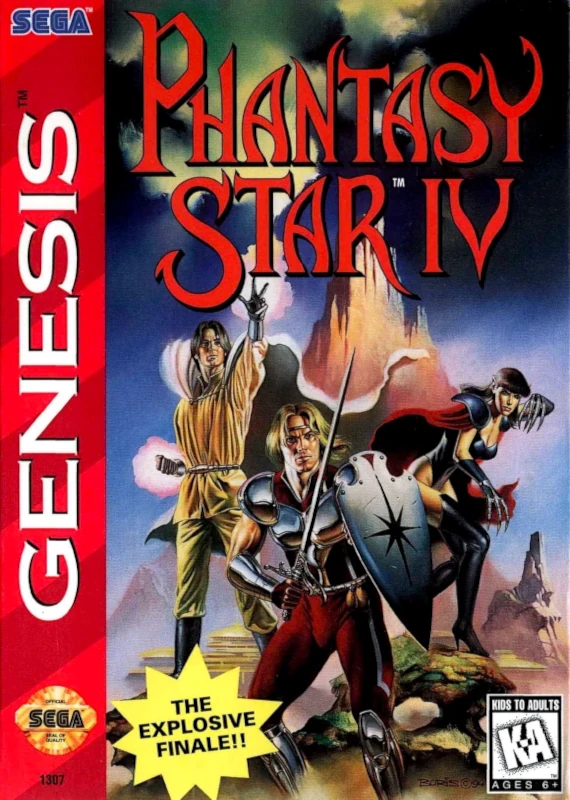
#3. – Phantasy Star IV: The End of the Millennium
After some mistakes were made with the third installment Sega returned the franchise to its roots. This is also one of the few Genesis RPGs that can compete with Final Fantasy games of this era in terms of production values and scope. The graphics, soundtrack, and story are all top notch. I especially like the comic book style still screen cinematics. They work extremely well for the game. This is also the single best version of the classic Phantasy Star battle system, and the varied cast of characters give you a ton of options. Phantasy Star IV is basically the cumulation of everything Sega had learned about making RPGs to this point. The only downside to the game is that it was intentionally made to be the last mainline Phantasy Star title. It wraps up all of the loose ends in a nice little bow.
#2. – Shining Force II
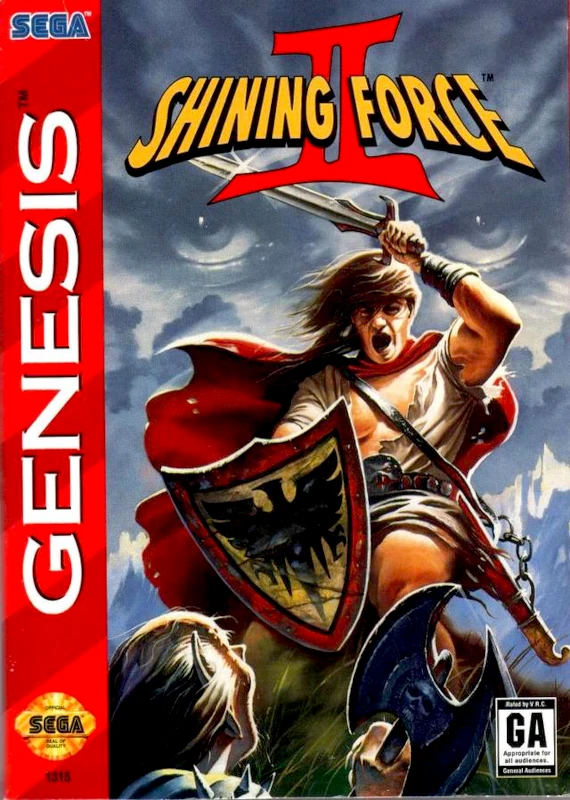
Sega really outdid themselves with this sequel. They took everything that made the original great and expanded upon it thoughtfully while fixing many of its weakest points. The end result is one of the very best Sega Genesis RPGs. Sega really stepped up their storytelling game with a cast of characters that are charming and memorable. It’s the battle system that sees the most improvements though. Shining Force II uses the traditional turn based combat with grid style battlefields. It’s the cast that was so thoroughly upgraded. The original Shining Force had a few unique characters in its ranks, but this one has a ton of them. Furthermore many characters have different promotional branches that they can choose from. Some of the end results are really cool. In my opinion Shining Force II is one of the best strategy RPGs of all time.
#1. – Phantasy Star II
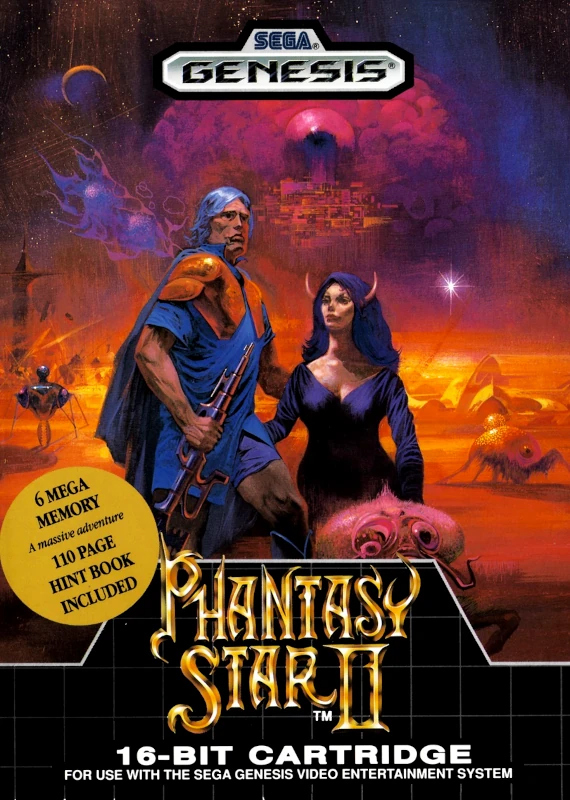
I’ll start off by saying that Phantasy Star II isn’t for everyone. It’s a grueling classic style RPG where you cannot avoid grinding. Strap in because you’ll be doing it a lot. Your party never feels overpowered, items and money are scarce resources, and the dungeons are absolutely masochistic. Whomever designed the dam area of this game was clearly wanting to punish players. I’m not a glutton for punishment. Phantasy Star II is worth the pain it causes. The story is more subtle than in most RPGs, but the overarching scenario is amazing involving a super computer that runs society with a group of people rebelling against it. This one is also a direct sequel and seeing how it ties into the first one is absolutely amazing. The combat and interface is a little unwieldly at first but once you get used to it you’ll find some really deep mechanics.
