
It’s not easy being the weakest console of your respective generation. Just ask the Sega Saturn. Some real boneheaded moves were made during its design stages. For one thing the engineers focused more on 2D gaming. This was at a time when Sega was leading the 3D revolution with Virtua Fighter in the arcades. Legend has it that the company made some last minute changes and shoehorned in polygonal capabilities. Because of this it was noticeably weaker than both the Sony PlayStation and Nintendo 64. When it came to 3D gaming, that is. As it turns out Sega were wizards when it came to game development. They consistently got more juice out of the console than we ever thought possible. That’s why today we’re going to highlight our picks for the top 15 Sega Saturn games that pushed the hardware to its limits. Let’s check it out.

#15. – Fighting Vipers
Hear me out on this one. Fighting Vipers in screenshots doesn’t look like anything too special. It has decent character models, and the environments look good too. For a 32-bit fighter, that is. In motion it truly is something special. I’m not even talking about the framerate here. The game targets sixty frames per second, but often falls below that. No, what we’re talking about is how complex the visuals are. You have destructible environments for one thing.
It’s also possible to knock pieces of armor off of each fighter. Add to this the random effects that are just full of details. You have real-time lighting effects, and sometimes the source changes. You’ll see shadows react in real-time. When you take all of these details into account what you have here is a technical showcase. Fighting Vipers is the real deal.
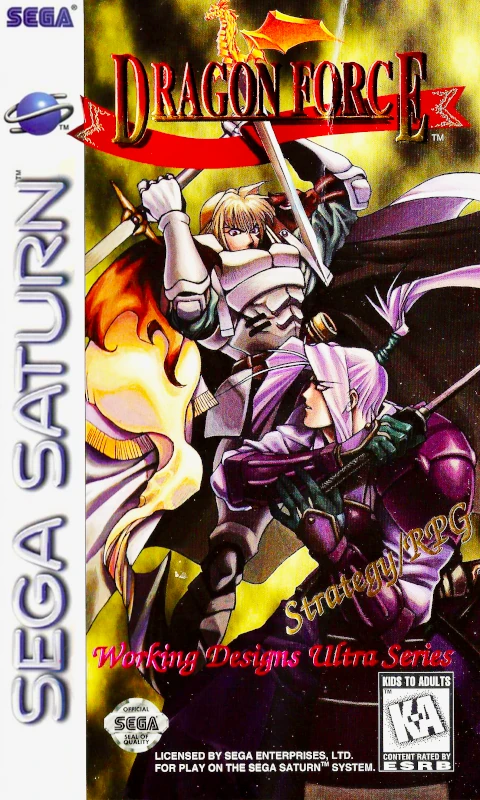
#14. – Dragon Force
Here’s another one that doesn’t look particularly impressive from still shots. It’s a two dimensional strategy RPG where you guide characters across set paths on a map, and fight real-time battles against enemy armies. The game looks good enough for the era, but the scale is absolutely massive. Both armies can have up to one hundred units apiece. In battle they move on their own in real-time. That’s two hundred characters running around independently from one another. Wow. We take things like this for granted now, but back then this was incredible.
With that in mind we also have spell effects, as well as animations for each character’s attack. Even when standing idle each character is animated. It looks incredibly busy for a 32-bit game. I mean that in the best way possible. Sure, the framerate takes some dips but it’s an incredible feat that they even got this one running in the first place. Dragon Force is one of the best examples of just how much of a 2D powerhouse the console really was. It looks incredible.
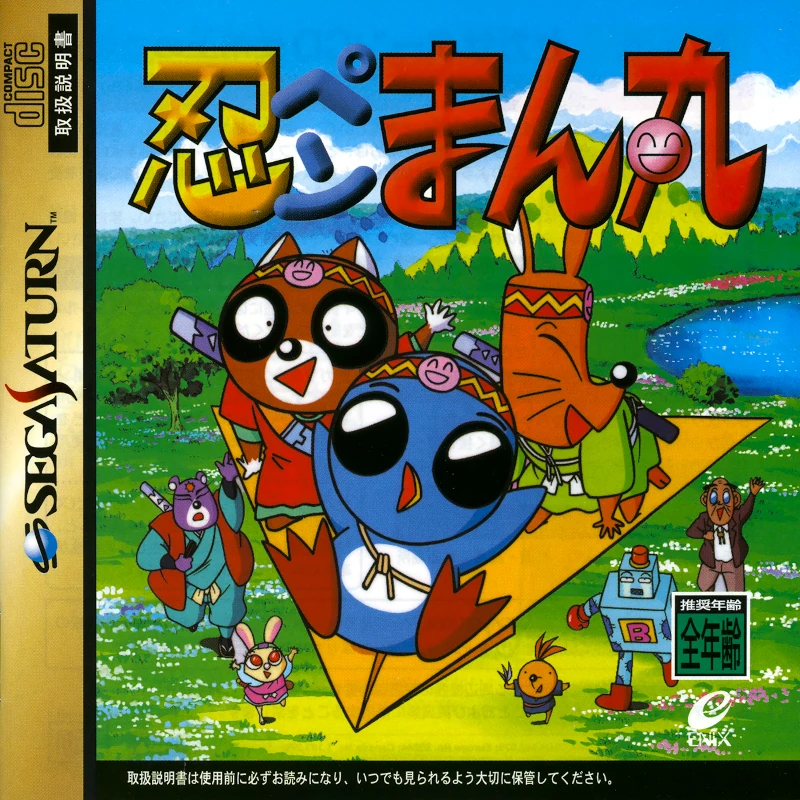
#13. – Ninpen Manmaru
Here’s some trivia for you. Ninpen Manmaru is one of the few games Enix published on the Sega Saturn. Yes, that’s the same Enix responsible for the Dragon Quest series. Given their history of leaving games in Japan it’s no surprise that Ninpen Manmaru never made its way to Western shores. This is a shame because it filled a niche on the console that no other titles did. It was a fully 3D platformer. Furthermore it was one not limited to linear stage designs. While it’s not as vast as something like Super Mario 64 was Ninpen Manmaru still pushes past what most of us thought possible on the console.
Wanna know what’s most impressive? Ninpen Manmaru manages a steady framerate. Throughout my playthrough I was unable to find any significant dips. Additionally the characters and enemies have a lot of different frames of animation. The game also has a lot of moving parts at once. Multiple enemies are frequently in view, and platforms aren’t always stationary. Ninpen Manmaru was truly a game that pushed the Sega Saturn to its limits.
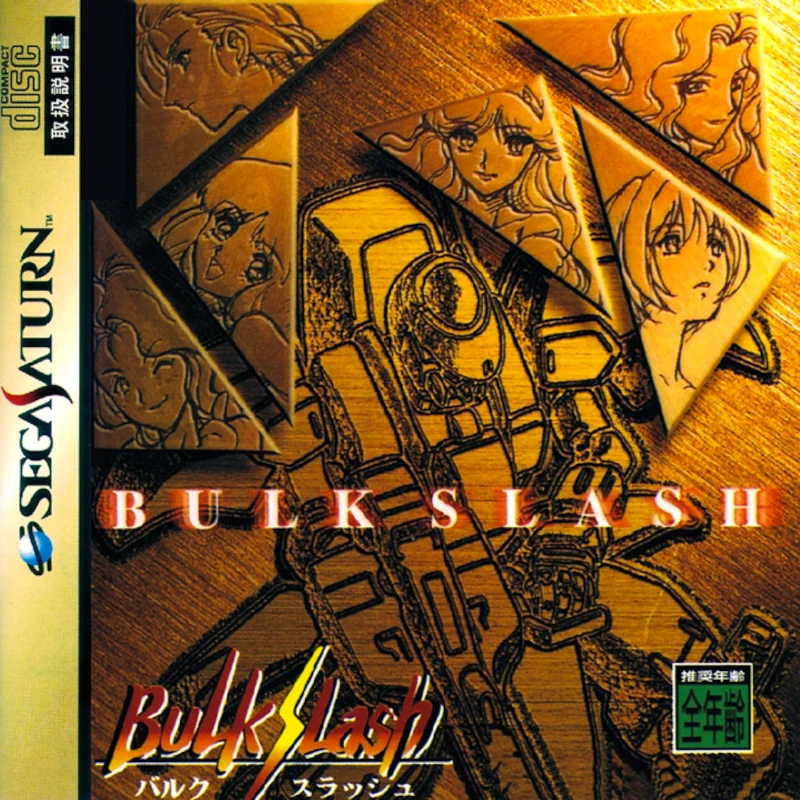
#12. – Bulk Slash
Ninpen Manmaru may have pushed boundaries but it had slow small stages. Bulk Slash is just as impressive, but the scale is significantly bigger. This is something that would have pushed any console of the era. Pretty impressive for a Sega Saturn title, right? The game is a 3D mecha shooter. You can transform your robot between both on-foot mech form, and also transform into a jet thus allowing you to fly around. It looks absolutely incredible. No joke. The 3D environments are huge and you have full control over where you go. I was shocked. Shocked, I tell you.
Yes, many of the areas are hallway shaped labyrinths. Even these push the hardware to its limits with great texture work and significant polygonal rendering. Enemies are often huge and animate well. The same goes for the explosions. The audio is also extremely impressive too. Particularly the way it’s integrated into the gameplay. You have navigators that give detailed instructions based on what’s happening in the game. It’s a smart design that routinely surprised me. Of course it’s all in Japanese so unless you’re following the translation this might go right over your head. Bulk Slash is absolutely amazing tech-wise.
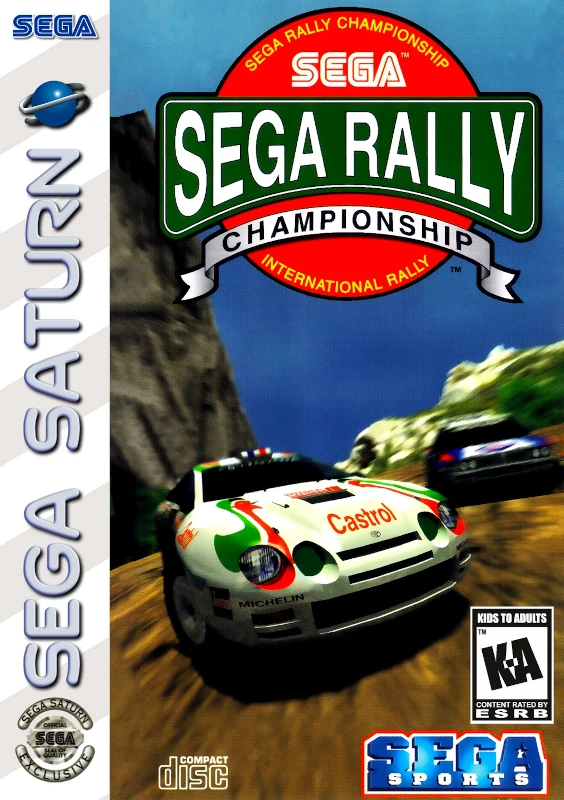
#11. – Sega Rally Championship
All right, a racer! The Sega Saturn started off on the wrong foot with this genre. I’m talking about you, Daytona USA. Sega Rally Championship more than made up for this. It was fun, no doubt, but we aren’t talking about how fun these games are. It belongs on this list for the graphics it was able to push out of the strange hardware. Environments and cars are highly detailed featuring models with high polygon counts. The texture work is also decent if not a bit blocky. While it never hits sixty frames per second the action is still silky smooth.
That’s all good but what makes it so impressive? It’s the physics. Few racing games from this era have physics engines that feel so realistic. Your cars react naturally to every type of terrain including the changes to each track. Even things like bumping into objects just feels extremely realistic and nice. Add to that the fact that the action is extremely fast, the framerate consistent, and there’s minimal pop-in for a game released in this era. Sega Rally Championship was, and still is, a looker.
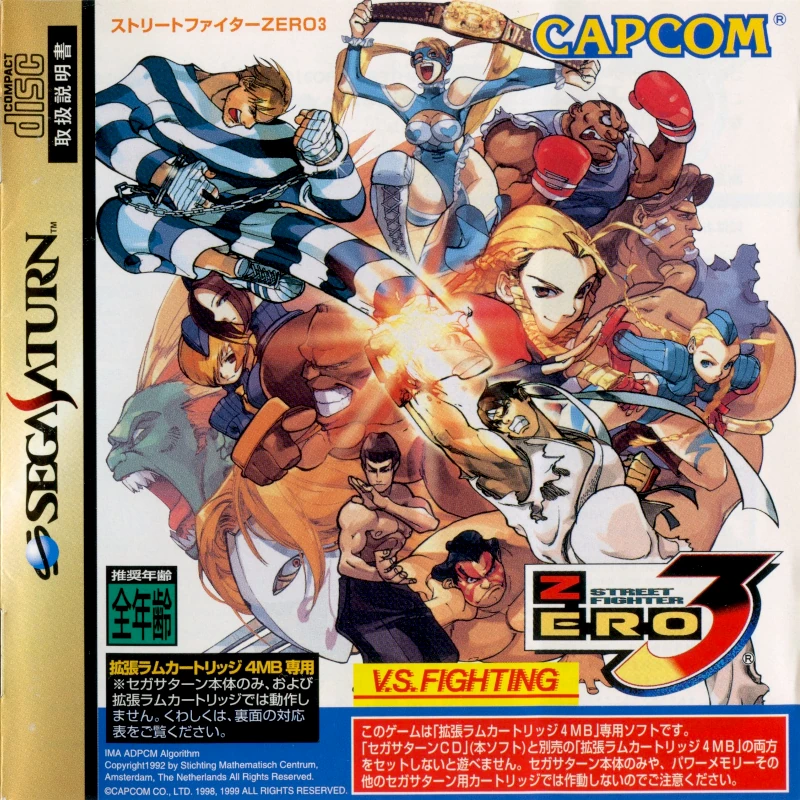
#10. – Street Fighter Zero III
This one is Street Fighter Alpha 3 to you and me. While most developers were moving to 3D graphics Capcom was still firmly devoted to two dimensional gameplay. With each new installment in the Street Fighter Alpha series they refined the graphics even further. Seriously, all of these games look incredible with detailed backgrounds, animations, and wide use of colors. Obviously Street Fighter Zero III is the best looking of the bunch. It looks incredible. Capcom were a wizard with sprites and they put in some real work here.
And you know what? Even to this day the Sega Saturn version is still the best home console port. Yes, I’m being serious. It’s a nearly arcade perfect port. It utilizes the ram expansion cartridge to deliver the truest version of the arcade game we’ve ever seen. It almost looks a generation ahead of the PS1 release, and even puts the Dreamcast iteration to shame. That’s mighty impressive for a console that’s infamously underpowered compared to the competition. If you are looking to play Street Fighter Alpha 3 then this is the version you want. Price be darned.
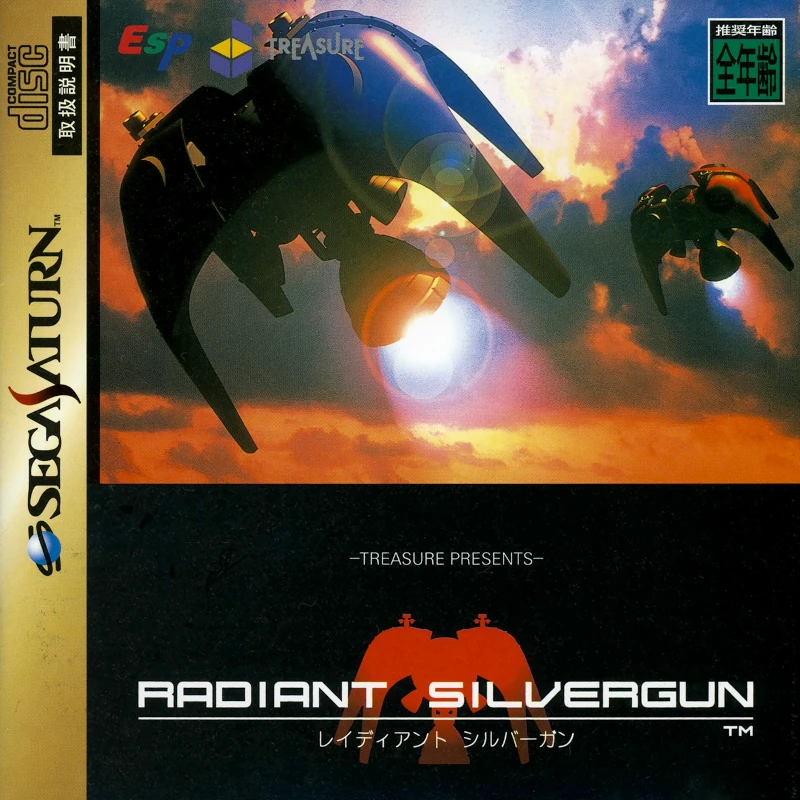
#9. – Radiant Silvergun
Radiant Silvergun is my favorite shmup of all time. That’s not why it’s here though. This Treasure developed title has some of the busiest and most impressive graphics on the console. It features both 3D environments and polygonal enemies. Sprites are blended in, but they look really nice. It’s almost seamless in this approach. There are several things that makes Radiant Silvergun so impressive. Let’s start with the polygonal environments. They’re incredible. Simply put. The number of polygons rendered is truly impressive for this generation. Even the textures look amazing.
There’s also a lot of on-screen carnage pretty much at all times. You’ll frequently be facing down screens full of bullets, or bosses that take up significant real estate and have several moving parts going crazy all at once. There’s a whole lot going on here. Oh, and it runs at a constant sixty frames per second. You heard that right. Somehow Treasure were able to optimize the hardware in a way that puts the other, more powerful consoles, largely to shame. Watch it in motion and you’ll see what I mean. Radiant Silvergun really is that impressive.
#8. – Quake
Sega Saturn developers were serious when it came to first person shooters. Most of these transcended what most of us thought the console was capable of. I had to include one of these, and I chose Quake. There’s a good reason for this. The developer made a completely new engine for this Sega Saturn version. It’s clear the console wouldn’t be able to handle a straight port. The work they put into the Saturn version is admirable to say the least.
No, the framerate isn’t perfect. Also, the characters are blocky and have sharp edges. Regardless the game still looks and feels like Quake. That’s something in and of itself. The part that really got me was the dynamic lighting. Shots from some of the weapons illuminate various sections of the environments. It looks insane in motion. The game doesn’t compare to the original release on PC, but it compares favorably to the N64 iteration. Quake on the Saturn shouldn’t exist, but here we are. It has its problems, and isn’t an ideal way to experience the classic first person shooter but it’s still an incredible feat of programming.

#7. – Shining Force III: Scenario 3
The third scenario of Shining Force III is incredible. I don’t think anyone will deny that; it’s simply one of the best strategy RPGs of all time. The tech it pushes is also extremely impressive. The game is fully 3D, but with sprite based characters. The latter can look a little hokey at times, but the environments look great their time. You can also rotate the camera freely using the shoulder buttons. We take things like this for granted now, but remember, the Sega Saturn struggled with 3D. It does an admirable job here.
It’s the attack sequences that look absolutely incredible. These ditch the sprite based character models and instead the game renders these in full 3D. They look amazing with a ton of detail. The animations are also impressive. It’s the lighting effects that blow the roof off. These are put on full display when spells are used. Typically the screen is purposely darkened in these sequences and the polygons are dynamically lit up in tune with the dazzling on screen effects. It looks incredible, and surpasses most of what we’ve seen on the PS1. Shining Force III: Scenario III really pushes boundaries, and it does so with style.
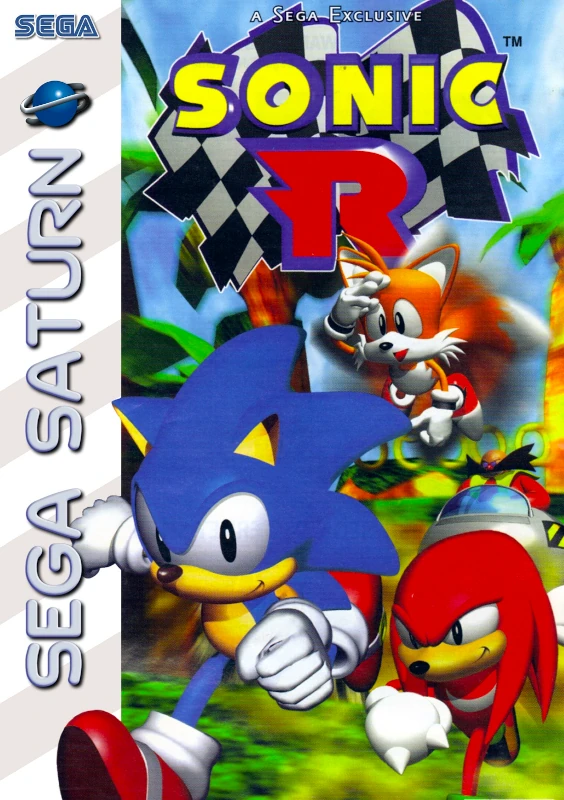
#6. – Sonic R
What we wanted was a fully 3D Sonic the Hedgehog platformer. What we got was everything else. Except for that. Apparently Sega was allergic to success. Sonic R from Traveller’s Tales is a racing game featuring everyone’s favorite hedgehog and his friends as they zoom around tracks in 3D space. It’s not a kart racer, but it’s close. This may not the full fledged platformer we had long expected, but hey, it will do.
Looking at Sonic R you might completely forget that the Sega Saturn struggled with 3D graphics. The game moves fast as you zip through well rendered environments with the hedgehog’s signature speed on full display here. The tracks have a lot of interactive elements and a variety of terrain types. The action runs at a brisk pace and decent framerate even when all of you opponents are on-screen at the same time. What’s more is that Sonic R supports split screen multiplayer. In this mode it retains most of its graphical fidelity although it understandably runs a little worse. Sonic R brought the hedgehog into 3D in a very impressive way. It looks amazing.
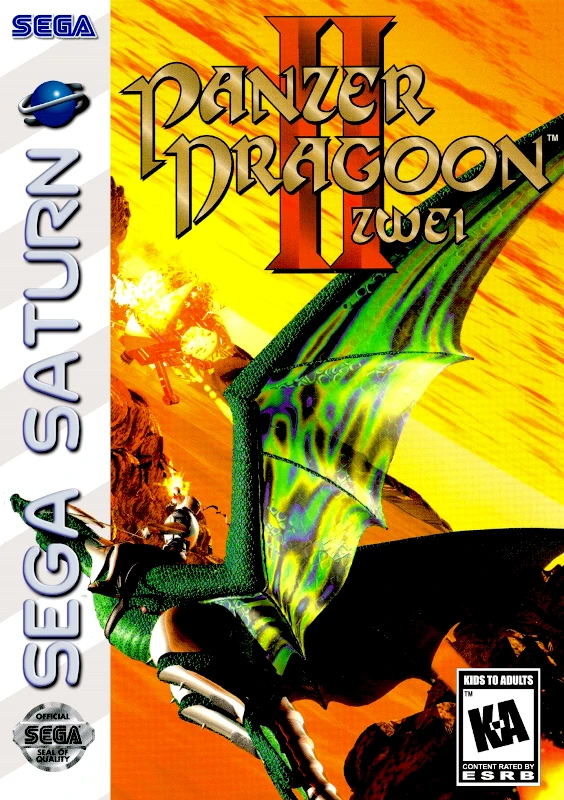
#5. – Panzer Dragoon II: Zwei
Panzer Dragoon might be Sega’s best franchise born on the Sega Saturn. The original release was a launch title for the platform. It was impressive. Especially the soundtrack. It was a 3D rail shooter but instead of flying a space ship through futuristic environments you instead rode on the back of a dragon. It was unique and interesting at least. The sequel took the same basic concept but kicked everything up several notches. This includes graphical fidelity. That might be selling what Team Andromeda did here short. Panzer Dragoon Zwei is an absolute technical showcase that’s more impressive than most Nintendo 64 and Sony PlayStation games. Not bad for a console with 3D capabilities thrown in as an afterthought, eh?
Gameplay is functionally the same here as it was in the original Panzer Dragoon. Zwei isn’t just more of the same though. You play as a character riding on the back of a dragon. This beast can fly around in all directions but is always moving forward. The environments look absolutely spectacular. As does the character/enemy models and their animations. There are times you’ll be faced with screens full of foes and the game maintains its impressive frame rate. The thing is you aren’t attacked from just the front. You can rotate the camera to deal with foes attacking from the sides and behind. This use of 3D space, paired with the already incredible graphical fidelity is truly something to behold. I swear, Sega had wizards working for them in this era.
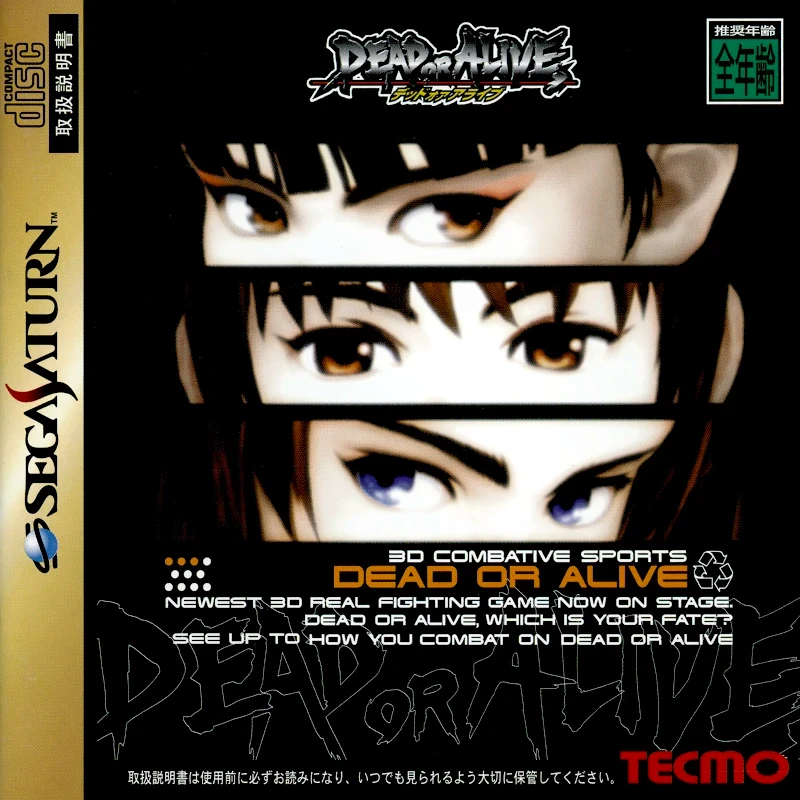
#4. – Dead or Alive
Yes, I already know what the main hook of Dead or Alive is. It’s well endowed women and a physics engine that highlights this. Do I care? No. I find that this hook largely distracted gamers from the incredible tech running here. Yeah those physics are impressive, but they’re a bullet point. Dead or Alive is a one-on-one 3D fighting game from Tecmo that is best known for it’s port on the PS1. The Sega Saturn version wasn’t even released in the West. This is a shame because this one runs a more impressive engine and looks much better as a result.
Dead or Alive features character models with extremely high polygon counts. They look incredible. It’s the animations that truly push Dead or Alive to the next level though. The game is based on real martial arts and the way characters move is incredible. Everything is so smooth and detailed that for all intents and purposes the Sega Saturn shouldn’t be able to pull it off. The icing on the cake is the high resolution. This reduces jagged polygons and gives the game a distinct smooth look. It’s such a feat that almost no PS1 titles match it just in terms of resolution. Dead or Alive is one of the few 3D games from this era that still holds up, and this Sega Saturn version is truly incredible.
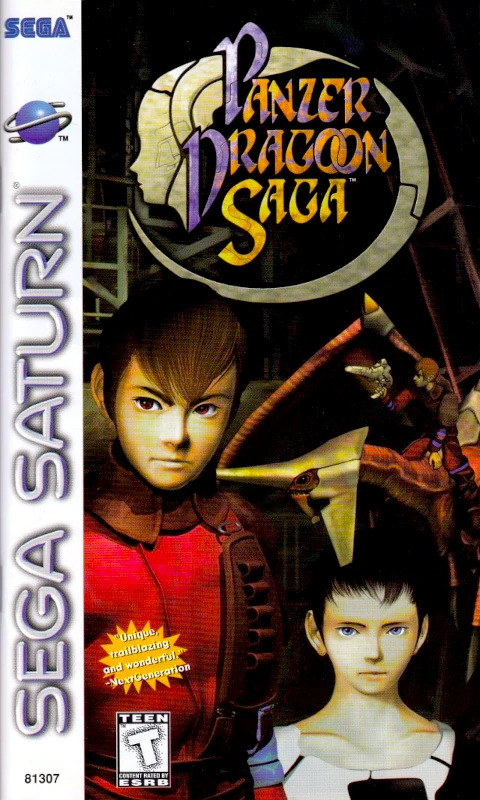
#3. – Panzer Dragoon Saga
For as impressive as Zwei was it can’t hold a candle to Panzer Dragoon Saga. For this installment Sega moved the franchise into the realm of role playing games. Basically you explore the world on the back of a flying dragon, and encounter enemies at random. From here you’re whisked away to a seprate battle screen. Enemy encounters are semi-real time with turn based elements in play. The thing is it still feels like Panzer Dragoon. You target enemies more meticulously for strategic attacks, and the game supports both huge enemies at once as well as several smaller ones moving independently. The battle sequences look downright amazing. You can still target foes on all sides of your dragon. The way the game accounts for such a large play area at once is really impressive.
The battles look incredible with great character models and the animations are absolutely wonderful. What surprised me most however is that outside of battle there are areas you can explore on foot. RPGs of this era generally used pre-rendered backgrounds. Panzer Dragoon Saga does not. The game features full 3D exploration and the environments look amazing. So do the character models. Walking around in such high graphical fidelity is far beyond what we have all been told the console is capable of. There is so much detail in even simple things. It’s insane. Panzer Dragoon Saga truly pushes the Sega Saturn to its limits.
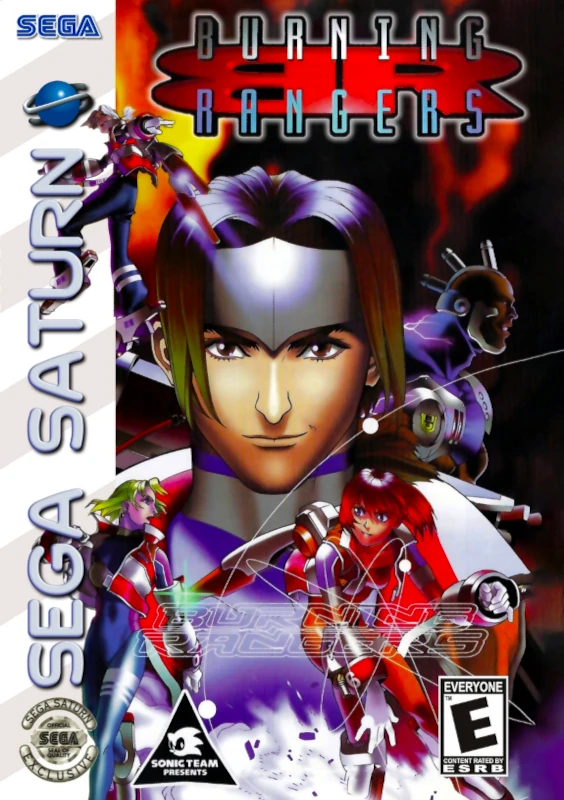
#2. – Burning Rangers
Burning Rangers was one of the final games released on the Sega Saturn. It’s another result of Sonic Team doing everything in their power to not make a 3D hedgehog game. All the way to the bitter end. It’s hard to be bitter because Burning Rangers is amazing. The game has you play as futuristic anime based firefighters that uses guns to combat flames. What? It sounds weird, but hey, it works. The game takes heavy advantage of the Sega Saturn’s 3D capabilities. You move around in three dimensional space and there are few to no pre-rendered elements. It looks amazing. That’s easy to say, but let’s get into why.
Transparencies. This was something the Sega Saturn really struggled with. Burning Rangers pulls these off at every turn. Additionally the lighting effects are absolutely insane. The environments light up with every explosion and general change to the surroundings. You have ton of things going on in nearly every room. Moving parts, explosions, and dynamic changes to the lighting. There are few games from this generation that pull off all of these effects so well, and even less that do it all at once. Sure, the framerate has some problems. That’s to be expected. The fact that it’s even running at all is a feat of software engineering. Burning Rangers is incredible looking.
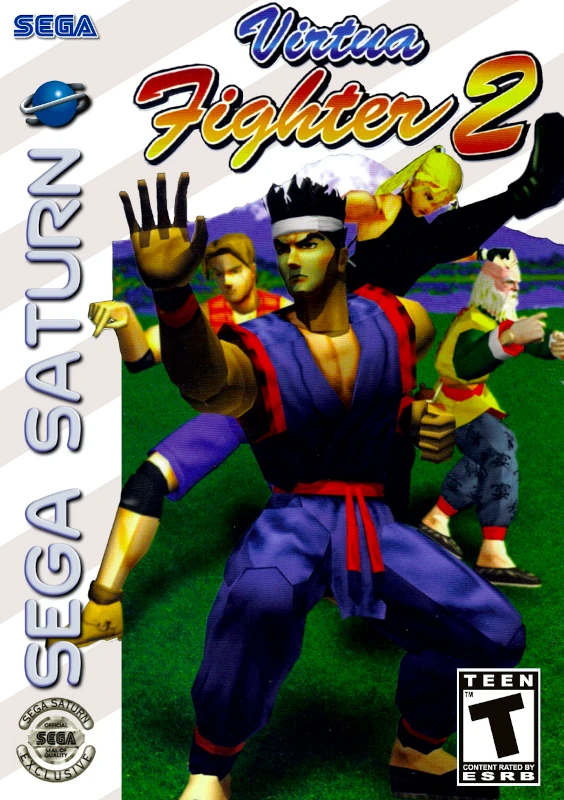
#1. – Virtua Fighter 2
My first thought with Virtua Fighter 2 is how in the holy heck did they ever get this game running on the Sega Saturn? It was the flagship title for the console. A fighter being pushed to the forefront of a library was a rarity. If you owned a Sega Saturn you probably had Virtua Fighter 2. There’s a good reason Sega was pushing it so hard. It might just be the best looking fighting game of its generation. It runs at the highest resolution of any fighting game on the Sony PlayStation. It also features some of the most impressive animations in the entire genre. In motion it’s an absolute work of art. Like I mentioned earlier Sega were wizards on the console.
At a glance the game looks amazing. When you really start paying attention you’ll notice all of the incredible details packed in. Some characters having flowing hair, and moving clothing. Additionally the game completing gets rid of that wobbly polygon problem that the 32-bit consoles suffered from. I honestly don’t know how they did it. Oh and did I mention that it runs at a constant sixty frames per second? There’s just nothing about Virtua Fighter 2 that could lead us to believe it’s running on a Sega Saturn. It’s that impressive. Tech wise I can’t think of any other fighting game from this generation that surpasses it in terms of graphical fidelity. It should cause your console to burst into flames, but somehow, the Sega Saturn pulls it off without a hitch.
