
I, like many RPG enthusiasts, have been a fan of Dragon Quest (or Dragon Warrior as it was once known in the West) since it’s inception. This long running RPG series from developer Enix (now Square-Enix) basically popularized role playing games worldwide. With that said it’s always been a bigger hit in Japan. While there have been a few breakthrough releases in the franchise that sold well worldwide Asia has always been the franchise’s biggest market.
Because of this we missed out on a few key releases. Namely Dragon Quest V and VI weren’t released in the West. Eventually we received remakes, and the originals were fan translated, but it’s not the same. Even Dragon Quest X was left in Japan only. That may have more to do with the fact that it’s an MMORPG, but the loss still stings nonetheless.
Dragon Quest is my favorite video game series of all time. It probably always will be. I’ve played through every mainline installment (minus the tenth one of course, but only because of the language barrier). When I sat down today to write I wanted to do so about Dragon Quest. That’s why I’ve decided to rank the entire series. This is my list of every mainline Dragon Quest game ranked. Let’s check it out!
#10. – Dragon Quest II
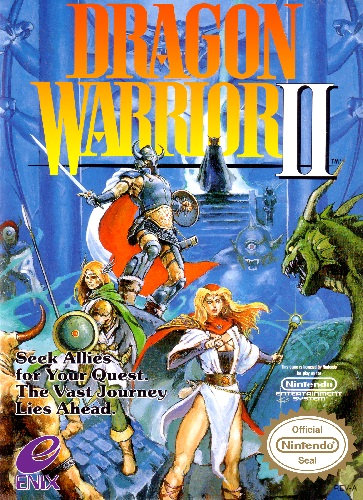
The Good: Amazing lore, Fantastic references to the original
The Bad: Limited party, Archaic interface
The Ugly: Cheap deaths at the end of the game, Incredibly unbalanced difficulty, Useless supporting party members
After the first game was a smashing hit Enix naturally planned for a follow up. Clearly their idea here was not to reinvent the wheel, bur rather, to refine it. Dragon Quest II continues the story of the original taking place one hundred years later in the same world with a new villain and a substantially larger world map. For the first time in the franchise you could recruit multiple characters, and their abilities varied pretty significantly. While all were descendants of the original protagonist (and by extension, the legendary hero Loto as referenced in the original game) they excelled in different areas. In addition you could now fight multiple enemies in battle at once.
Unfortunately this is, as you can probably guess due to its placement, my least favorite Dragon Quest title. On the 8-bit NES it released as a highly unbalanced package. Not only was the secondary prince completely useless (you found his final weapon just a few hours into the game) but the enemies were relentless. Toward the end of the game they could cheaply defeat the entire party with instant death magic. It’s clear this one wasn’t play tested because if it was these details could have been ironed out. On the Super Famicom Dragon Quest II fares significantly better, but it doesn’t save that rough NES release one bit.
#9. – Dragon Quest VIII: Journey of the Cursed King

The Good: Amazing and charming cel-shaded graphics, Incredible orchestral soundtrack, Huge world map
The Bad: Almost no party customization, Only four characters to use throughout the quest
The Ugly: Awkward loading in the midst of battle
I’m sure to get a lot of hate for this one. I was beyond hyped for Dragon Quest VIII before it released. This was the first fully 3D installment in the series. Sure, the previous sequel on PS1 used polygons but the perspective was isometric and characters were all sprites. It hardly counts. Dragon Quest VIII finally prioritized graphics and technical prowess. The game was even fully voiced which was a first for the franchise. The technical aspects were impressive, and it felt like the series finally matched Final Fantasy in terms of budget.
So what went wrong? Dragon Quest VIII feels like Square-Enix forgot what previously made the franchise so good. Customization and choice are an integral part of Dragon Quest, and it’s almost entirely absent here. Instead Dragon Quest VIII focused on presentation while actually taking a few steps backwards gameplay-wise. While I do appreciate the visual polish, the charming storytelling, and the amazing soundtrack that’s not something I play this franchise for. I played this one because I wanted to play Dragon Quest, and unfortunately this one didn’t quite nail it. It’s a great game on it’s own merits but a rather poor installment in the franchise.
#8. – Dragon Quest
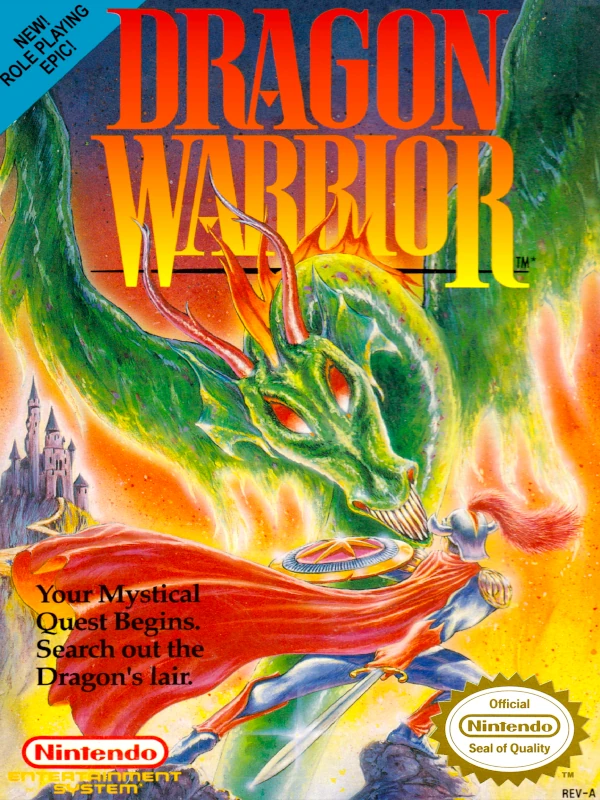
The Good: Simple gameplay, Fun world to explore
The Bad: Bad graphics
The Ugly: It’s the only installment in the series that absolutely requires grinding
Sometimes I let nostalgia get the best of me. Dragon Warrior on the Nintendo Entertainment Center is one such case. This is one of my all time favorite video games of all time. I have such great memories of playing the game with my childhood best friend Brian. Thing is most of those involve just wandering around grinding. Most Dragon Quest titles don’t require grinding of any kind. You can simple rework strategies and take advantage of skillsets of each character. This is not one of those. Because you only have one character with limited abilities and equipment there’s almost no customization. You simply have to increase your stats to survive in any new area.
I for one enjoy grinding in video games. I think this original installment instilled that odd characteristic in me. It’s just unfortunate that it’s so slow going here. The battle system is a bit slow, and the interface has too much text. That’s not to mention how clunky interacting with just about everything outside of battle is thanks to the menu system. Regardless I still love Dragon Quest blemishes and all. The world of Alefgard is a true treat to explore, and gaining a new piece of equipment or moving up a level has significant direct effects to gameplay.
#7. – Dragon Quest IX: Sentinels of the Starry Skies
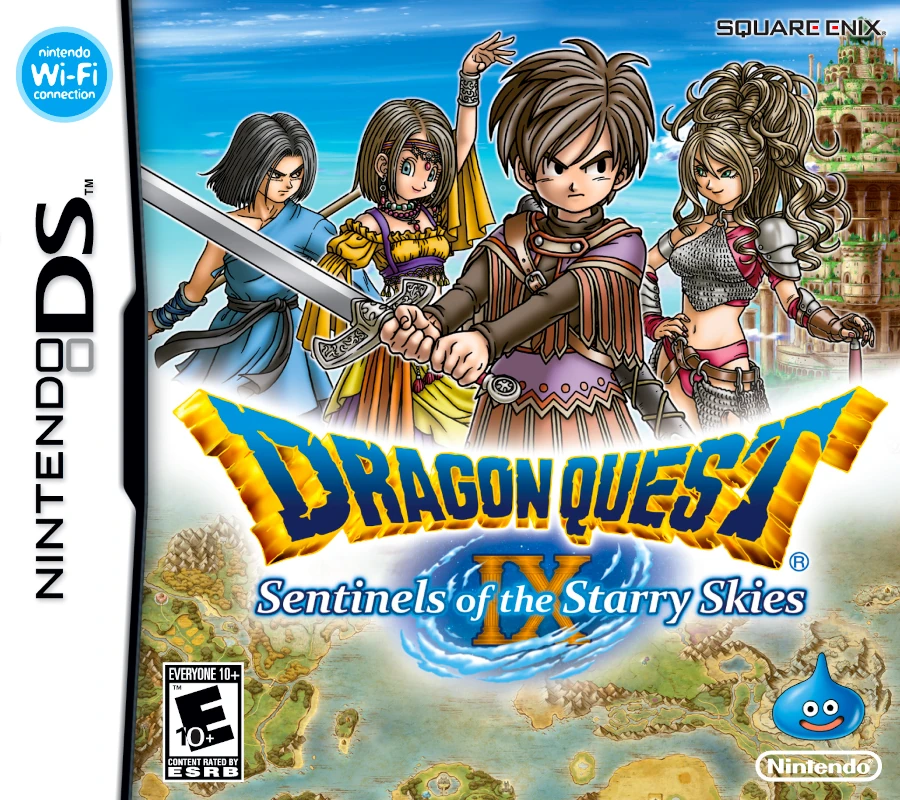
The Good: Huge amounts of character customization, Multiplayer modes, Speedy battle system
The Bad: Weaker storyline than usual, Limited graphics due to the hardware
Dragon Quest IX gets kind of a bad rap in my opinion. I think fans of the prior release were hoping for an extension of that game’s storytelling as well as emphasis on pushing modern technology. That’s not what Dragon Quest is or had ever really been about up to that point though. Dragon Quest IX went back closer to the series roots, and it was all the more stronger for it in my opinion. You created a protagonist as well as three allied characters to join in battle. The story was pretty barebones, and the graphics (because the game was released on the Nintendo DS) were rather rudimentary. The battle system however was pure Dragon Quest, and in my opinion this game was a return to form.
As I just mentioned the game returns to what worked best in the franchise. You can choose from a number of different jobs for each character, and experimenting and finding which abilities gained from them is what makes battles so interesting. The major upgrade to combat comes in the form of character placement. Your team (as well as the enemies) physically move around in battle and where they are left standing affects strategy. It may not have the graphics of the eighth installment, nor does it tell it’s story as well, but in terms of gameplay it’s much more refined, interesting, and well designed than part 8.
#6. – Dragon Quest V
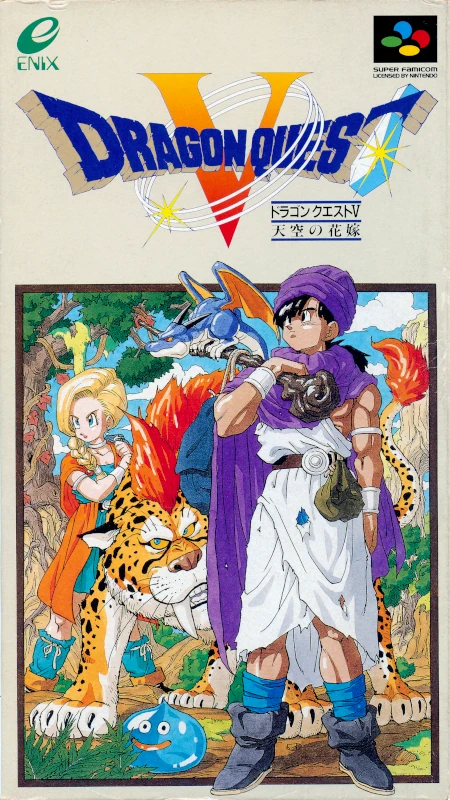
The Good: Excellent story, Unique generation system, Monster recruitment system, Fantastic soundtrack
The Bad: Three character party limit, Limited customization
With the Super Famicom came a new Dragon Quest. For the first time in the franchise history up to this point it wasn’t released in the West. For years Dragon Quest V was a Japan exclusive. I remember reading about it in Nintendo Power and getting hyped, but alas, it wasn’t meant to be. That is until years later when it was fan translated, and then later released for the Nintendo DS. The game even had a PS2 remake but that too was a Japan exclusive. It’s a shame because RPGs were just catching on in the West, and the emphasis on storyline here could have propelled the series to new heights in English speaking countries.
Dragon Quest V is a rather oddball installment in the franchise. As I mentioned it places a lot of emphasis on storyline. Honestly this game has one of the best and most interesting plots of any 16-bit RPG which is partially due to the generation system. Basically at a specific point in the quest you can marry one of two characters. This determines the strenghths of the offspring which later on join your party as well as affecting the plot overall. The game also introduces monster recruiting to the franchise. This was years before Pokemon came to be so it’s pretty significant. The only real downfalls are a lack of character customization, and the number of useless characters that join (including monsters). The fact that you can only use three characters at once is a major downside.
#5. – Dragon Quest XI: Echoes of an Elusive Age
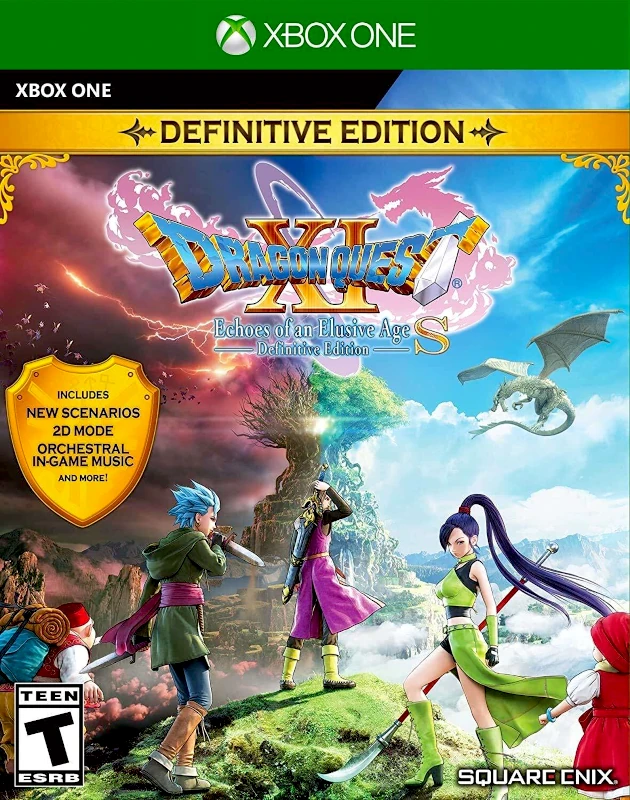
The Good: HD graphics, Fun characters, Voice acting, Story
The Bad: Uninteresting dungeon designs, Lack of job system
Funny story. Dragon Quest XI was actually the first game announced for the Nintendo Switch. It was also the first time a mainline installment was announced multiplatform right from the get-go. This was the series’ first foray into HD graphics as well. With so many firsts I was worried that the game would be unfocused. There were also a lot of differences between the ports. For example, the Nintendo 3DS version obviously had scaled down graphics per the hardware. It also boasted a 2D mode that looked more like classic Dragon Quest. Meanwhile the PS4 release boasted cutting edge graphics and full voice acting. When it finally hit the Nintendo Switch Square-Enix offered the best of both worlds although the graphics took a noticeable hit.
With the focus on presentation I was expecting this one to be another Dragon Quest VIII. I’m happy to report that it wasn’t. This was the first time that Square-Enix showed the franchise could have top notch presentation and storytelling while focusing on what makes the series so amazing. My only complaint is that there’s no job system. That’s forgivable because the cast is large, and you can customize your party by choosing who to bring. Because of this it never feels like your options are limited, and I love the experimentation it allows for. Dragon Quest XI is amazing.
#4. – Dragon Quest VI
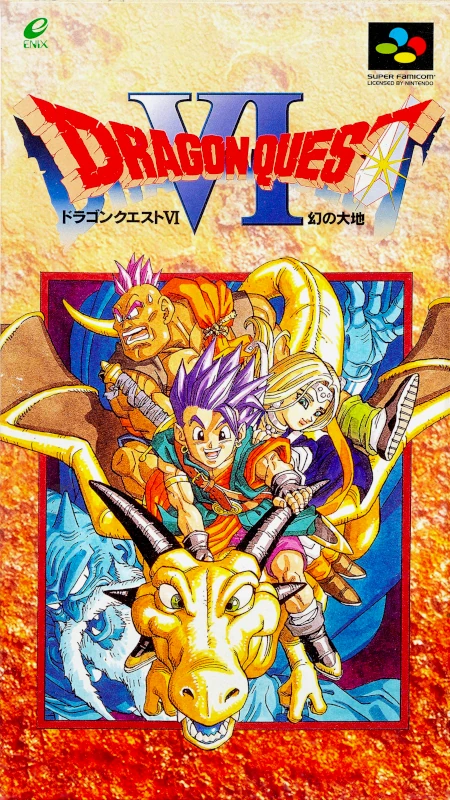
The Good: Amazing graphics, Interesting mirror world, Great customization
The Bad: Somewhat weaker story
This was the second mainline installment in the franchise to not be released in Japan only. Enix played it safe with the Super Famicom, and it’s unfortunate because this is clearly one of the best Dragon Quest games. Part VI is notable because it was the first huge jump in graphics for the franchise. The prior installment almost looked like something that could have released on the original Famicom. Not this one. The sprite work is amazing. It’s seriously almost on par with that of Final Fantasy VI. Dragon Quest VI is one of the best looking RPGs for the platform. Battles are still static but the enemy rendering is seriously on point and they even have animations.
Up to this point we weren’t sure the series would rely on gimmicks for each sequel. The word might be a little harsh actually. Let’s call them ‘twists.’ Dragon Quest V had a generations system, and the developers seemed to think they had to add something different to this one. Here we have a mirror world. Things are different, but largely the same. You switch between the two by going down wells. The differences between them are really interesting, and this feature is completely necessary to progress. The job system is also present, as are multiple characters to use in your party. Customization is seriously on point and makes the battle system all the more amazing. I absolutely love Dragon Quest VI.
#3. – Dragon Quest VII
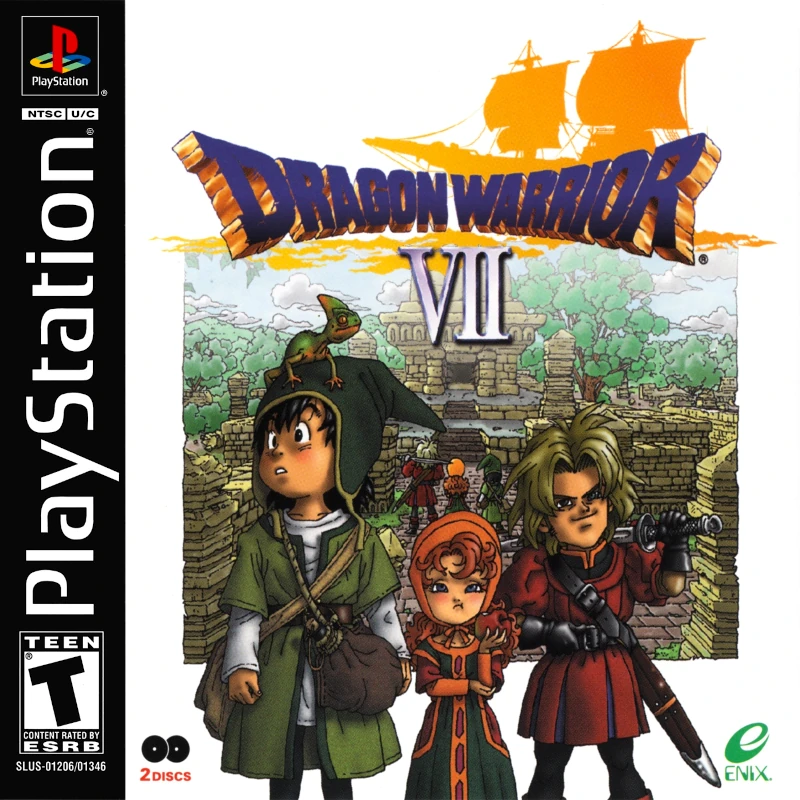
The Good: Compelling narrative, Amazing job system, Long quest
The Bad: Perhaps too long, Somewhat ugly graphics, Awkward translation
Finally Dragon Quest came back to the West with this seventh installment. Unfortunately most gamers passed on this one, but I didn’t. At the time I remember thinking how basic the graphics were. Characters were sprite based, but environments were rendered in rudimentary 3D. Honestly it didn’t look good especially next to such powerhouses as Final Fantasy IX. Dragon Quest had also been mostly absent from the North American market up to this point. That’s why this seventh installment went mostly ignored. It’s a shame too because it’s one of the very best ones.
Despite the new coat of paint (however ugly it is) Dragon Quest VII retains the classic formula. Battles are strictly random encounters, you view the attacking party from head on, and everything is rendered in sprites. Enemies do feature animation and move wonderfully. It’s a nice upgrade, but hardly impressive compared to other 32-bit RPGs. So where does Dragon Quest VII excel? It has all the best aspects of each Dragon Quest title before it, but with some new scenario spins. This one is based on time travel. You play as a young boy on the lone island in the world, and must travel through time to save other landmasses from their doom. The story vignettes are absolutely incredible and downright haunting at times. This is also the longest Dragon Quest game to date. Expect to spend around one hundred hours here even without the side content.
#2. – Dragon Quest IV
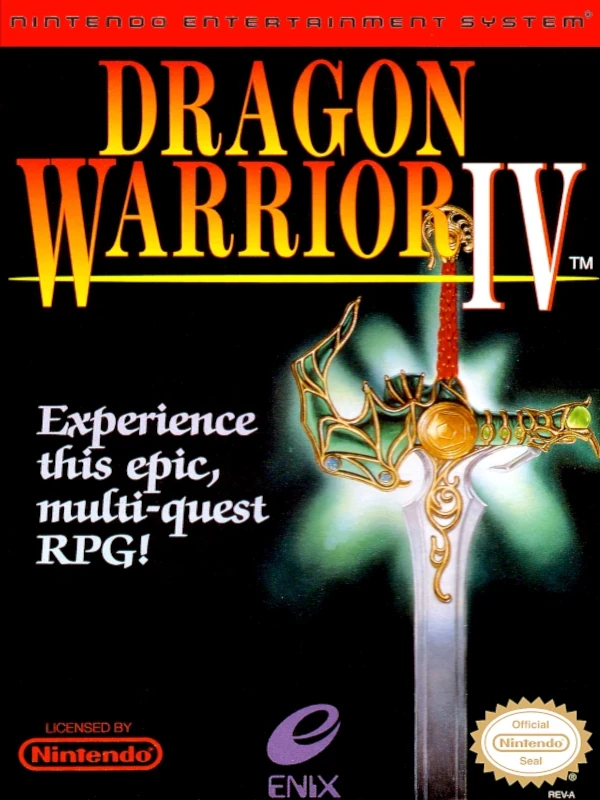
The Good: Interesting scenario system, Specifically designed character roles, Lots of options in combat
The Bad: Perhaps too many characters
Dragon Quest IV was the last NES/Famicom release for the franchise. It was also the last original mainline title we got in the West until the aforementioned part VII on the PlayStation. DQ IV was the first time Enix diverged from the story of the hero of Alefgard, Loto. This began what is commonly referred to as the ‘heaven’ sub-series which instead revolved around floating islands in the sky. Dragon Quest IV uses a unique chapter system wherein you play as a different character, but in the same world and timeframe. The last of these has all of the previous characters meeting up to fight against the ultimate evil being Necrosaro.
The best part of this game is just how different each scenario is from a gameplay perspective. The knight Ragnar’s vignette is most similar to the first three Dragon Quest games. He has the attributes of the hero character from them, but with no magic. Then you have a rebellious princess named Alena and her staff, a pair of gypsy sisters, and even a merchant Taloon who just wants to earn money to open a shop of his own. They may not sound particularly interesting from my brief description but trust me when I say they’re all memorable. I would go so far as to say that this title has the best cast of any game in the franchise. For a series with such memorable characters that’s saying a whole lot. Honestly, Taloon is the GOAT.
#1. – Dragon Quest III
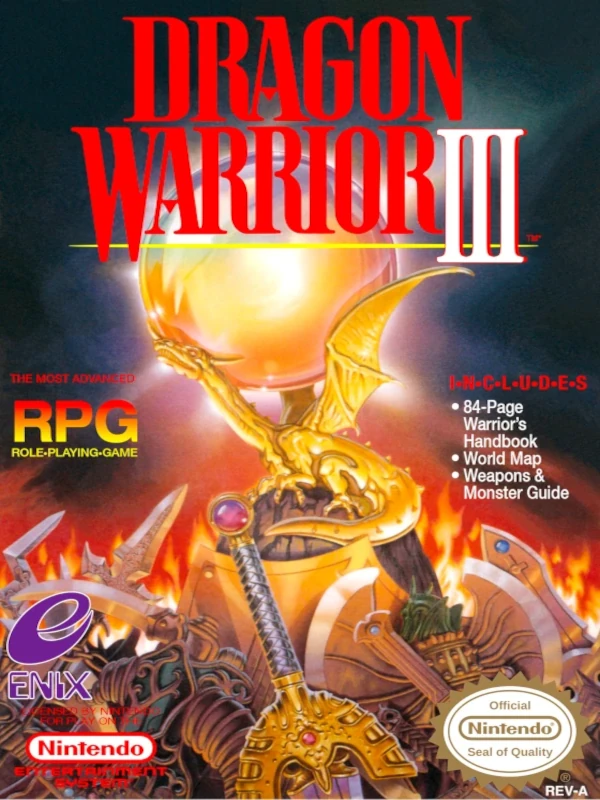
The Good: Amazing Tie in to the original Dragon Quest, Great plot, Fantastic worlds to explore, Incredible implementation of the job system, Dynamic day and night mechanics
The Bad: Honestly nothing
It’s not a well kept secret that I consider Dragon Quest III to be the best in the series. For a NES RPG it’s one of the most ambitious. You begin as a singular character who sets out into the world to find out what happened to his father. Right from the get-go you can create a custom party with characters that you yourself create. While these avatars contribute little to the plot I couldn’t be bothered to care. Eventually you come to discover that the character you’ve created is hero referenced in the first Dragon Quest title, and your ultimate goal is to lift the darkness from Alefgard. It’s quite the twist, and a very well done one at that.
Dragon Quest III was a highly ambitious 8-bit RPG that no other was able to match in scope and scale. The customization options are absolutely through the roof. You can not only pick the jobs of your three allies but they can also be changed and/or upgraded once you reach the Dharma Temple. It is here that your options truly open up. No other 8-bit RPG gives you so much choice as far as party composition goes. Furthermore the world is an absolute delight to explore. The day and night system adds so much lore and interesting interactions. Add to that the fact that the last branch of the game is a re-creation of the original Dragon Quest, and that up to this point it wasn’t even revealed that this was a prequel. Dragon Quest III is simply incredible, and one of the best RPGs of all time.
