
Believe it or not there was a time when Nintendo wasn’t so hot on making 2D platformers. It’s all the rage for them now, but back in the early days of the Nintendo DS the pickings were slim. Before New Super Mario Bros re-ignited Nintendo’s fire they released a really curious side game. This was Super Princess Peach. Mario and Luigi were now the damsels in distress. It was a big glow up for Peach. No longer was she simply baking them cakes. The game itself was okay. Reviews were mostly net positive. I thought it would be fun to see how it holds up. Is Super Princess Peach still worth playing? Let’s figure this out.
As I’ve already touched on this game stars Princess Peach. This time around Mario, Luigi, and several Toads have been kidnapped by Bowser. He has taken them to an island just outside of the Mushroom Kingdom. He accomplished this task using a magical artifact found on the island. It’s called the Vibe Scepter, and it can be used to control emotions. Fortunately Peach missed all of this. You see, she was on a walk when it all went down. It’s now up to her to travel to Vibe Island, defeat Bowser, rescue her former heroes, and return the Vibe Scepter to where it belongs. Now that’s just peachy. Am I right?
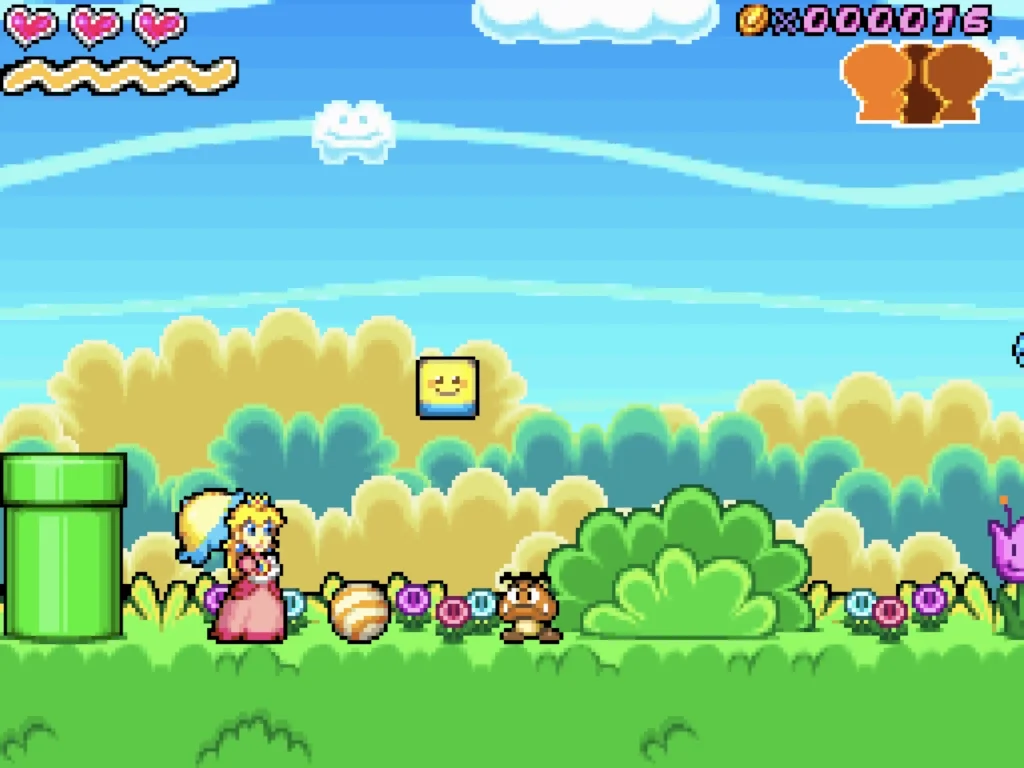
Hey at least Nintendo tried. The scenario is a little different. After all, it would have to be for a game to star Peach of all people. In case you missed it this is a 2D side scrolling platformer. At first glance it looks like a more colorful Super Mario Bros game. The game has all the standard enemies like goombas, koopa troopas, piranha plants and more. It doesn’t play like one though. Peach’s abilities are pretty different from her plumber counterparts. She can walk and jump extraordinarily high, but that’s where the similarities end. For one thing hopping on enemy’s heads usually does very little. Her main method of attack is via an anthropomorphic parasol. She can swing it, pick up enemies with it, throw these guys, and even feed them to her crazed parasol. That last point is important, but we’ll get to that later.
You’d think the parasol was the game’s main gimmick, but you would be wrong. There are no traditional power-ups in this game. Instead Peach gains abilities via her emotions. You have four differently colored hearts (all with faces) at the bottom of the screen. Each of these correspond to a separate emotion, and touching them sends Peach into an extreme version of this. You have joy, rage, gloom, and calm. These are used both to solve simple puzzles, and battle enemies. Joy causes her to fly in a cyclone of happiness. This one is used primarily to reach areas she can’t reach with simple jumps. Rage however envelopes the princess in flames thus damaging all enemies that get too close. Oh and she also shakes the ground when she jumps. Scary.
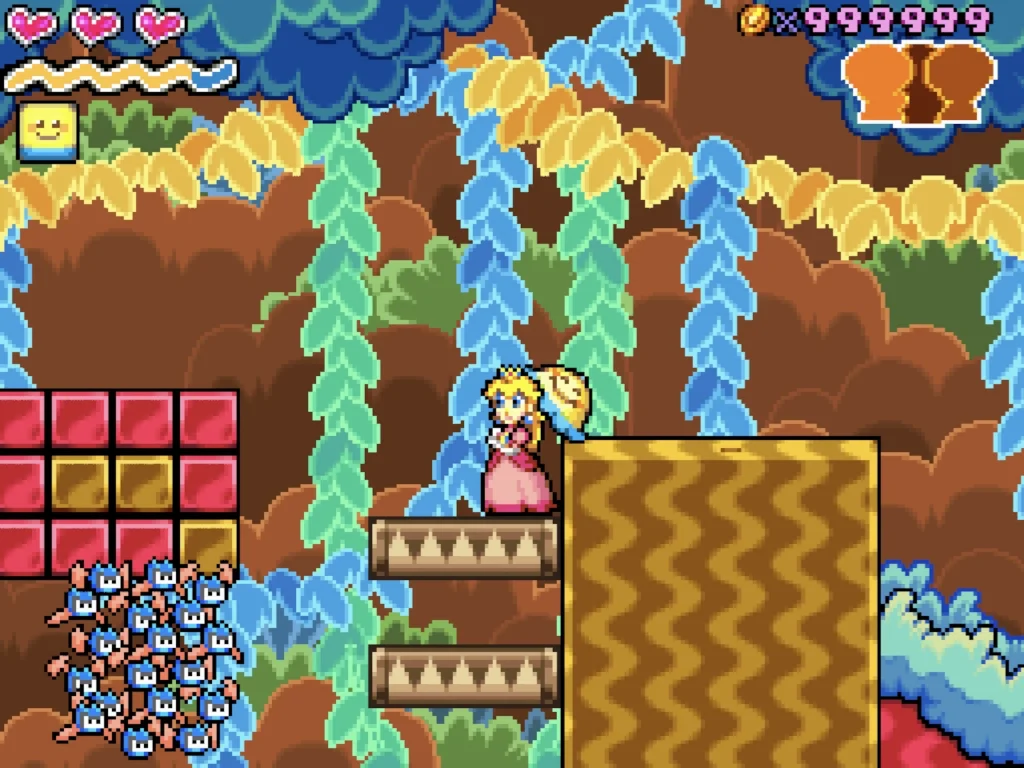
Gloom is my favorite one of the bunch. She starts crying and in her frantic fit can run and move much faster than before. The main utility of this is that streams of tears fly out of the character. Normally this is used to water plants to make them grow and reveal new platforms. Hilarious. On the opposite end of the spectrum is calm. This replenishes one heart from her health. Honestly it’s a kind of a waste of time. Hearts are frequent pick ups in just about every stage. I don’t see why one of Peach’s primary abilities had to be tied to it recovering health. The vibe powers themselves aren’t particularly interesting when fighting monsters. I did like how they’re used for puzzles however. If you need to refill Peach’s vibe meter it’s as simple as feeding enemies to her parasol. How ghoulishly delightful.
Okay I’m just going to put this out there. It’s a little sexist. The concept of Peach’s abilities being tied to emotional extremes is kind of hilarious though. Nintendo, one of the biggest innovators in the video game world, could only think to give her temper tantrums and crying fits. There was so much more material they could have drawn from. Don’t get me wrong. I think some of her emotion based powers are interesting. The way they’re used in specific circumstances is actually kind of interesting. I just feel like it’s a wasted opportunity. This doesn’t feel like a Mario game, nor does it have the polish of a typical spin-off in this franchise. Super Princess Peach tries to blend new with old but it’s not the sum of its parts.
Also, why does this game even need the touch screen? Pulling the stylus out each time you need to activate a power is tedious. We didn’t need a separate screen to display her powers. Sure, this gives us an adorable portrait of Peach that changes as you activate her powers. It just feels like a waste of estate. I’d rather the vibes be activated via button presses. I would even sacrifice the portrait of Peach and emotion hearts for a map of the stage. I wanted something more. Anything. This just goes to show that while Nintendo made the DS they sure didn’t know what to do with it. At least early on.
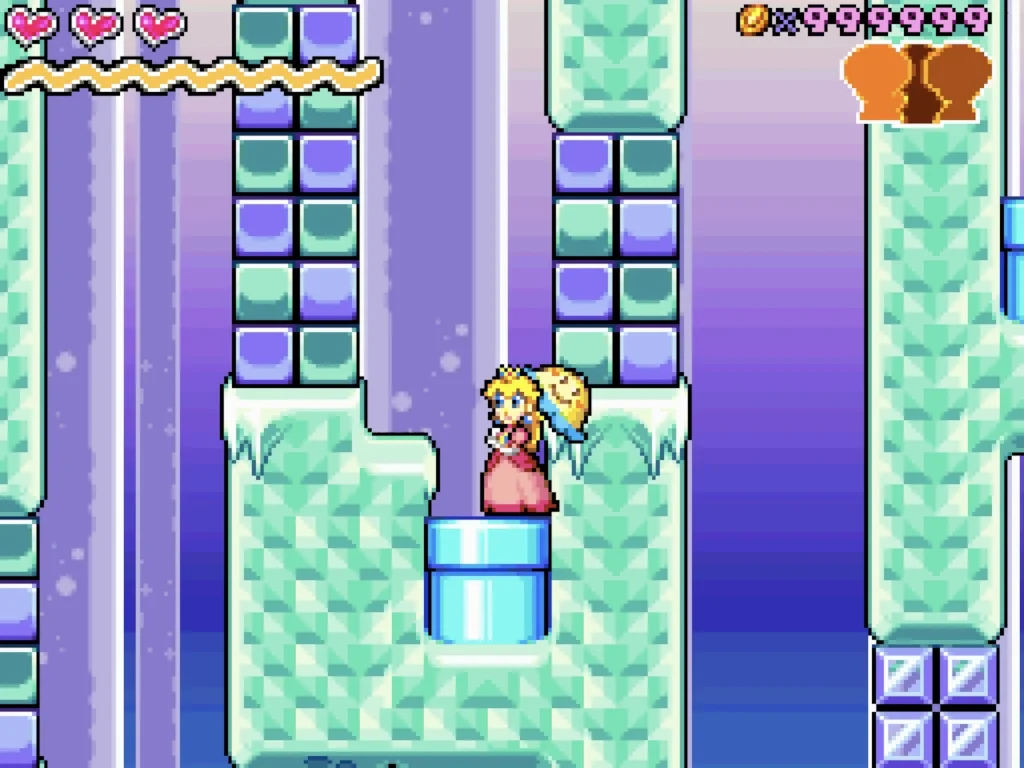
To get more mileage out of the touch screen Nintendo implemented some forced mini-games into the package. You have to complete one of these before facing each boss in every world. These are okay. Honestly they kind of feel like left over concepts from other games because they don’t make a lot of sense here. Generally you either have to interact with elements in the environment using the touch screen in order to move her to the goal, or defeat enemies and keep her safe while she moves automatically. These felt a little tacked on to me. Still, I appreciated the diversion and some of them were mildly entertaining. You have other optional mini-games that can be unlocked as you play, and these are okay too. Except Toad Jump. That one can and should be ignored.
Super Princess Peach is also very easy. Too easy. The game is a cakewalk. Peach’s life is measured in hearts at the top of the screen, and each time you’re hit you lose half of one. That’s six mistakes you can make before she perishes. You also have infinite lives so game overs aren’t a thing. I realize that Nintendo was aiming this release at younger gamers but they’re famous for their brand of all ages gameplay. This isn’t that. The only mild challenges come from solving the puzzles. Some of them had me stuck, but not for long. I enjoyed trying to figure out exactly which vibe power I needed to go forward. Also, each stage has three hidden (often not very well) Toads for you to collect. It’s something, and I appreciate that this gives Super Princess Peach some replayability.
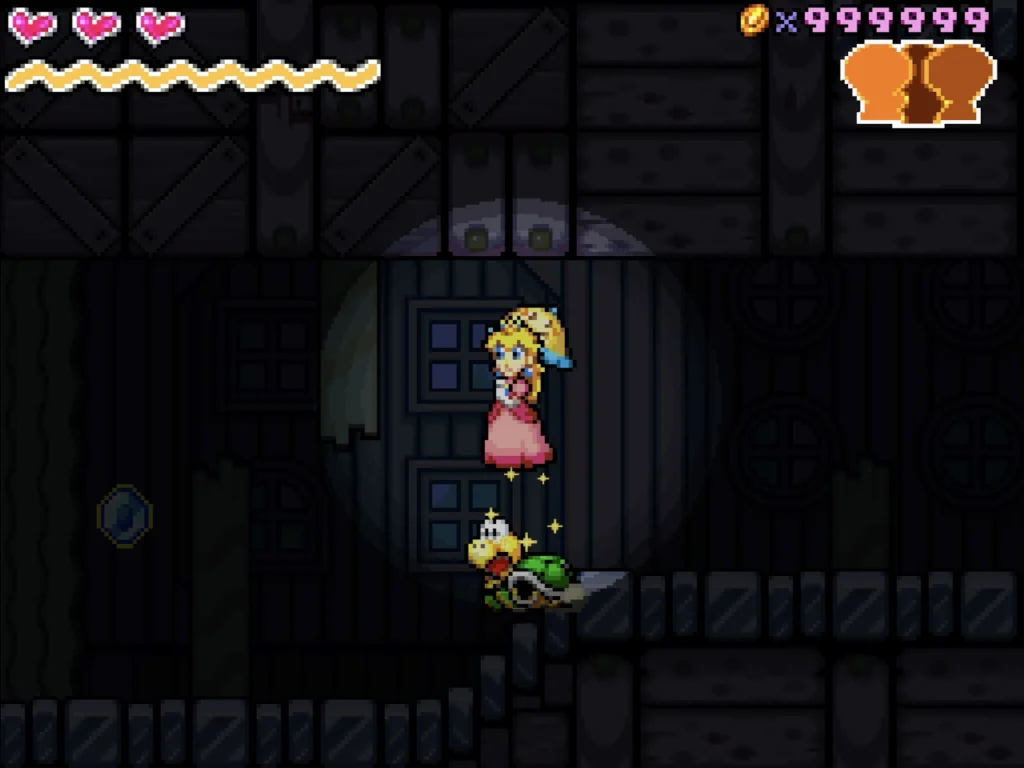
Oh and how could I forget? There’s also a shop that you can access from the level select screen. It’s primary function is that it lets you buy new abilities for Perry, Peach’s parasol. These include things like letting you float in the air, fire projectiles, and slam into the ground while jumping. This is pretty cool. In the store you can also buy new tracks for the music room, mini-games, and collectibles. These aren’t as interesting, but at least we’re given a lot of options. All of these purchases use the in-game coins found throughout each stage. That’s the only function this golden currency has in the game. No 1-ups for you.
What might be Super Princess Peach’s biggest problem is its length. The game can be completed in just a few hours. This is disappointing because near the end of the adventure is when I was having the most fun with it. This is when the game finally starts to (gently) push back at the player. Honestly that’s the difficulty level that Super Princess Peach should have started out at in the first place. It might not sound like it up to this point, but I did enjoy the short time I spent with the game. It lacks challenge, and the touch screen controls are annoying. Super Princess Peach does however have decent level designs, and a really charming colorful style. I just can’t imagine paying full price for this one at release.
I’m positive that Super Princess Peach started out like as a Game Boy Advance game. It doesn’t push the Nintendo DS hardware in any meaningful way. All characters and environments are rendered entirely in sprites. They have about as much detail as your average late gen Super Nintendo game. The animations aren’t all that impressive either. You have some neat effects with the vibe abilities, but I don’t think it’s anything the previous handheld couldn’t have handled. The game is however really colorful, and that’s it’s best trait. The soundtrack unfortunately can’t go toe-to-toe with the rest of the Mario franchise. The music is decent, bouncy, and fun, but ultimately it’s all forgettable.
