
I recently returned to the game that is widely considered to be the worst installment the Suikoden franchise. Part IV specifically. After III reviewed well and received several accolades Konami changed up the formula. They went for something both more nostalgic and distintinctly different at the same time. The end result has gotten mixed reviews throughout the years. I liked Suikoden IV at the time of release, but I didn’t love it. I decided to give it another go to see how the game holds up. Is Suikoden IV worth playing in this day and age? How does it compare to its highly acclaimed but extremely overrated predecessor? Let’s dive in and find out.
Suikoden IV is the first game in the franchise to serve as a prequel. The story here takes place roughly one hundred and fifty years before Tir Mcdohl liberated the Scarlet Moon Empire in the first installment. This was a bold move at the time, but one I appreciate. This franchise is based heavily upon references to events to games. It’s actually quite nice to get more backstory The franchise is rich in lore and this prequel adds heavily to this. Some were disappointed that Suikoden IV didn’t push the narrative forward. I was happy to learn more about the world the games take place in. With the way they left things in Suikoden III it’s probably for the best that they go back in time.
In Suikoden IV you assume the role of a young man named Lazlo (though you can choose his name). The setting is a world of magical fantasy and politics. Lazlo is a new knight recruit on the island of Gaien. This is a part of the Island Nations; a region only hinted at in prior Suikoden titles. Soon after being granted entry into the knights Lazlo’s world is turned upside down. During a battle against a famous pirate his commander absorbs a mysterious rune. Through a turn of events Lazlo is given this magical symbol. It’s the rune of punishment, and is aptly named for all that are cursed with it are destined to suffer.
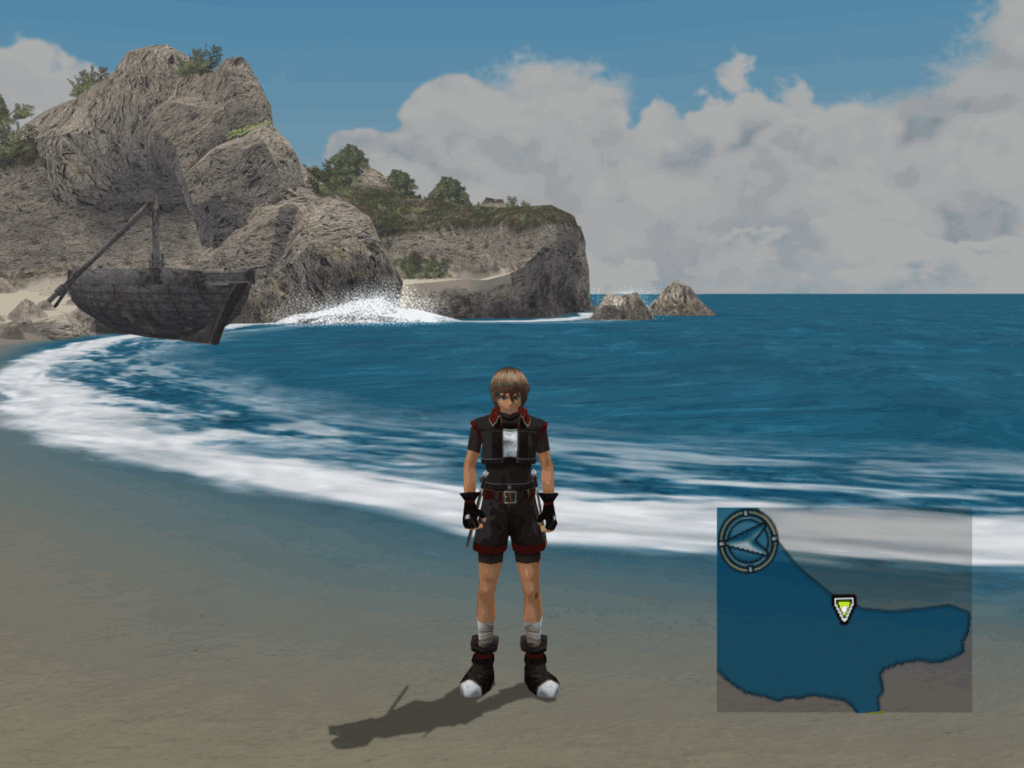
Unfortunately there was a mix-up wherein it looks like Lazlo is directly responsible for his commander’s death. Only he and the player (that’s you) know otherwise. His punishment? A discharge from the knights of Gaien as well as banishment from the island. After being cast out to sea with a few friends the soon to be hero. Through a chance encounter they meet the young and kind king of Obel who takes them in. From here Lazlo and crew are swept up into a battle against the evil Kooluk Empire to save the Island Nations from invasion. It’s a political story rounded out with lots of fantastical elements. It’s Suikoden through and through.
I liked the story but it was lacking in a few areas. For one thing there were fewer references to other Suikoden games than in prior releases. This kind of comes with the territory though. Suikoden IV is a prequel and so none of the other events have taken place. In addition the cast is less interesting than in the other games. Again, this can be blamed on IV’s status as a prequel. It’s set too far apart from the others in the timeline and therefore there aren’t many returning characters. On the plus side there are a few recognizable faces. Ted from the first Suikoden, for example, complete with his soul eater rune. You also have Jean (the friendly rune master from every other title in the series). The other characters that join are relegated heavily to the background. They join, and then are totally forgotten about.
Suikoden IV is a fully 3D traditional turn based role playing game. Generally you’ll be exploring three dimensional environments to push forward the plot while engaging in random battles. The graphical engine has been significantly improved since the last title. Characters now have more realistic proportions, and the environments are less expansive but also have less empty space. There are several different types of areas to explore. You have towns (in most cases there aren’t random encounters here) where you purchase supplies, upgrade equipment, interact with NPCs, recruit characters, and push the plot forward. Then you have dungeons that are full of enemies and boss fights as well as treasure and other items.
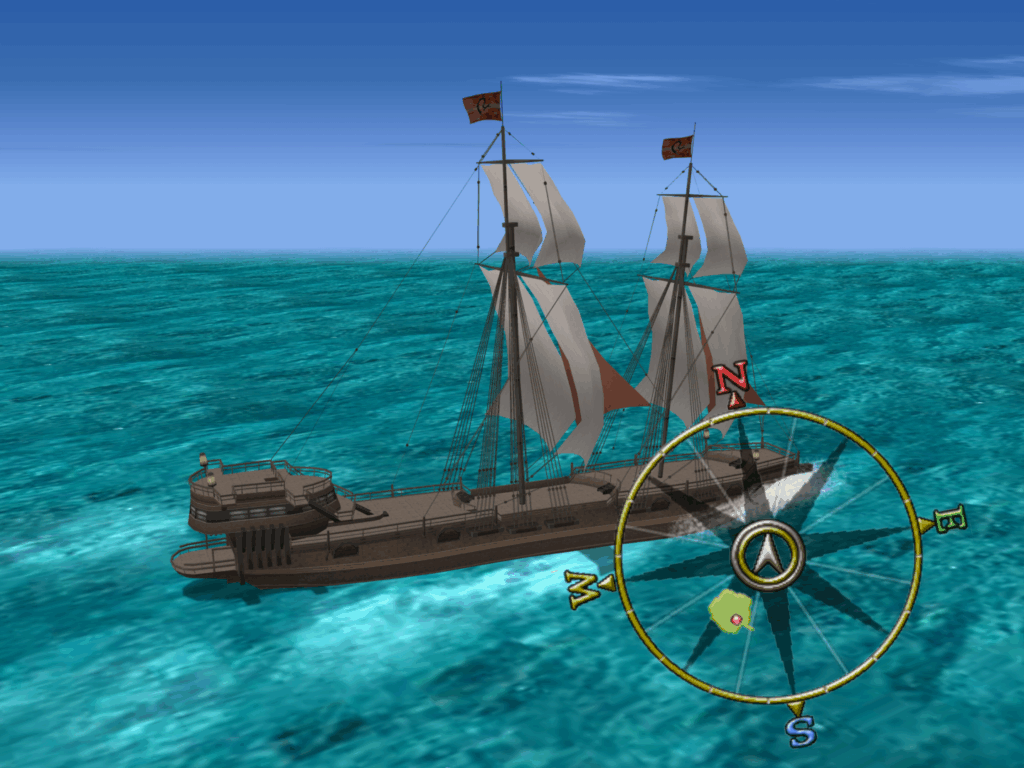
The most major change made to the game is the world map. Instead of exploring it on foot you instead sail the ocean moving from island to island. This game does take place in the Island Nations, after all. Starting the game using a vehicle to travel the world is pretty novel in the RPG genre, but it does have its drawbacks. For one thing the world is huge. Even without random encounters it would take several minutes to sail across the entire world at full speed. Travel is slow, and a little tedious. The controls are also kind of unwieldly. The ship has more realistic handling so simple things like turning around is an absolute chore. If you get too close to a landmass the ship instantly does a full turn to the left or right. It can make aiming for and entering ports frustrating.
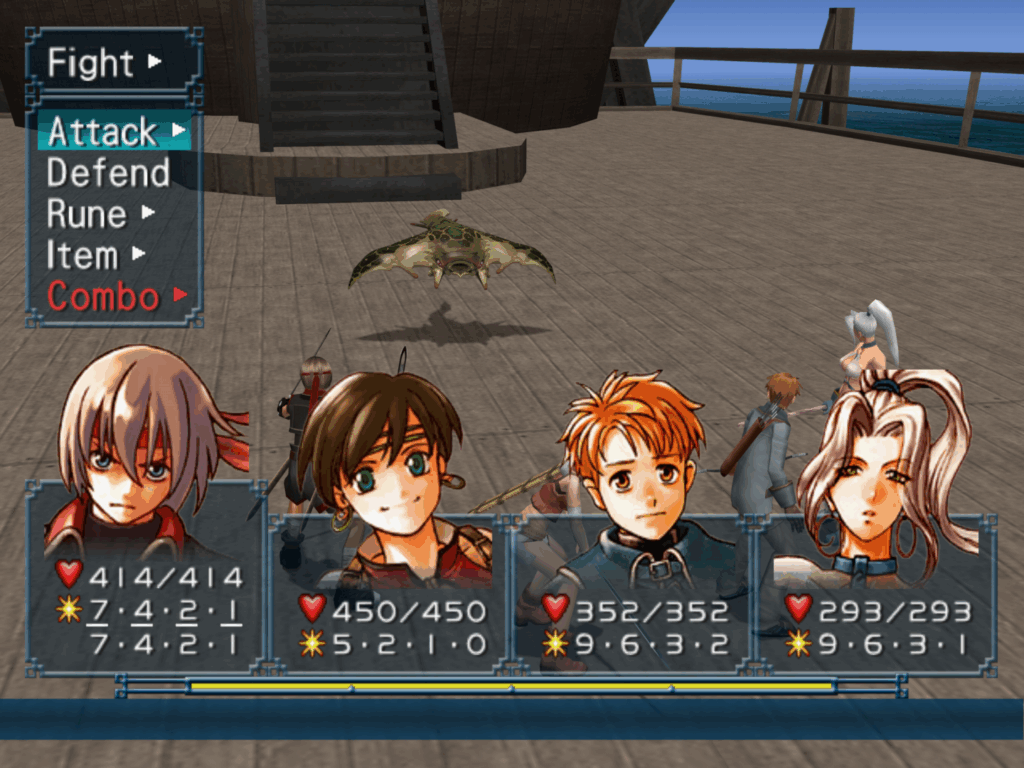
Konami also altered the battle system in some pretty basic ways. They completed ditched the placement mechanics from III and returned to a more traditional experience here. Pairing is also a thing of the past. The battle system is very traditional. Your characters line up together on one side of the battlefield, and the enemies are on the other. You input commands via the menu which include things like attack, rune (the game’s equivalent of magic), combo attack, and item. It’s pretty basic, but very functional in this case. I’m glad they ditched the conventions Suikoden III introduced. Unfortunately there’s one major alteration that feels like a downgrade. Now your party can only have up to four characters at once. Each installment up to this point let you bring six allies into battle at a time. With 108 total recruitable characters this is highly disappointing.
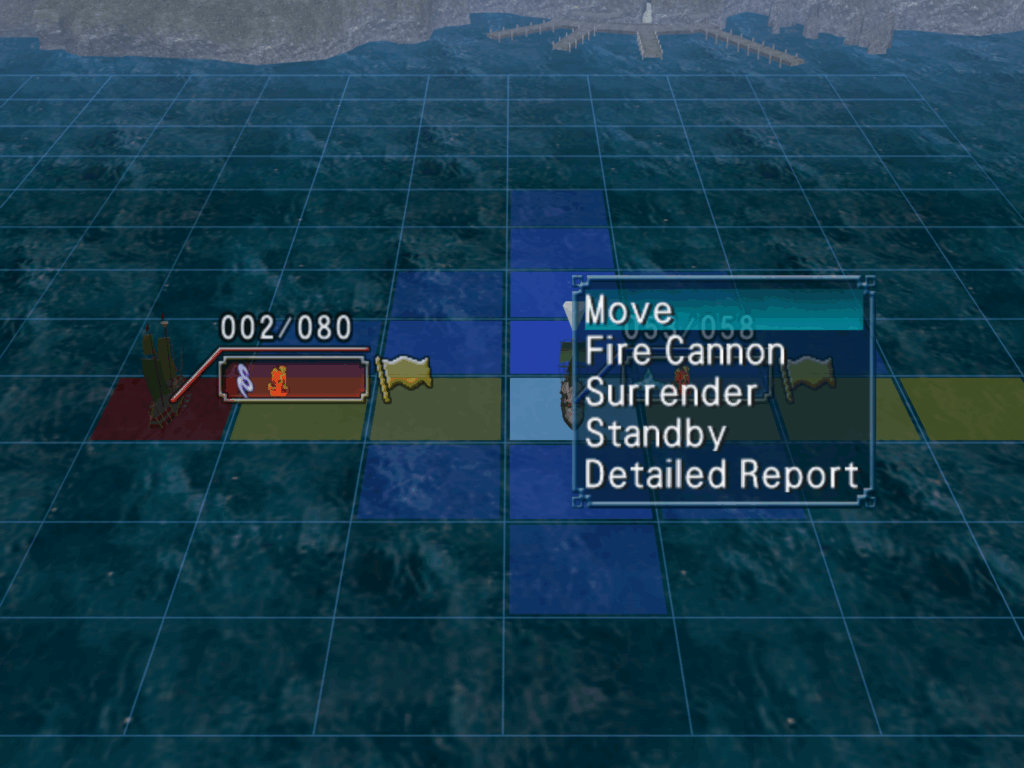
This series is known for having three distinct types of battles; normal, duels, and army battles. The first two remain intact, but the last one has been changed. Army skirmishes have been replaced with ship battles. It makes sense considering the nautical theme here. In these sequences you move ships around a grid-based battlefield lining them up with enemies and blasting away with your rune cannons. During an attack the defending ship can, if they’re aimed the correct way, fire back. This battle system is based entirely around runes and their elements. Because of this if you choose the correct rune to counter with you can completely nullify the foe’s attack. These are surprisingly fun encounters. I also like how you can customize the crew (from the list of characters who have joined) for your vessels. Suikoden IV allows a lot of fine tuning of your ships. I loved this.
What’s interesting is how much of a difference using different characters as crew members can make each encounter. The rune cannons that they can use, for example, are based on which runes specific characters have equipped. The power of their blasts are determined by their magic stat which means you’re going to have to grind characters beyond those you are using in your main party. What’s also interesting is that if your ship is close to an enemy vessel during combat you can have your party board the other ship. This starts a standard battle but commands are limited to just attacking. If characters not important to the story perish here they’re gone forever. Ship battles are handled extremely well. In my opinion these are one of the strong points of this sequel.
Your ship isn’t just used for battle and travel. Every installment in the Suikoden franchise features a base where the characters you have recruited all join together. It is here where you can upgrade your weapons to their highest level, bring in shopkeepers to sell their goods, and progress the plot at key points. Suikoden IV changes things up a bit. Early on in the adventure you acquire a new ship. A huge one. This quickly becomes your base. I was skeptical at first but the designers pulled it off with a lot of finesse. Due to having large wide open rooms, and multiple floors with lots of mini-games and shopping this feels just like any other base in Suikoden. It’s unique though in that you travel around in it. I really liked this mechanic in the game. It really hits the nautical theme home.
The biggest issue in Suikoden IV however is its encounter rate. It’s completely off the rails here. This especially makes traveling via the ship an absolute chore. There are times where you’ll go just five or so seconds in between each battle. It makes the long distances you have to travel even more annoying. I grew up with RPGs, and can handle high encounter rates. Suikoden IV managed to even get on my nerves. This issue is alleviated somewhat when the character Viki joins because she can fast travel to locations you’ve already been. That doesn’t help much for the dungeons however. Running from battles is easy enough, but there’s loading to get both in and out of battle. Sometimes the run command also fails. The high encounter rate here just feels like a big time sink when it comes down to it.
This makes Suikoden IV feel like a much bigger and grander game than it actually is. Truth be told I was able to finish in less than thirty hours. That’s pretty disappointing for a full priced release on the PS2. It’s also one of the easier Suikoden games. There were a few boss fights I had to try more than once but one of these was optional in the first place. Besides that Suikoden IV is kind of a pushover. There are some instances where you can accidentally access areas more advanced, but even these instances aren’t overwhelming. Unfortunately there are some unbalancing issues. Ship battles and standard fights are easy, but the final boss is one of the most difficult in the series. The developers should have tried to balance things out better. Regardless I would still say this is one of the best RPGs of all time.
I’m not a fan of Suikoden IV’s graphics. It uses the same engine as Silent Hill 3, but it’s pretty clear straight away that it was better designed for dark graphics. The characters have that uncanny valley look to them. They’re kind of like walking talking dolls. It looks better than what we had in Suikoden III but not by much. The environments while highly detailed tend to be a little drab. You would think that the tropical theme would do some heavy lifting here but it doesn’t. There are also some framerate issues particularly during battle. Spell effects are also not as interesting as they have been in past installments. Them being less flashy helps with the flow of combat, but it’s disappointing nonetheless. The soundtrack however is really good. I really like the music, and this is one area the game has improved since the last installment.
