
SoulCalibur was easily the most celebrated game on the Sega Dreamcast. This launch title was, at the time, the most beautiful and fluid fighter ever released. Namco took the rare extra steps by making the console port better than it was in the arcades. Weapons based fighters at the time were a rarity and SoulCalibur basically popularized the format. With the Sega Dreamcast on its way out of the market it was unclear what this meant for the future of the franchise on home console. Namco surprised everyone by releasing it on all modern consoles at the time, and each with their own unique bonus. Today we’re going to be taking a look at the PlayStation 2 release. Does the soul still burn? Let’s jump in and find out.
SoulCalibur II still takes place in the same fantastical version of Europe that the original did. The story picks up four years after the conclusion of the past iteration. The evil sword Soul Edge has been destroyed, but it’s fragments remain. It continues to influence the world with its magic. Several fighters have gathered to either collect and destroy the fragments or ultimately possess the completed sword. The old adage is true after all; evil never really dies. There’s not a lot of story exposition here. There’s a neat FMV intro, and some of the characters get unique dialogue when confronting other fighters before battle. Story doesn’t really matter either way. The increase in production values and presentation polish is noticeable straight away. It’s easy to get sucked into the world of SoulCalibur, and it’s a very compelling place to spend time.
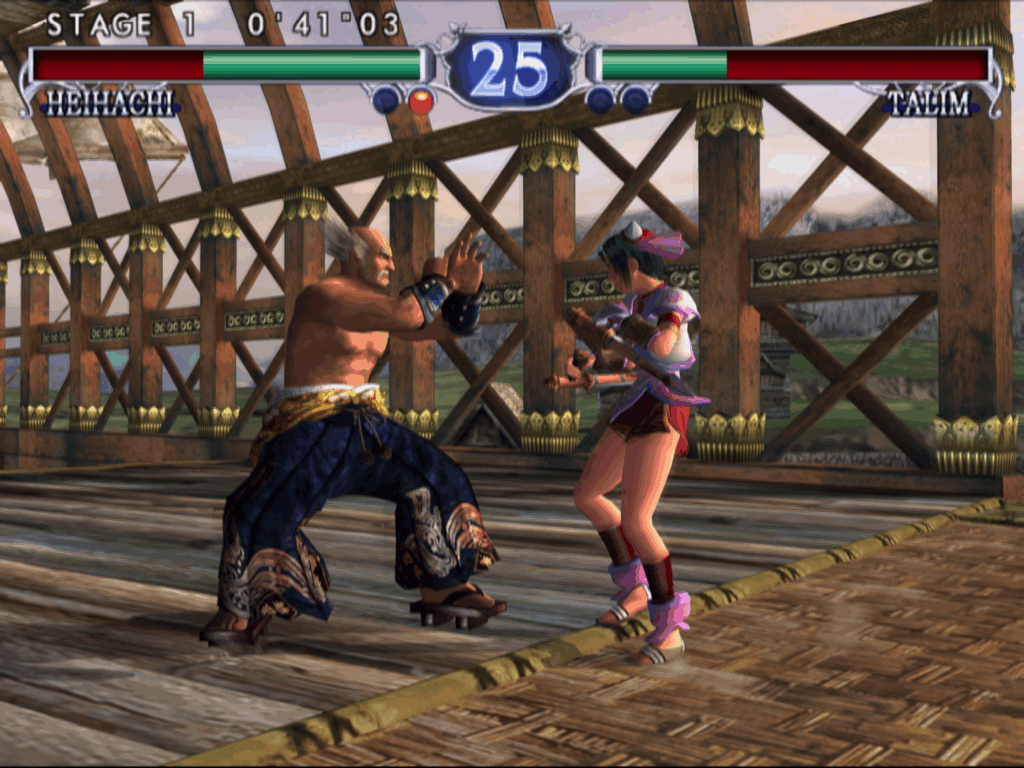
The game, like its predecessors, is a 3D fighter with a focus on weapons based combat. Each character has a default weapon which fall into specific types. You have the obvious swords (with several different varieties) but some use others such as bo staffs, nunchucks, axes, etc. Because of the diversity of tools these fighting styles can differ significantly. Moreso than in just about every other fighting game actually. This should be obvious as someone using nunchucks is going to move and swipe differently than another swinging around a giant axe. The nuance isn’t subtle here, at all. Some of the weapons are really over-the-top but I say that in the best way possible. Because of this combat isn’t super realistic, but it doesn’t have to be. SoulCalibur II has some of the most varied fighting techniques in the genre.
Fighting games live and die by their roster. It’s almost as important as good gameplay in my opinion. In both regards SoulCalibur II doesn’t disappoint. For starters almost the entire roster returns from the first game. Some cuts were made, such as Lizardman, and Rock, but these were guys I never cared about in the first place. With just the returning characters you already have a well rounded roster representing a wide variety in styles. Thankfully Namco rounded them out by adding in several new faces. Cassandra is kind of like a more agile version of Sophitia and uses the same sword and shield combo. Despite using similar weapons I find their difference in agility makes them play quite differently. Then there’s Necrid. He’s okay, but I do like how they went more with a dark horror theme.
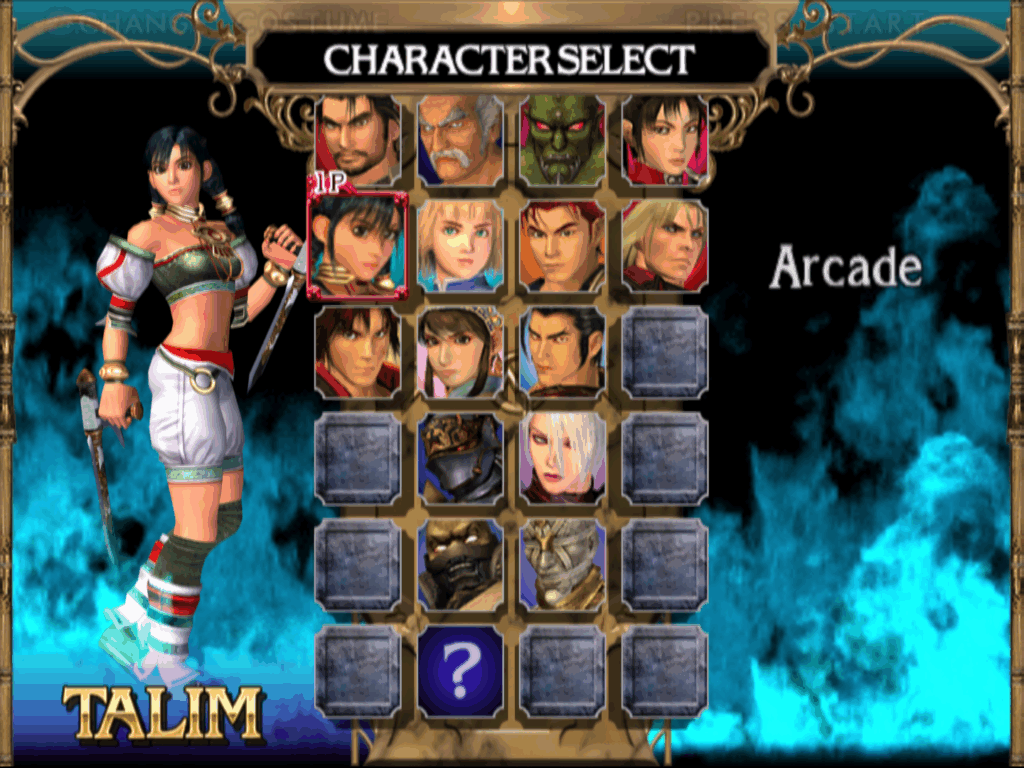
Raphael and Talim are my favorite new faces. The former’s rapier manipulates a lot differently than short swords in the game and he definitely doesn’t feel derivative. Talim uses dual elbow blades and has some really decimating attacks because they pair well with her speed. Even Yunsung, who isn’t particularly unique, is still a lot of fun to use. What’s interesting is that with the release of SoulCalibur II Namco gave each console iteration its own ‘guest’ character from another franchise. Unfortunately this PS2 iteration got the short end of the stick here. While the Gamecube iteration had Link from the Legend of Zelda, and Xbox had Todd Mcfarlane’s Spawn character we get Heihachi from Tekken in this port. It’s less inspired than the other two in my opinion. He also uses just his fists and kicks which makes this character feel out of place here.
SoulCalibur II plays exceptionally well even now. The detailed movement and fluidity of each attack is remarkable. The game is smooth as butter even when compared to something like Tekken or Dead or Alive. Your basic goal remains the same as in any other fighter; to win two of three matches against a series of opponents. This is done both by draining their life bar as well as knocking them out of the ring. The fighting engine itself is based on different strength attacks on slashes with your weapon, kicks, blocks and throws. You want to chain together strikes so that your opponent doesn’t have an opportunity to counter. The combo system is very easy to learn and it’s highly adaptable at the same time. SoulCalibur II is not a game you can simply button mash to win against human opponents.
Because combat is based on weapons you have to focus more on range here than in other fighters. Some fighters such as Astaroth and Ivy have very long reaches with their weapons by default. This also means it takes them longer to both wind up for, and recover after, each attack. In cases such as these you want to try and stay farther away from your foe. Others such as Talim and Heihatchi are short range only, but their speed can be used to both create and close distance in a flash. Because of the differences in range and agility each fighter feels quite different from one another. SoulCalibur II has special moves, but these are more attune to different styles of weapon strikes. No one throws fireballs here, or even has any projectiles of any kind. Special moves are more subtle, but I loved this more technical approach.
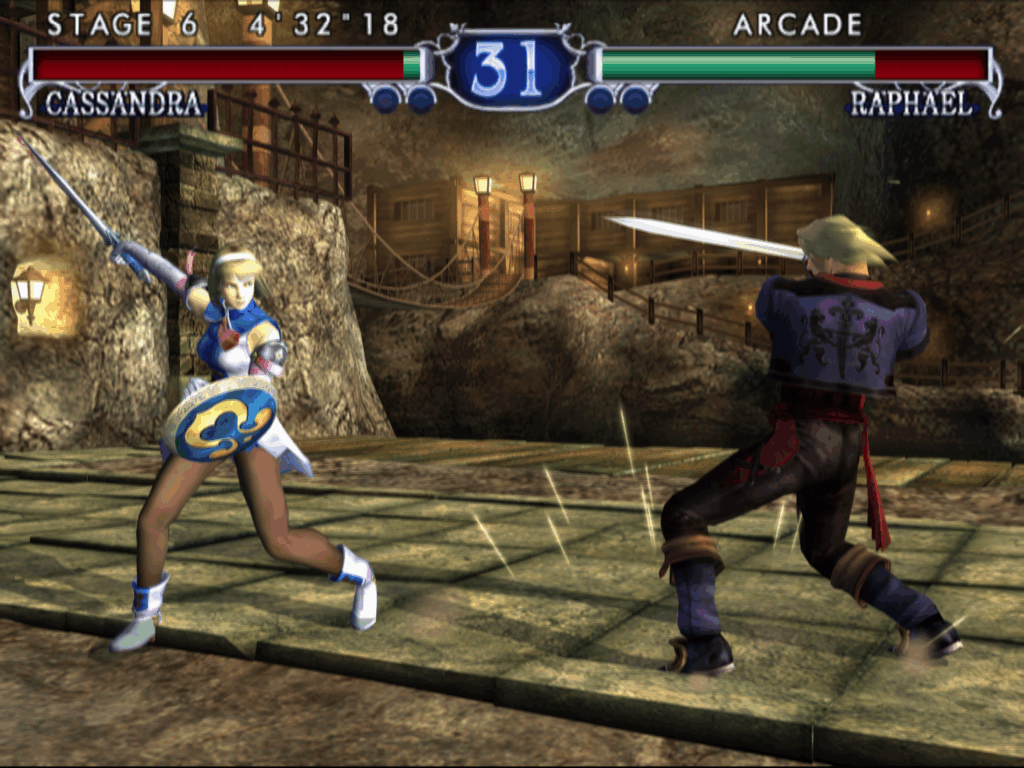
Another key difference in SoulCalibur II is the movement system. Most fighters didn’t know how to use 3D space back then and offered simple solutions like sidesteps. In SoulCalibur II you have a much better range of motion. You can move in all directions by default. It’s not exactly free-range of motion because the characters always face each other. When moving it feels more like you’re circling your foe. This allows you to tactfully dodge attacks and strike while your foe is recovering. It also gives you more opportunity to escape when cornered to help alleviate frustrations regarding ring-outs. This mechanic is really well done because it never feels like there’s too much space in an arena. Fights are still intimate. At the same time the freedom of movement is far greater than in most other fighting games.
Some new mechanics have also been added, and others re-tooled. Some arenas now have walls which adds to strategies for ring-outs. In specific instances you can jump off of these and some special moves even make use of them. There’s also a new soul charge mechanic allowing you to perform a more devastating move. My favorite addition however is guard breaks. With these you can not only stop a foe from blocking but also stun them for a short time. Unfortunately they aren’t particularly strong and are slower to perform than basic strikes. I feel like all of these additions make sense from a pure gameplay perspective and they add to the technical elements of the game. They also don’t alter the SoulCalibur experience too much. If you loved SoulCalibur then you’re in for a treat because this is largely the same thing but better in every way.
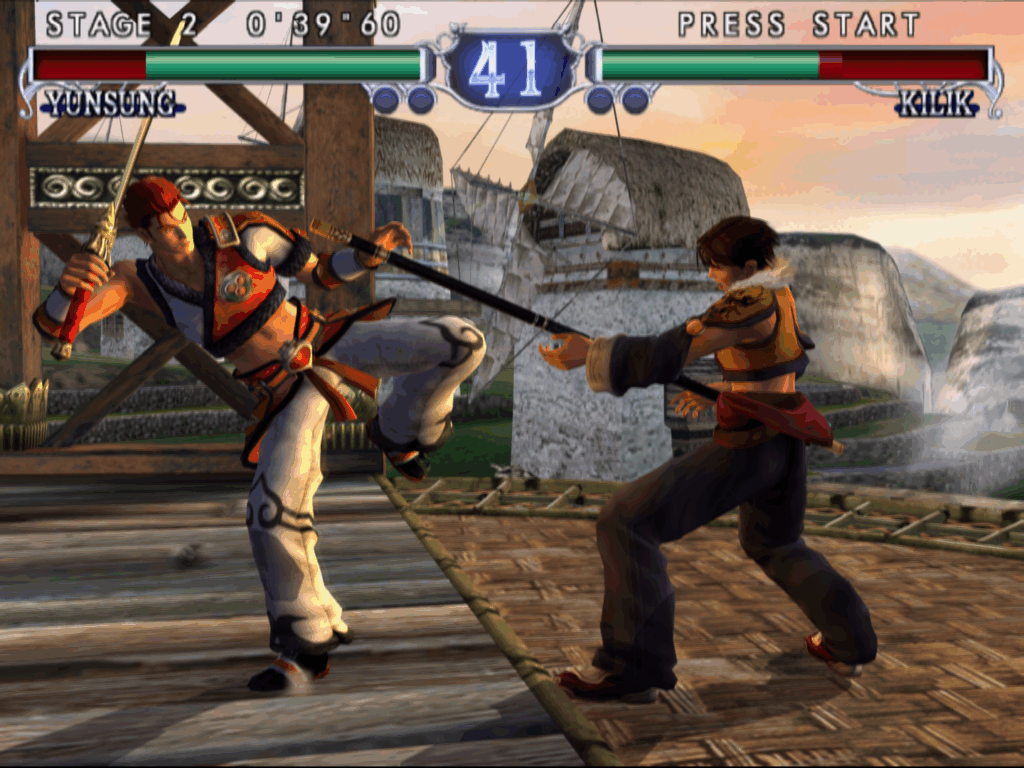
Fighting games often suffer from a lack of content but that’s not the case in SoulCalibur II. You have the traditional arcade mode. It’s the basic story of the game where you choose a character and fight through opponents until finally besting the villain. Versus is the traditional two player mode against a human opponent, time attack challenges you to defeat as many foes as possible, survival lets you keep battling until you perish, etc. There’s also a practice mode which is fairly robust and helpful to learn the ins and outs of each character. The highlight however is weapons master. This challenges you to specific missions within a series of fights. You also gain experience points and gold like in an RPG. This mode is used to unlock new weapons variations and content. It’s pretty interesting.
SoulCalibur II is a beautiful looking game. So was the original, but this is on more powerful hardware right? Well to start the character models have been improved noticeably. There are a lot more polygons in play here. Backgrounds also have a lot of extra oomph with some moving parts and animations. The stage with the cherry blossoms in the background looks amazing. Lighting effects have also been stepped up significantly. I loved the glow of light from weapons clashes. Animations look absolutely incredible and are really detailed. SoulCalibur II is an amazing looking game overall. The soundtrack is also stellar. It really works to set the mood. The acting in the voice samples could use some work but I didn’t mind these overall.
