
There are a whole lot of PlayStation Vita RPGs, and today we’re going to talk about some of them. Before we begin let’s get into some backstory. The Vita was Sony’s second handheld following the PSP. Unfortunately it failed to catch on with mainstream audiences in the same way that its predecessor did. Gamers largely chose either Nintendo or smartphones for their on the go gaming needs. The PS Vita was left out in the rain. Regardless it had strong support from Japanese developers its first few years on the market. Thankfully they weren’t shy about putting RPGs on the platform. That’s why the system was able to gain a respectable library of role playing games. Today we’re going to highlight the best PlayStation Vita RPGs of all time. Let’s check it out.
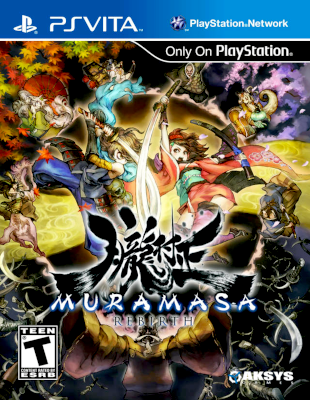
#25. – Muramasa Rebirth
Muramasa was one of Vanillaware’s few games released on the Nintendo Wii. Years later an enhanced port made its way to the PlayStation Vita. Reportedly this was because the developers wanted to take advantage of the OLED screen. It’s easy to see why. Muramasa is absolutely beautiful. Seriously, it’s a work of art in motion. It has some of the best sprite work I’ve ever seen. The game isn’t just pretty either. It has solid gameplay too. Muramasa Rebirth is a two dimensional side scrolling action game. It has platforming elements, but that’s not the focus. You’ll find the majority of your time here spent fighting off enemies. Combat is entirely in real time. It’s also very fast paced with hacking, slashing and dashing. The action RPG elements round out the package and make for a good game. Muramasa on the PlayStation Vita is great fun.
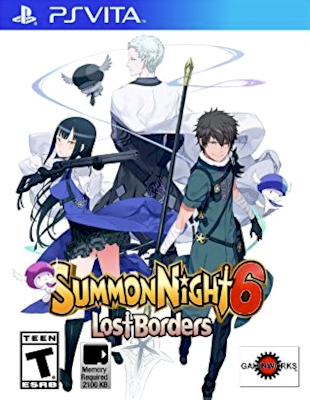
#24. – Summon Night 6: Lost Borders
The Summon Night series never really hit it big in the West. Regardless, publisher Gaijinworks picked this one up and localized it for English audiences. I’m thankful because it’s a real hoot. Summon Night 6 is two parts strategy RPG and one part visual novel. This means there’s going to be a lot of text to wade through, and that the package will be overflowing with anime tropes. If you can get past that then you’re in for a treat. Summon Night 6 has a good turn based battle system over grid battlefields, and it’s all wrapped up in a lovely and easy to use interface. The story and characters aren’t incredible by any means, but gameplay is good enough to carry the whole package. If you like strategy RPGs and aren’t allergic to generic anime tropes then this one is a good choice.
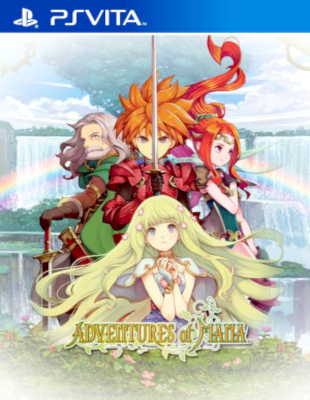
#23. – Adventures of Mana
Most gamers recognize the Seiken Densetsu series from the Super Nintendo installment titled Secret of Mana in North America. That one had a remake on the Vita (we’ll get to it later) but so did its predecessor which was the first installment in the franchise. We know it as Final Fantasy Adventure in North America. This remake was released as Adventures of Mana. It has significantly upgraded graphics (which are now in 3D), a new gameplay engine, improved music, etc. It’s the whole package. Unfortunately it still has the bones of a Game Boy game. That means there just isn’t a lot to it. Regardless this action RPG is a lot of fun to play. It features an interesting world, fun dungeons, and entertaining enemy encounters. It’s rather simplistic but Adventures of Mana is still worth checking out. The Vita version is much better than the mobile release.
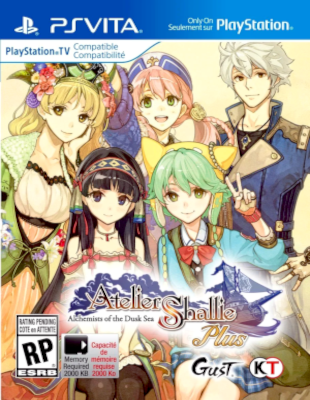
#22. – Atelier Shallie Plus: Alchemists of the Dusk Sea
The Vita was also home to many PS3 ports. It’s a testament to how powerful this handheld hardware really was. In particular developer Gust made sure to release just about every installment in their classic RPG Atelier series on both platforms. In the case of Atelier Shallie I think the platform is well suited to the gameplay. It’s a light hearted adventure with a heavy handed anime approach. You play as one of two alchemists here who take different routes to saving their arid desert town. The battle system is highly traditional turn based fare that works well and offers players lots of options. Where the Atelier games, and by extension Shallie, succeed is in their alchemy system and side quests. You’ll spend a good portion of the day hunting down ingredients to make powerful items and medicines. The Vita edition runs a little worse, but is still good.
#21. – Cosmic Star Heroine
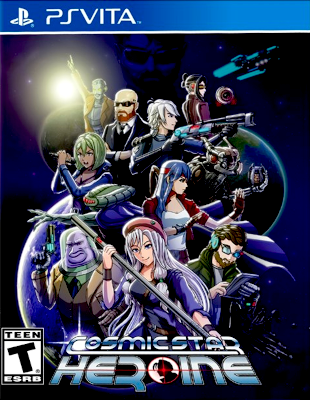
When I first heard about this game I was absolutely pumped. Cosmic Star Heroine is an indie RPG heavily inspired by the Phantasy Star series. This is a sci-fi role playing game where you guide a party of up to four characters through an adventure with lots of twists and turns. It’s worth noting that the game is rendered entirely in 2D. The graphics are sprites. While the combat system is closely based on retro turn based RPGs it is competently designed and a lot of fun. Plus, it borrows elements from some of the best ones. I love that you can see enemies outside of battle, and instead of the screen transitioning to a battlefield the skirmishes start right where they begun. Cosmic Star Heroine limits the usefulness of specific skills by requiring a rest period after their use. The game is a love letter to retro RPG fans.
#20. – Digimon Story: Cyber Sleuth
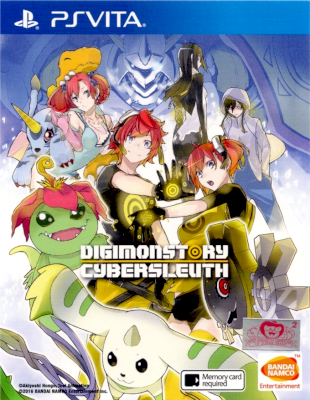
Believe it or not there was a specific point in time where Digimon was bigger than Pokemon. Obviously that was a long time ago, and a very short lived phenomenon. Digimon might have died down but new games are still being released. Cyber Sleuth came out on a myriad of consoles but I experienced it on the Vita. This is a 3D RPG wherein you explore the small and enclosed world, trek through dungeons, collect Digimon, and of course battle it out with the little guys. Combat is turn based action wrapped around tried and true JRPG mechanics. It’s not particularly original, but that isn’t a bad thing at all. The high point is that there are over three hundred different Digimon to collect in this package, and many are wildly different from one another. If you have nostalgia for the franchise then you should check this one out.

#19. – Secret of Mana
Secret of Mana is one of those legendary 16-bit RPGs that everyone can’t stop talking about. There’s good reason for this; it was amazing. While many sequels have come and gone none have been able to reach the same heights. That’s probably why Square-Enix decided to release a 3D remake for the game. Secret of Mana is easily one of the Vita’s best RPGs. It maintains the same unique action RPG gameplay. The power of your sword strikes is based on how full a meter is at the bottom of the screen, and it depletes with each swing. The gameplay really has not changed at all, nor has the story. The only thing that’s really different are the graphics. It looks great. Unfortunately gameplay feels unpolished. It’s clear that this remake was made on a shoestring budget. It even crashes sometimes. Technical flaws aside it’s a great game.

#18. – Child of Light
Some video games focus on style over substance. Child of Light has both. This is one of the most beautiful games ever released on the PlayStation Vita. It uses hand drawn backgrounds that are a real sight to behold. They look especially nice on the small OLED screen. Child of Light at first looks like a gorgeous side scrolling platformer. Exploration is handled from this perspective and the character can run, jump, and solve light but thoughtful puzzles. Battles are entirely turn based, and use the basic staples of the genre. The combat system is vaguely similar to that of Grandia. You have a bar at the bottom of the screen indicating each character and how far they are from their turn. Using this knowledge you can cancel out enemy attacks with a well placed strike. You’ll often need to do so to stop them from using their strongest moves.
#17. – World of Final Fantasy
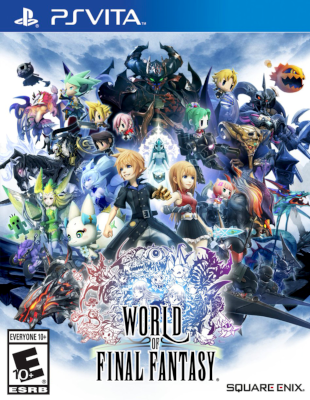
This was one of the most surprising Final Fantasy spin-offs. World of Final Fantasy combines story elements, locations, and characters from past releases in the franchise. They’re all wrapped up in a cute new aesthetic that kind of reminded me of those funco-pop things everyone loves so much. World of Final Fantasy takes place in a new place called Grymoire, and has two brand new protagonists in the form of Lann and Reynn. The story is pretty nonsensical, but I won’t harp on it too much. Battles carry out in classic turn based fashion, but this time involve stacking mirages (which are basically monsters) to each character for various bonuses. These can also be used outside of battle for solving puzzles or traveling the terrain. It’s not groundbreaking by any means, but World of Final Fantasy is kind of neat.

#16. – Legend of Heroes: Trails of Cold Steel
Despite the change in name this one is a direct continuation from the Legend of Heroes: Trails in the Sky series. This time the setting is the Erebonian Empire. You play as a rag tag group from the newly founded Class VII at a military school. The setting is pure medieval fantasy with a heavy splash of anime thrown in. There are a lot of tropes but the continuing story is intriguing. The battle system is conventional, but has some thoughtful elements driving it. It’s still turn based, but placement on the battlefield plays heavily into the strategy here. For example, you can only attack at specific ranges, and during any characters turn can determine where you want them to move to. This might not be unique by any measure but I still enjoyed the mechanic here. It’s a pretty standard RPG, but does most everything right.

#15. – Ys: Memories of Celceta
You know you’re always in for a good time when playing an Ys game. Memories of Celceta is one of my favorite releases in the franchise. It was one of the first Vita RPGs localized for North American audiences. In this game you once again take control of Adol Christian. This time the setting is the land of Celceta. The adventure begins with our hero having amnesia, and being hired along with his old friend Duren to map out the world. What starts with a simple task eventually unfolds to saving the entire land. Memories of Celceta, like its predecessors, is an action RPG with an emphasis on combo attacks and dodging. The battle system takes a little bit of time to get used to but once you do it’s quite fun. Boss encounters are the highlight with some really well done large scale battles.
#14. – Disgaea 3: Absence of Detention
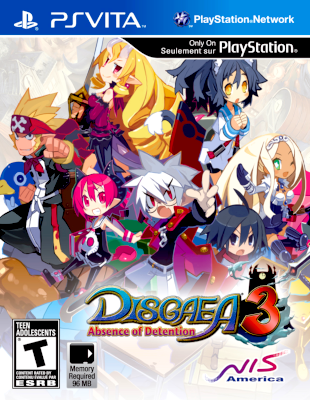
Another day, another Disgaea game. This one was originally released on the PS3 but was overshadowed by bigger and grander releases. That makes it perfect as a release on the Vita. Plus, strategy RPGs are so much better on handhelds due to their pick up and play nature. Regardless, Disgaea 3 is a pretty solid continuation with a great foundation. This is an isometric strategy RPG that has several really deep mechanics within. Geo panels can now be stacked, and these offer even more bonuses than before. Additionally the weapons mechanics have been altered. Specific characters work better with different types of these which plays heavily into strategy. It’s still Disgaea, and that’s not a bad thing. I will say that this is one of the weaker installments in the series, but that’s only because these games are so good.
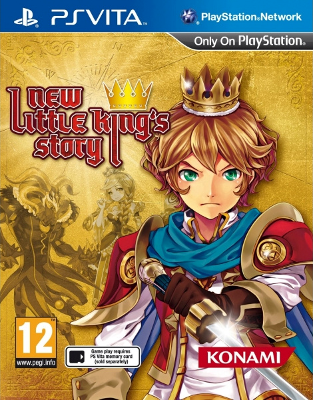
#13. – New Little King’s Story
Little King’s Story was great when it released on the Wii. It was a unique blend of city management, role playing elements, and real time strategy gameplay. It all came together nicely. In my opinion New Little King’s Story is even better. It’s largely the same game but with a few changes which are for the better. The watercolor art style looks amazing, and I liked the soundtrack better as well. New Little King’s Story has you play the role of a young king who can only weakly swipe his sword in combat. You need grunts to do the majority of work for you. In town you can recruit a veritable army to follow you around, and with the press of a button can send them out to act on your target. Exploration is fun, as is combat, but the highlight for me were the boss encounters.
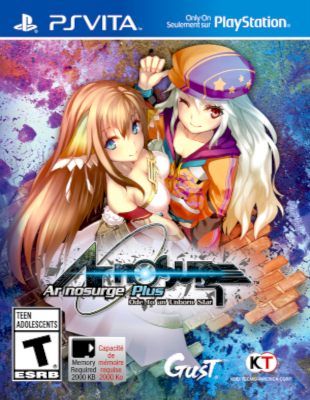
#12. – Ar Nosurge Plus: Ode to an Unborn Star
The Ar Tonelico series was interesting to say the least. These games didn’t particularly interest me, but they’re RPGs, so of course I had to dig in. Ar Nosurge is a loose continuation of the series. This futuristic sci-fi role playing game has you exploring a giant space station while fighting against many different types of enemies. It’s pretty standard for the genre, but Ar Nosurge has a few things going for it. For one thing the battle system is fun. It’s also really flashy, and looks great in motion. Environments are also fun to explore even if they do get a bit repetitive. A huge part of the adventure involves visual novel elements. If you’re into that then you’ll like this mechanic, but if you’re like me you’d rather just stay in the action. Ar Nosurge Plus is one of the best PS3 to Vita ports in my opinion.
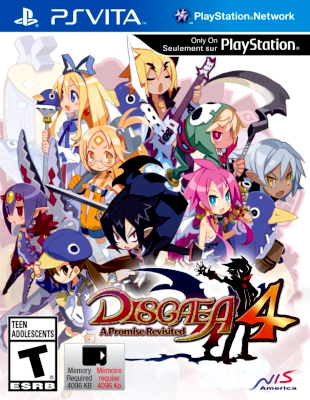
#11. – Disgaea 4: A Promise Revisited
Again with the Disgaea. I know, I know. This too is another PS3 port, and on the Vita it was given more attention due to there being less competition. It’s the light hearted characters and whimsical story that do a lot of the heavy lifting here. Oh, and the battle system. Disgaea 4 has some of the most technical gameplay in the genre. It’s not that anything is overcomplicated, rather, so many options are thrown at you it can be a little overwhelming. New to the series in this sequel is the ability to equip monsters as weapons, and even combine them to create characters. These features make sense in the game’s universe, and I had a lot of fun with them. Besides that this is pretty much what you would expect from Disgaea. If you don’t love the series then part 4 will do little to sway you.
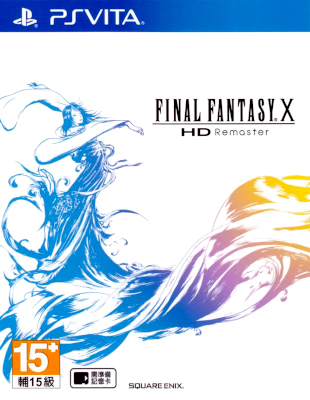
#10. – Final Fantasy X HD Remaster
The Vita could handle PS2 games like a champ. It’s easy to see why Square-Enix decided to release an enhanced version of their biggest PlayStation 2 role playing game to the platform. Final Fantasy X HD Remaster is a very faithful re-creation of the original title. It’s now displayed in high definition, some of the graphics have been reworked, and the soundtrack was re-arranged. The end result is a fantastic package that’ll take you to Zanarkand and back again. Unfortunately this game does have its issues, but these are problems the original release experienced to. Things like poor exploration and the awful sphere grid come with the territory though. Final Fantasy X HD Remaster basically makes the original release obsolete. What’s really neat about this one is the fact that you can transfer your save file between the Vita and PS4 versions.
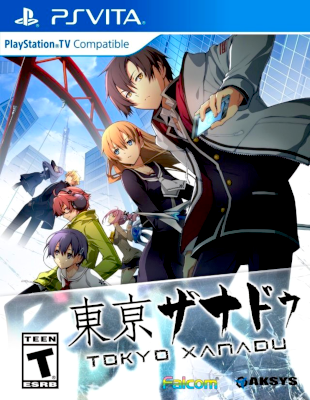
#9. – Tokyo Xanadu
Falcolm apparently took some notes on Persona and how popular the series was becoming. They tried their hand at something vaguely similar. The end result was Tokyo Xanadu. This is a 3D action RPG that uses a combat system not unlike their other series Ys. The biggest note of comparison to Persona is the social elements and settings. While you’ll spend a significant amount of time in this game slaying monsters in the otherworldly dungeons there’s an emphasis on interaction. There’s a heavy handed slice of life thing focus, and I’m here for it. While going to school, completing chores, making friends etc is good and fun the combat is really where it’s at. You only control one character at a time, but can switch between them. Each wields a different weapon for both short and long range attacks. Combat is a blast and the story is fun too.

#8. – Ys VIII: Lacrimosa of Dana
Ys games go together with Sony handhelds like peanut butter and jelly. For the longest time they were the best source for these. The Vita is no different. What’s new with this one is that it feels like there was a bigger budget driving it. Ys VIII once again sees the return of Adol Christian, and gameplay is similar to that in the past titles. This one is an action RPG and is fully 3D. The battle system flows very nicely, and it’s really flashy too. What’s really neat is the fact that you can switch control between the different characters in your party. Due to their different weapons there’s a real noticeable contrast between using them. What really surprised me with Ys VIII is how enjoyable the story is. Good narratives aren’t something I generally associate with this series. This was a pleasant surprise.
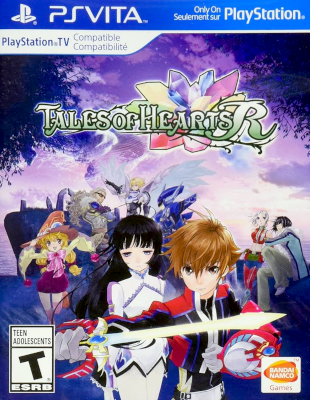
#7. – Tales of Hearts R
Tales of Hearts was originally a Japan-only Nintendo DS game. This ‘R’ version is a fully 3D remake on the PlayStation Vita with a lot of enhancements under its belt. The best part about it is that the game was finally localized. Tales of Hearts R is a pretty typical release by the series standards. It looks like a traditional RPG on the surface, but the battles sway toward the action side. You can freely move your character both away and toward the enemy, and the face buttons are used for various types of strikes. You can even block attacks. It’s a derivative of the linear motion battle system we saw in titles like Tales of Symphonia. This one has a few more bells and whistles though. Aside from that it’s what you can expect from a typical Tales game; generic story with simple characters, and an overdramatic anime plot.
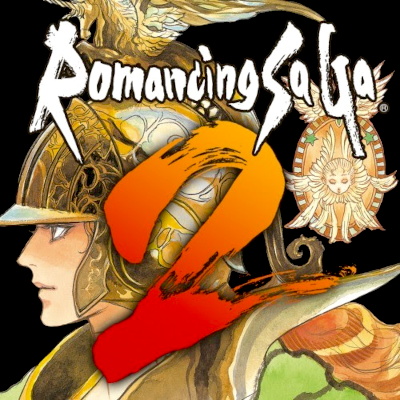
#6. – Romancing SaGa 2
I’ve long considered the SaGa series to be Square-Enix’s most underrated one. These games are best considered ‘bizarro Final Fantasy.’ Unfortunately none of the Romancing SaGa games on the Super Famicom were localized for the West. In the mid 2010s Square-Enix announced remakes of the second and third games for modern platforms, and at long last we could officially play them in English. The best part is that while the graphics were upgraded everything was still pixel based. Romancing SaGa 2 is a fairly traditional turn based RPG but with some serious nuances. It’s fairly open world with a plethora of side quests that are time sensitive to be completed. What’s really interesting is that the game is based on different eras in time, and your party changes with each switch to a new one. It’s a novel mechanic that in some ways is better than your typical generational system.

#5. – Legend of Heroes: Trails of Cold Steel II
What I love most about this series is how interconnected the games are. This sequel is a direct continuation from the last entry, and even features the same main character. The battle system is mostly unchanged and turn based in nature, but with a heavy emphasis on character placement during battle. What has changed however is the scope. Trails of Cold Steel was a little restrictive in that the setting was a military school with your characters stuck going to class and completing missions. Now they travel the world, and it makes for a far more interesting scenario in my opinion. Trails of Cold Steel II is one of the better games in this series. While the Vita version doesn’t run as well as it’s PS3 counterpart it’s still more than worthwhile. If you have a ton of time to waste there are few better choices than this one.
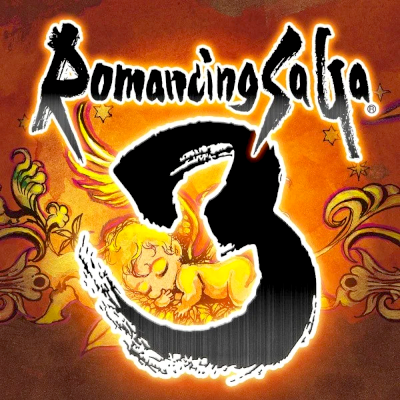
#4. – Romancing SaGa 3
Romancing SaGa 3 was the best game in the franchise on the Super Famicom, and it’s the same story on the PlayStation Vita. As is tradition in this series you start by selecting your main character. The scenarios between the bunch vary a fair degree, but for the most part they all have the same end goal. The combat system has been upgraded in some pretty thoughtful ways. It’s still turn based, and a bit weird when compared to the streamlined versions in Final Fantasy. Gone is the three row system. You still have formations to choose from, and these offer stat bonuses, but they’re less structured than before. Also returning is the ability to learn new special moves from your weapons in the midst of combat. It’s more reliable here than in past Romancing SaGa games. The story isn’t amazing, but the setting is a joy to take in.
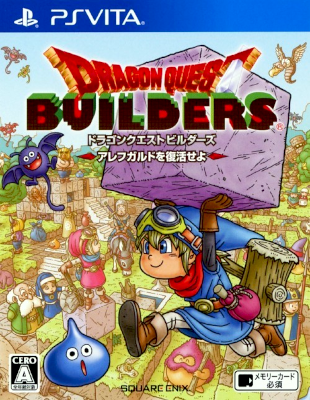
#3. – Dragon Quest Builders
Dragon Quest Builders is one of the most interesting spin-offs in the series. It’s also the only game in the franchise released on the Vita. DQB transforms the world’s most traditional RPG into a 3D action role playing game with a heavy dose of Minecraft style building. The end result is extremely interesting as you rebuild town areas for citizens in a ruined Alefgard. Perhaps most enthralling is the scenario. This one is a ‘what if’ take on the original Dragon Quest. It takes place in an alternate universe wherein the main character of that game struck a deal with Dragonlord to work with him and destroy the world. It’s just pure fanservice for fans of the franchise. What surprised me is how well done the boss encounters are. You have to stay on your toes as many of these encounters require you to build in the middle of combat.
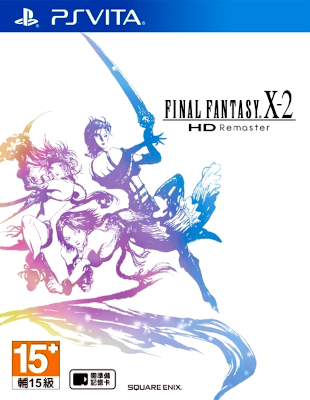
#2. – Final Fantasy X-2 HD Remaster
This one was a little too ‘girl power’ for a lot of gamers when it debuted on the PS2. It was the first direct sequel to any Final Fantasy game, and is generally thought of us inferior to X. I have the opposite opinion. The game featured just three characters to play as, but brought back the job system in the form of dresspheres. You could switch classes in the midst of combat, and it made the battle system even more fun and dynamic. Furthermore that awful sphere grid is gone, and replaced with a more traditional experience points system. Sure, Final Fantasy X-2 might not have the best story, but the improvements to gameplay more than make up for this. If you can get past the pop music intro then you’re in a for a real treat. This Vita version is seriously on point too.
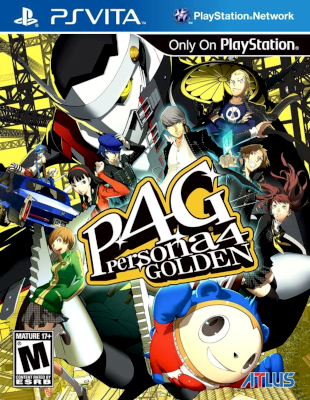
#1. – Persona 4: Golden
Persona 4: Golden is the game that really got me into the Persona series. Basically you play a high school student by day. This involves making friends in a visual novel style atmosphere, meeting up with people, working jobs, etc. By night the main character and his rag tag group of friends enter a magical television to do battle with demons in turn based JRPG style combat. The battle system has your characters using recruited demons called Personas to do much of the fighting. This gives them access to a plethora of spells and special moves. You can recruit more of these demons, and even combine them for more powerful effects. The story leans heavily into the anime tropes but even I found it to be enjoyable. Where this game excels is in its atmosphere. Persona 4: Golden has style in spades. This is easily the best Vita RPG.
